
The National School Food Program has turned school meals in Canada from a patchwork into a funded, national effort, and the people running the food are feeling it first. This guide is for them: the foodservice operator contracted by a board or a province, the school board’s food lead, and the non-profit running a program. It covers the federal facts from the government’s own pages, how provinces run it differently, and what a funded program needs from its ordering software.
One line up front, so nothing below reads otherwise: Rally Schools, App8’s school meal ordering software, isn’t part of the National School Food Program and isn’t approved, funded or endorsed under it. App8 does not determine eligibility or manage federal reimbursement.
TL;DR
- The program: federal money now reaches every province and territory, and the Act made it law in March 2026.
- Provinces run it differently: free at the point of service in some, pay what you can in others.
- What changes for operators: ordering ahead, rotating menus, item-by-item subsidies, at high volumes.
- What a funded program needs, and how subsidies work in Rally Schools, screens included.
- English and French, on both the family and the operator side.
What the National School Food Program is
In March 2026 the program became permanent law, and CTV News covered the announcement:
The National School Food Policy, released in June 2024, sets the vision: “That all children and youth in Canada have access to nutritious food at school.” It aims to “Work progressively towards the long-term goal of universal access”, “Striving to serve meals that are free at the point of participation”, “offered in an environment designed to minimize or eliminate stigma.”
The money flows through agreements with each province and territory, and the numbers below come straight from the government’s pages.
| Fact | Source |
|---|---|
| $1 billion over five years, announced in Budget 2024 | Backgrounder, June 2026 |
| Agreements signed with all provinces and territories by March 2025 | Backgrounder, June 2026 |
| The National School Food Program Act received Royal Assent through Bill C-15 on March 26, 2026 | The Act, S.C. 2026, c. 3 |
| ”more than 10,000 schools”, about 80% of provincially and territorially operated schools, “providing meals to up to 400,000 more kids every year” | News release, June 2026 |
| Federal funding to provinces and territories doubled from 2024-25 to $140 million | News release, June 2026 |
| Budget 2025 proposed $216.6 million a year starting in 2029-30 | News release, June 2026 |
That last line is a proposal, not a commitment, so read it that way. The full policy is on the National School Food Policy page.
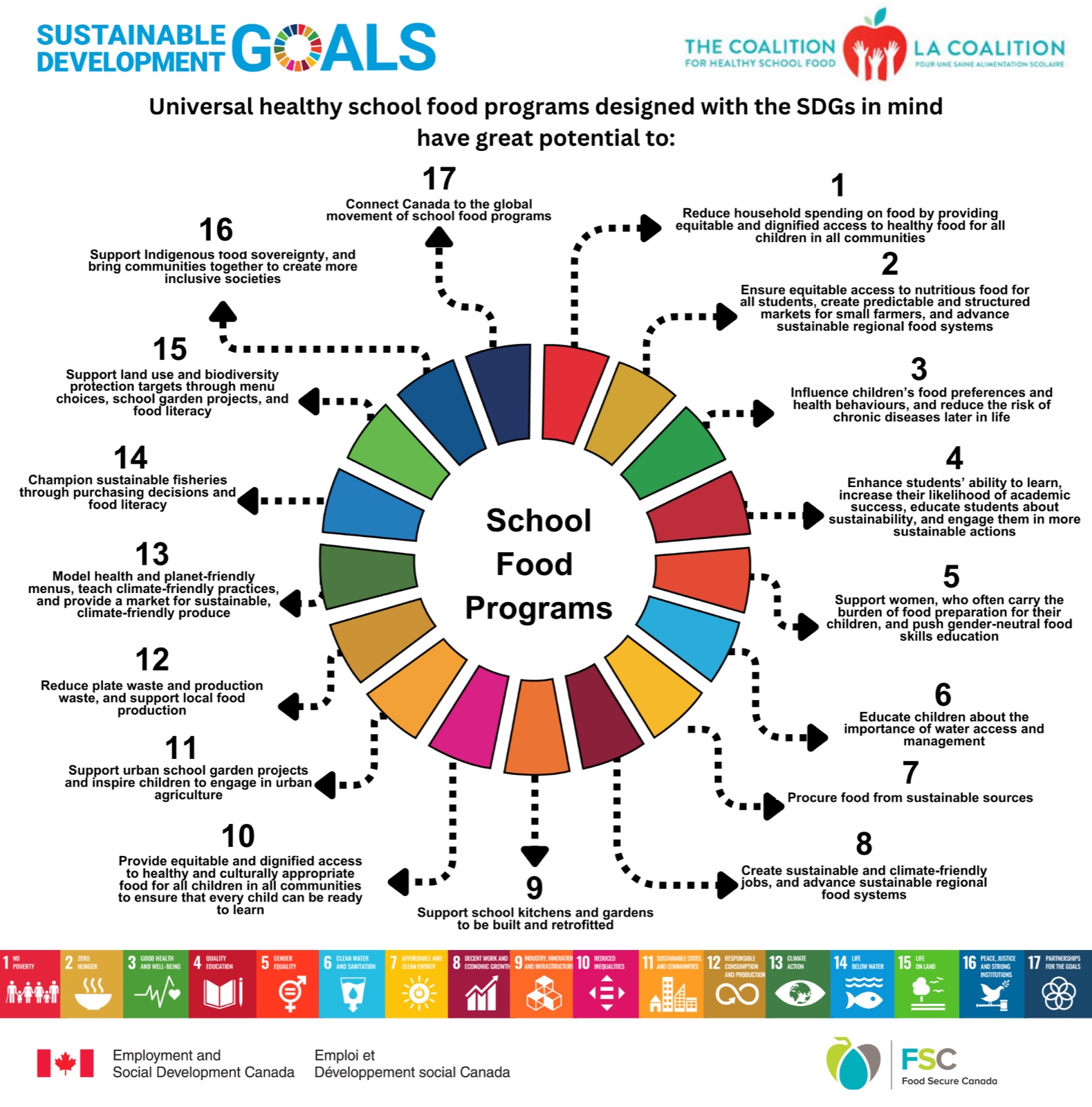
The policy’s push toward universal programs also connects school food to wider goals. This infographic, carrying the marks of the Coalition for Healthy School Food, Food Secure Canada and Employment and Social Development Canada, maps school food programs to the 17 UN Sustainable Development Goals.
How provinces run it differently
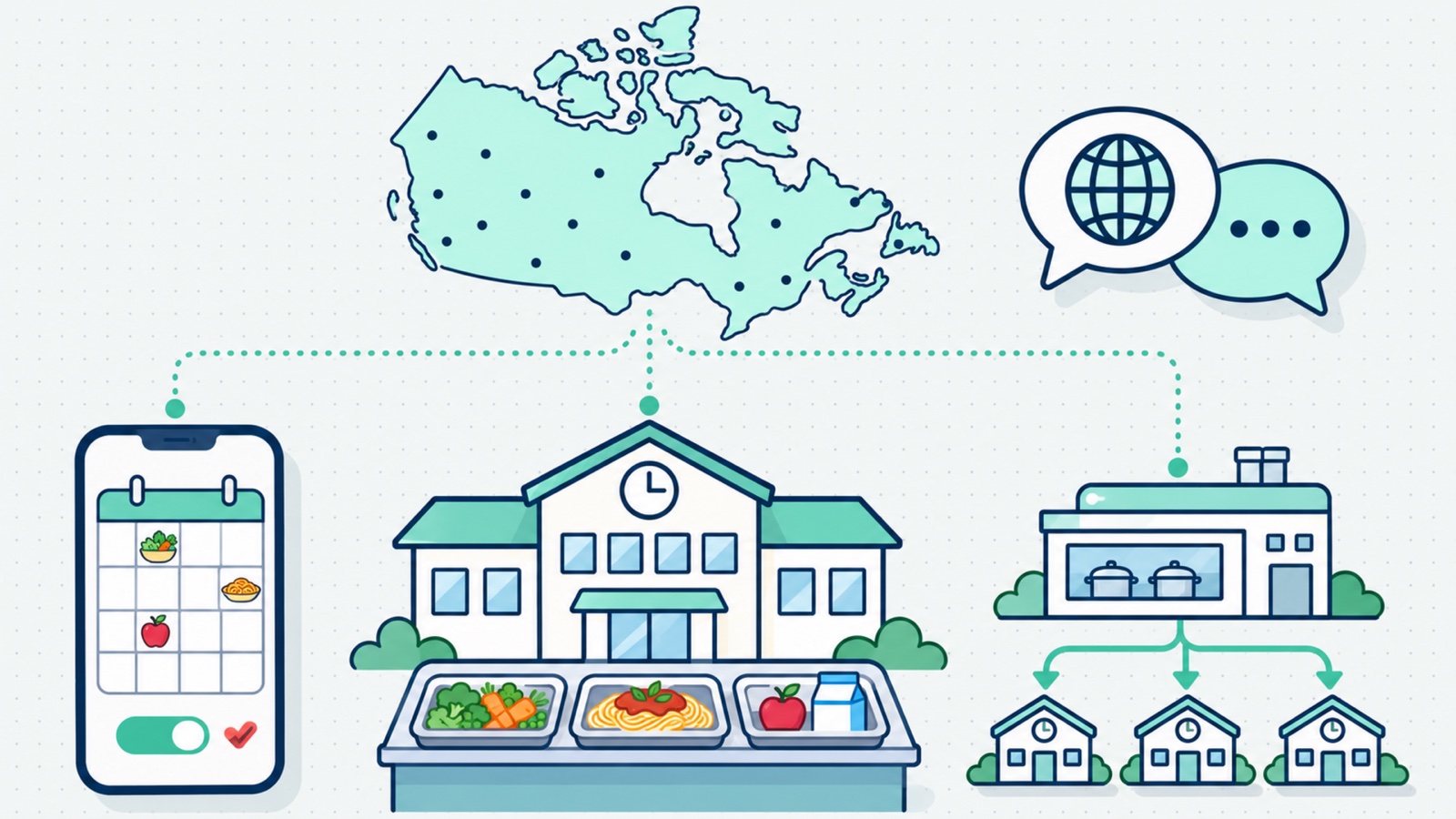
Federal money reaches every province and territory, but each runs its own model, and the differences matter to whoever runs the food. Here are five, each in its own action plan’s words, as published in June 2026.
| Province | The model, in its action plan’s words |
|---|---|
| Prince Edward Island | ”families and students can choose the amount they pay for each meal” |
| Nova Scotia | Families “confidentially contribute if they choose through a pay-what-you-can (PWYC) model”, and “Data on meal uptake and student satisfaction will be collected through the ordering platform” |
| British Columbia | ”a variety of models used across B.C. for food procurement, preparation, and delivery”, including “pay-what-you can payment models or online ordering” |
| Ontario | The province partially funds 13 Student Nutrition Program lead agencies, and “Parent contributions are made on a voluntary basis to the program and are not based on the cost per meal” |
| Manitoba | Meals for “any student in any publicly funded school in a school division at no cost to the student” |
Notice how many of them land on some version of pay what you can: each family chooses what to pay, from nothing up to the full price. That single choice changes the ordering, the payments and the reporting behind every meal.
What the program asks of the people running it
A few lines in the program’s own documents shape the work, and they’re worth knowing in their own words. The policy wants meals “offered in an environment designed to minimize or eliminate stigma.”
British Columbia’s action plan says the province “will require school districts to track and report back on program data and expenditures.” Manitoba’s agreement says the province “agrees to share an Annual Report with Canada” (section 5.2.2).
On language, the Act says federal investments under a provincial agreement “must be guided by” principles that include “the commitments set out in the Official Languages Act” (section 6(2)). Manitoba’s agreement says it will, “Where appropriate,” “offer communication or services funded through this Agreement equally in both official languages” (section 2.3.2).
What changes for the people running the food
This is App8’s view, from the funded and subsidized programs running on Rally Schools today. The funding is raising what students are served, and it’s changing the work behind it just as much.
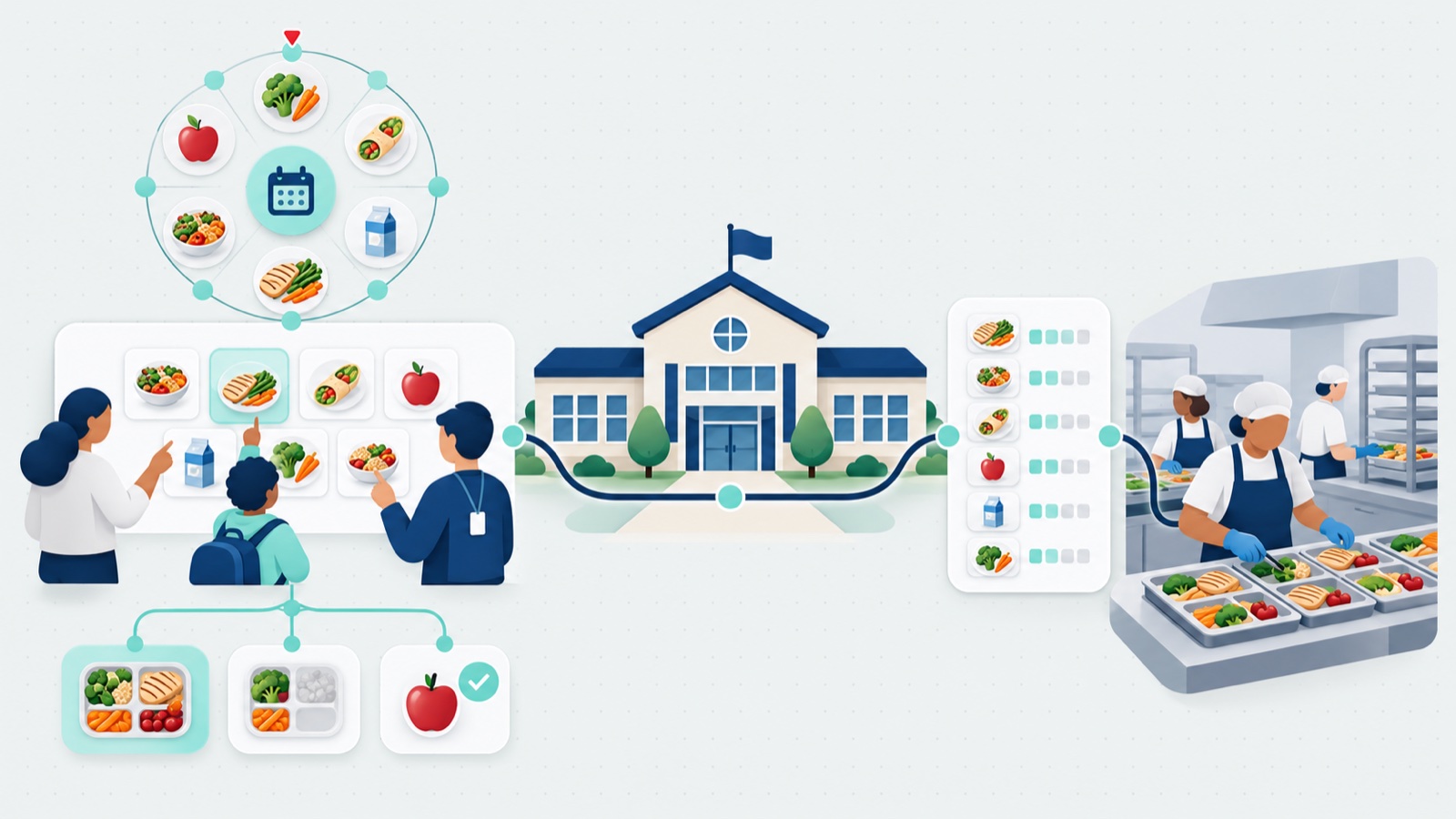
Programs that were a cafeteria line now take orders ahead. Parents order days, weeks or a month at a time, sometimes for more than one child, and menus rotate by day and week.
Then the money gets specific. A subsidy can differ from one item to the next, a few dollars off one meal and a different amount off another, or the family pays what they can. Every one of those orders ties to money, across many schools, at high volumes.
Run by hand, that work can make an operator wonder whether a subsidized program is worth taking on at all. The answer shouldn’t depend on how many spreadsheets the team can survive.
What a funded or subsidized program needs to run well
In App8’s view, five things, plus one that sits behind them all when a kitchen cooks for several schools. This is our grouping from the programs we see, not the program’s own list.
| Need | What it means in practice |
|---|---|
| Taking part without stigma | Every family orders the same way, whatever they pay |
| Parent accounts with a profile per child | One parent orders for each child, by school, class and grade, ahead of time |
| Subsidies set by the program’s rules | Full, pay what you can, or reduced prices on some items, for every family or only those the funder approves |
| Seeing subsidized and paid meals | Orders counted both ways, by school and by day |
| Both official languages | French and English for families, and for the staff running the program |
| Production for many schools | One commissary kitchen often cooks for several schools, so orders roll up by school, class and day |
For the full requirements picture, cutoffs and allergens included, see our school lunch ordering guide.
How subsidies work in Rally Schools
The subsidy models are built into Rally Schools; the operator configures which one applies, at what price, and to whom, under its funder’s rules. App8 doesn’t decide who’s eligible.
In our product page’s words, the three models are “Full subsidy by default with a parent opt-out to pay, a sliding scale that starts fully subsidized,” or subsidized prices on chosen items. In the operator’s settings, those are a discount (a dollar amount or a percentage), a fixed item price, or pay what you can, where a family chooses any amount from zero up to the full price.
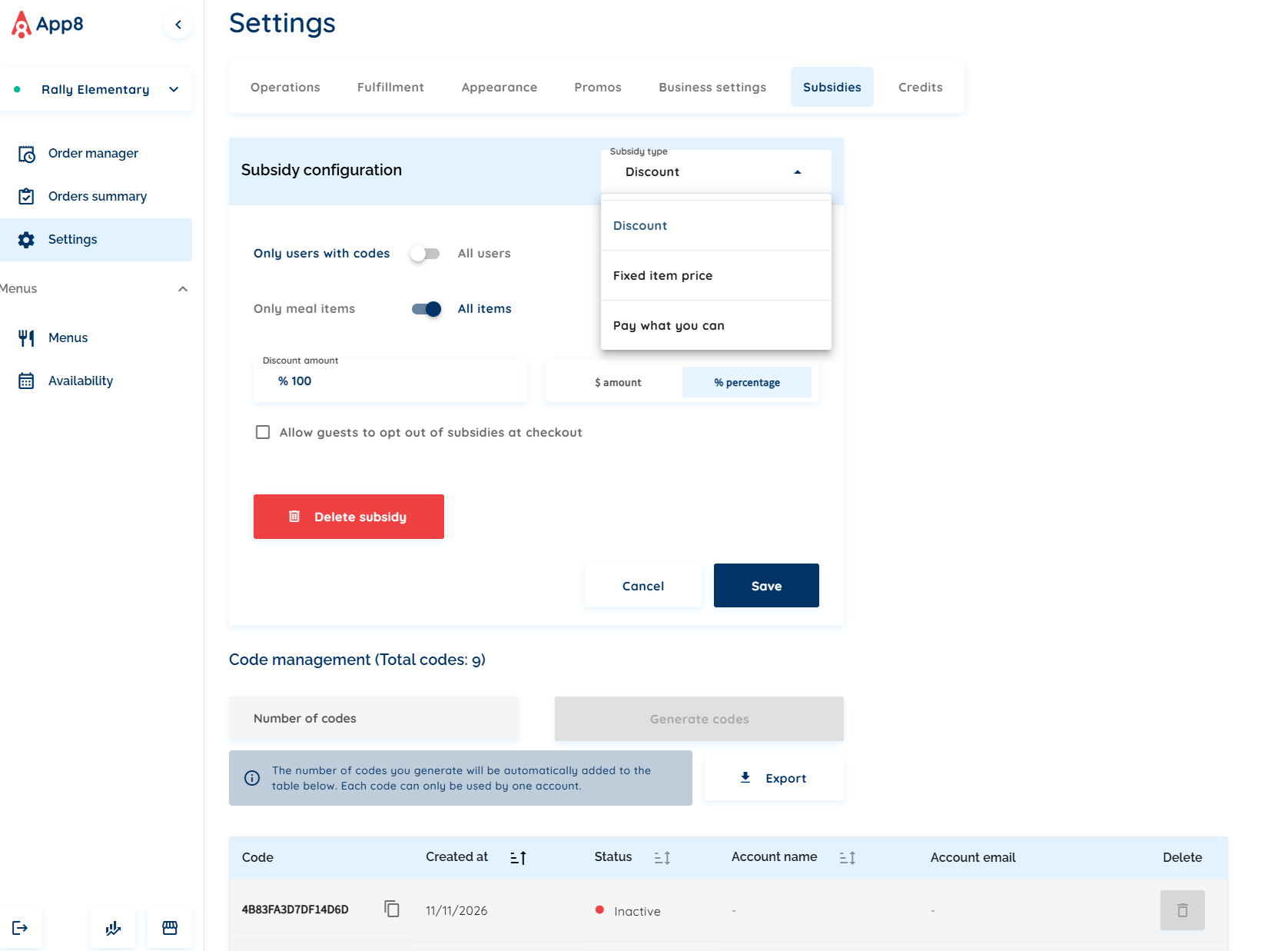
Here’s what the operator controls, in plain terms:
- Item by item. Each menu item can carry a regular price and a subsidized price, so one program can subsidize different items by different amounts. A subsidy can apply to meal items only or to every item.
- Who gets it. A subsidy goes to every family or only to families with a code. The operator generates and exports the codes, each code works for one account, and the operator and its funder decide who gets one.
- Opting out. The operator can let families opt out of the subsidy at checkout.
- Caps. The operator can cap subsidized meals per account per day.
On the family side, the parent turns the subsidy on for the order in the cart. A parent can also order for several children in one checkout.
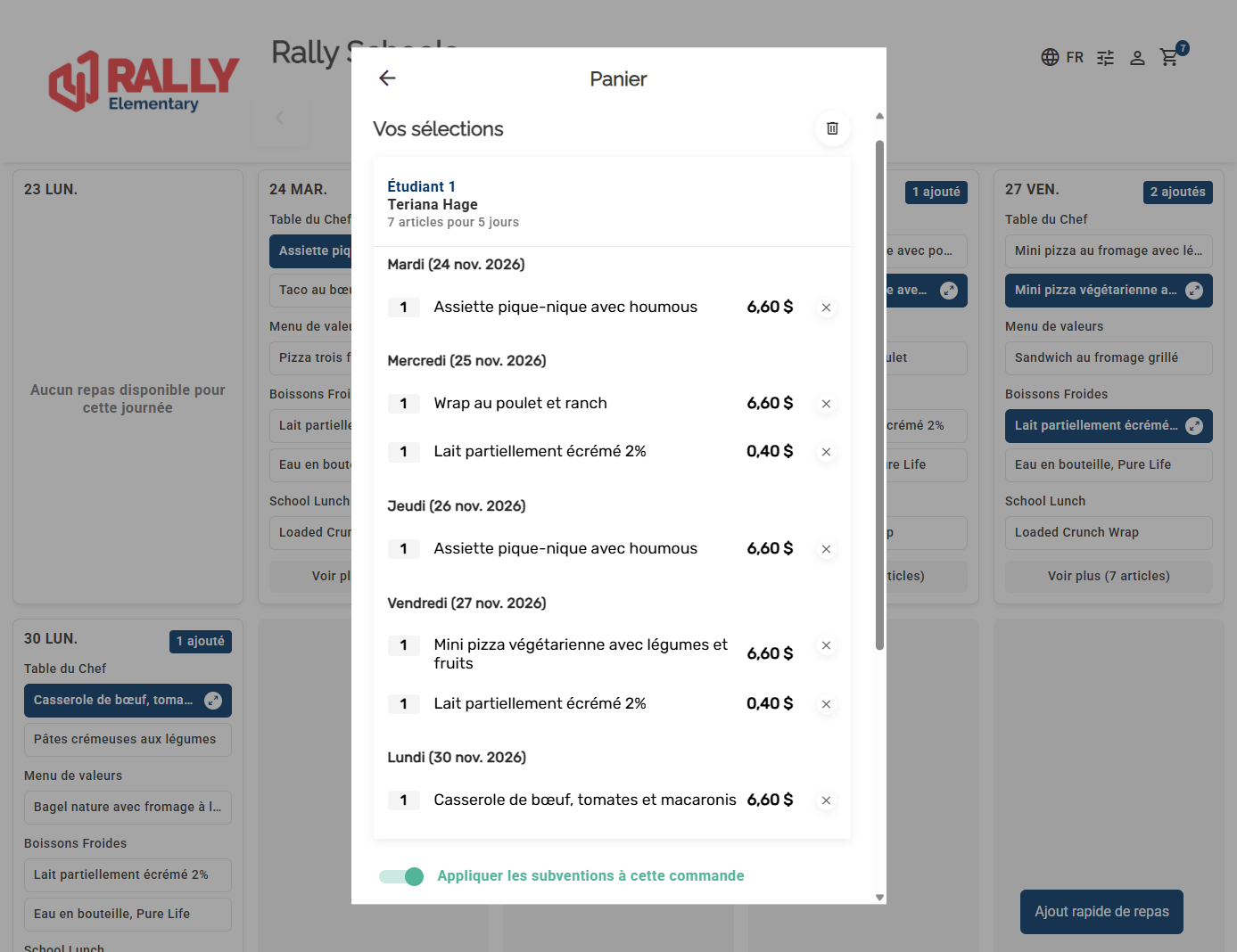
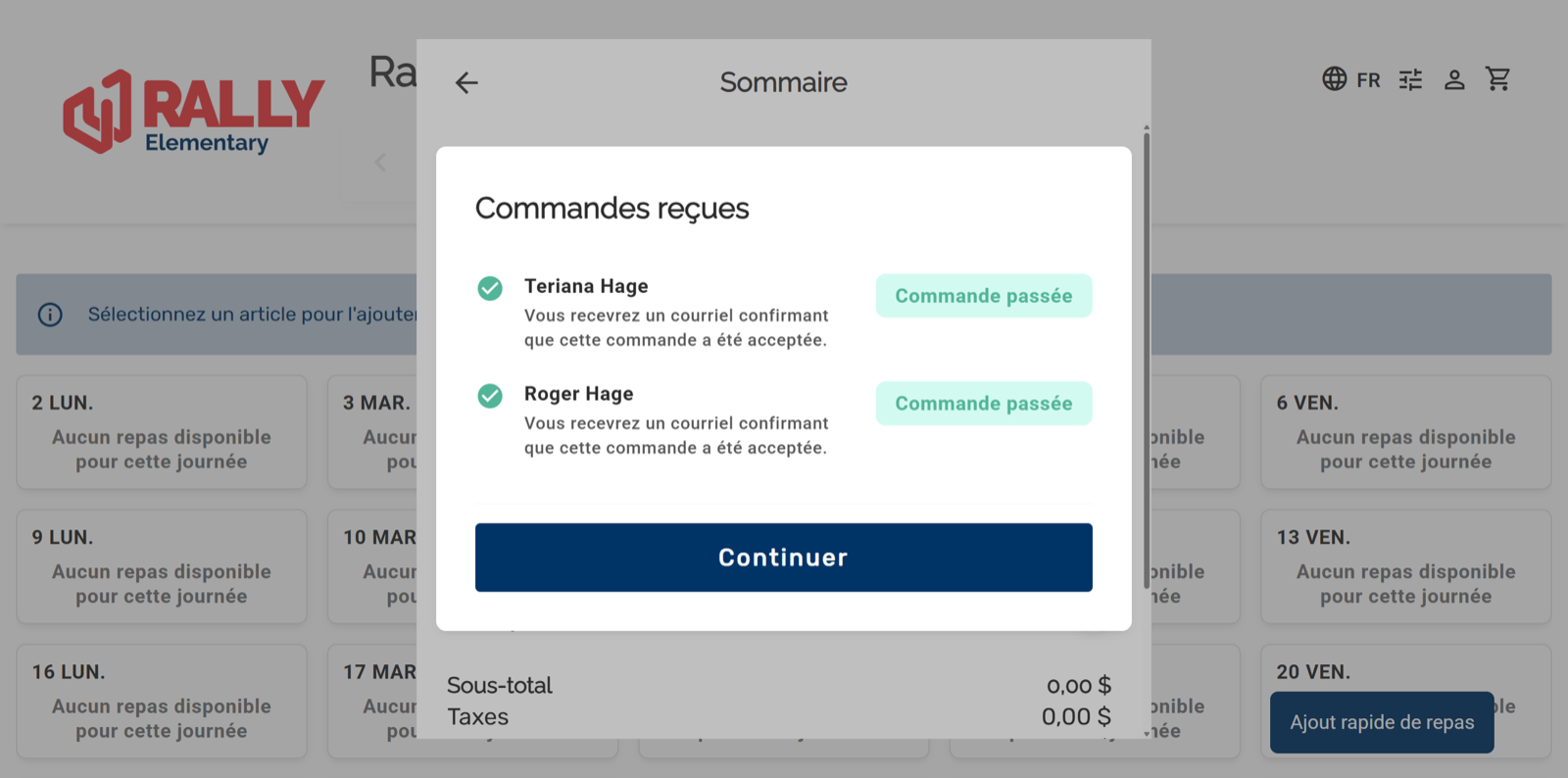
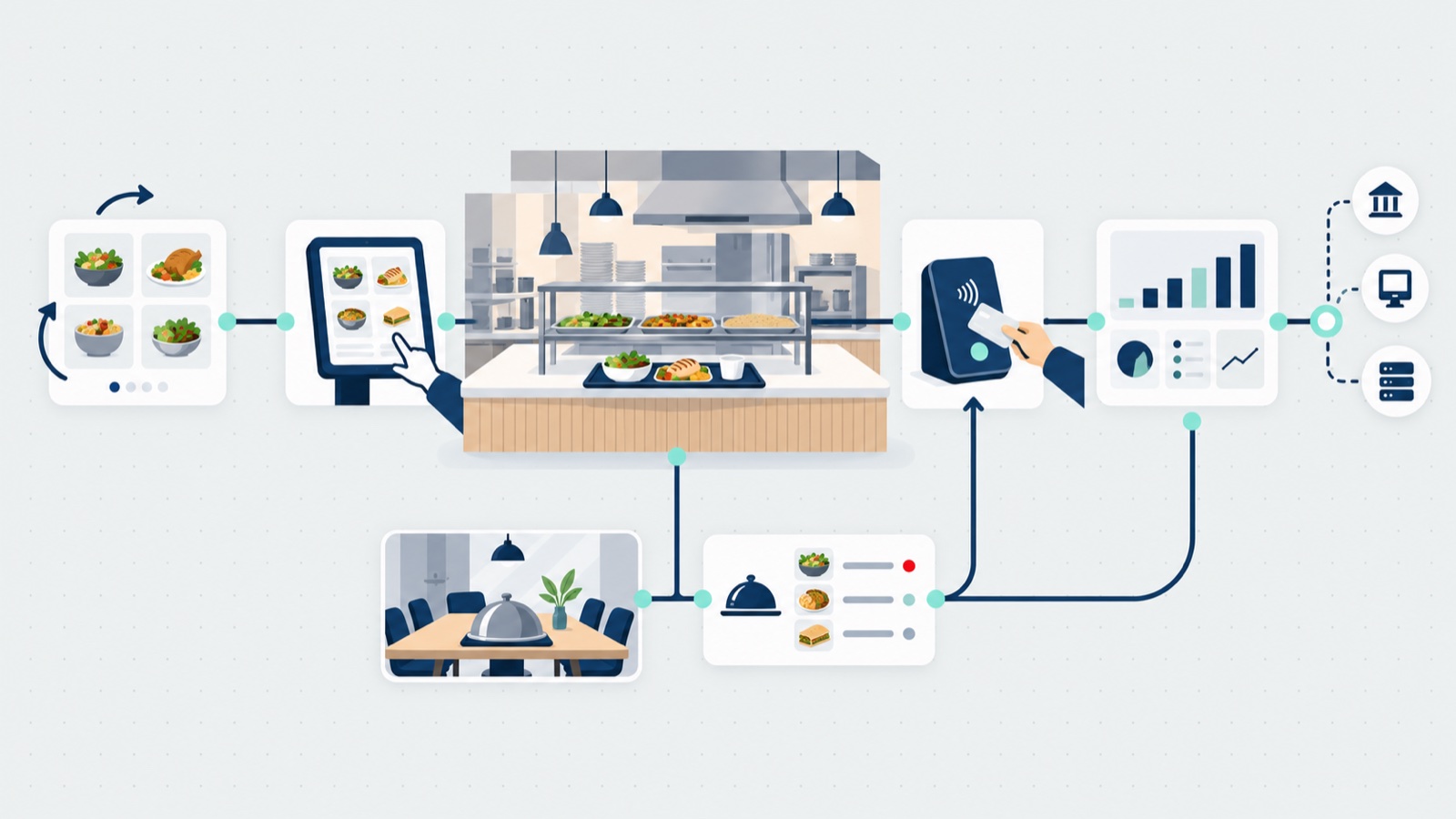
Every order reports as subsidized or paid, in production and order reports by school, class, teacher and student, ready to print or export. In App8’s view, that’s the part operators care about most: seeing subsidized and paid orders separately, without doing it by hand.
Two more details round it out. When an order is canceled, the family can get a credit instead of a refund and use it on future orders, with the operator setting when credits expire, by school year. And on payments, App8 is certified to PCI DSS Level 1, and the payment providers App8 uses are PCI certified.
The design idea behind all of it, as App8’s view: automate what every program does the same way, and make the rest configurable, because no two funded programs run alike.
For parents: weekly, monthly, and many days at once
A parent saves a profile for each child, then picks how to order. The weekly menu shows meals with photos; the monthly calendar lets them pick each day’s meal at a glance; and quick add fills many days in one step.
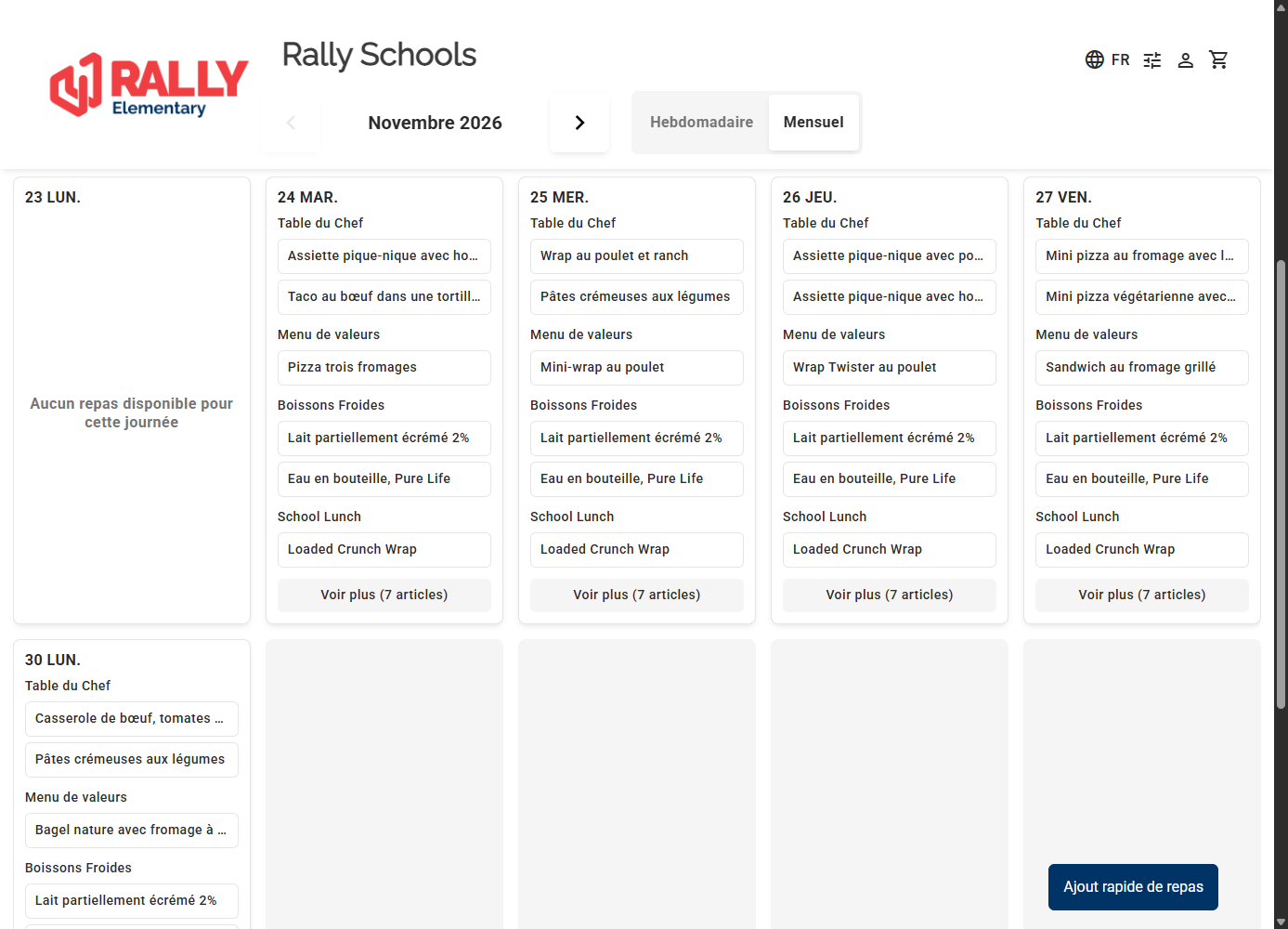
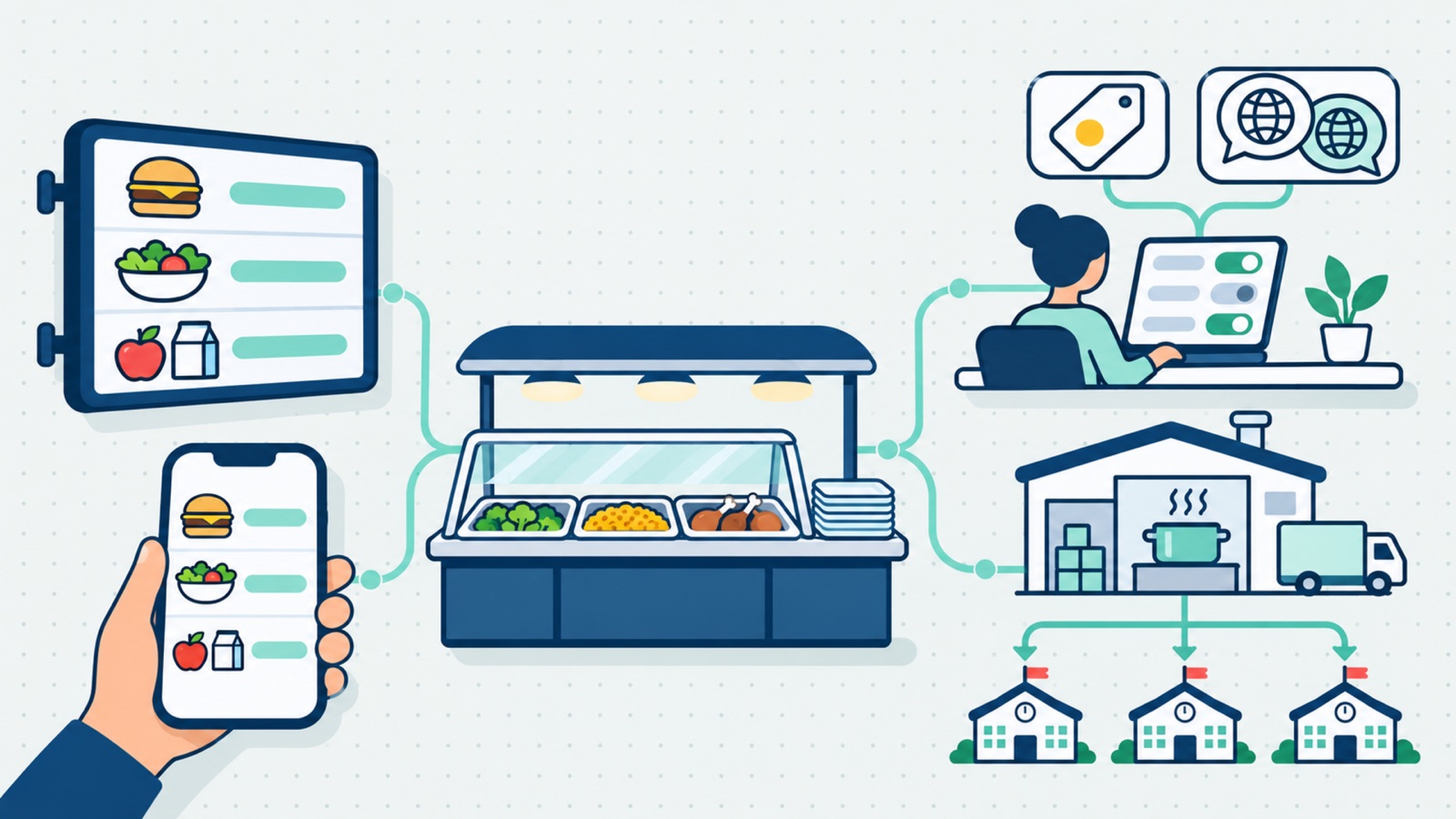
On the operator’s side, menus are set up once and copied to many schools, orders and reports are handled in bulk, and one commissary kitchen can cook for several schools. The weekly photo view and the operator screens are in our Nutrislice alternatives guide.
Ordering in English and French
Bilingual ordering comes up often, and not only in Quebec. English and French are Canada’s two official languages, several regions outside Quebec are bilingual, and in App8’s view, where families speak more than one language, language becomes part of the meal program itself.
That means language on both sides: what families see, and what the operator’s staff work in. It’s worth asking any ordering vendor about directly.
Rally Schools runs in English and French, on the menus families see and on the operator’s side, written to meet Quebec’s French-language requirements under Bill 96, and App8’s support also works in French. A family switches language with one button on the ordering page.
The menu names and descriptions are the operator’s own content, entered in both languages, and menu import by CSV handles English and French menus. Other languages can be added for a program on request.
Programs running on Rally Schools today
Two programs, described by their shape only:
A provincewide school lunch program in Canada went live on Rally Schools in September 2026. A foodservice operator runs it; families pay what they can for each lunch, and parents order online ahead of time.
A school district’s funded meal program in Canada runs on Rally Schools, with meals cooked in a commissary kitchen and ordered online.
We can’t name them, and we won’t add numbers we can’t stand behind. If you run a funded or subsidized program and want to see how yours would be configured, Rally Schools is the place to start, and our school lunch ordering guide covers the rest of the requirements.
Frequently asked questions
What is the National School Food Program?
It's Canada's federal program, under the National School Food Policy released in June 2024 and the National School Food Program Act, that funds provinces and territories to expand school meals. The Act received Royal Assent through Bill C-15 on March 26, 2026. The federal government signed agreements with all provinces and territories by March 2025, and each province and territory runs its own model.
How much funding does the National School Food Program provide?
Budget 2024 announced $1 billion over five years. The Government of Canada's June 2026 news release says federal funding to provinces and territories doubled from the 2024-25 fiscal year to $140 million, and that Budget 2025 proposed $216.6 million a year starting in 2029-30. The same release says more than 10,000 schools, about 80% of provincially and territorially operated schools, offer school food programs this school year, providing meals to up to 400,000 more kids every year.
Are school meals free under the National School Food Program?
It depends on the province or territory. The National School Food Policy works progressively toward universal access, striving to serve meals that are free at the point of participation. Manitoba's action plan describes meals at no cost to the student, while Prince Edward Island's and Nova Scotia's describe families choosing what to pay, and Ontario's describes voluntary parent contributions.
What does pay what you can mean for school meals?
Each family chooses what to pay for a meal, from nothing up to the full price, so every family orders the same way whatever they pay. Several provincial action plans describe it, including Prince Edward Island's and Nova Scotia's. In Rally Schools, pay what you can is one of the subsidy models an operator can configure, alongside a discount and a fixed item price.
Is Rally Schools part of the National School Food Program?
No. Rally Schools isn't part of the National School Food Program and isn't approved, funded or endorsed under it. It's school meal ordering software that operators configure under their own funder's rules. App8 does not determine eligibility or manage federal reimbursement.
Can a school meal program run in both English and French?
Yes, and in Canada it often has to. Rally Schools runs in English and French, on the menus families see and on the operator's side, written to meet Quebec's French-language requirements under Bill 96, and App8's support also works in French. A family switches language with one button on the ordering page.