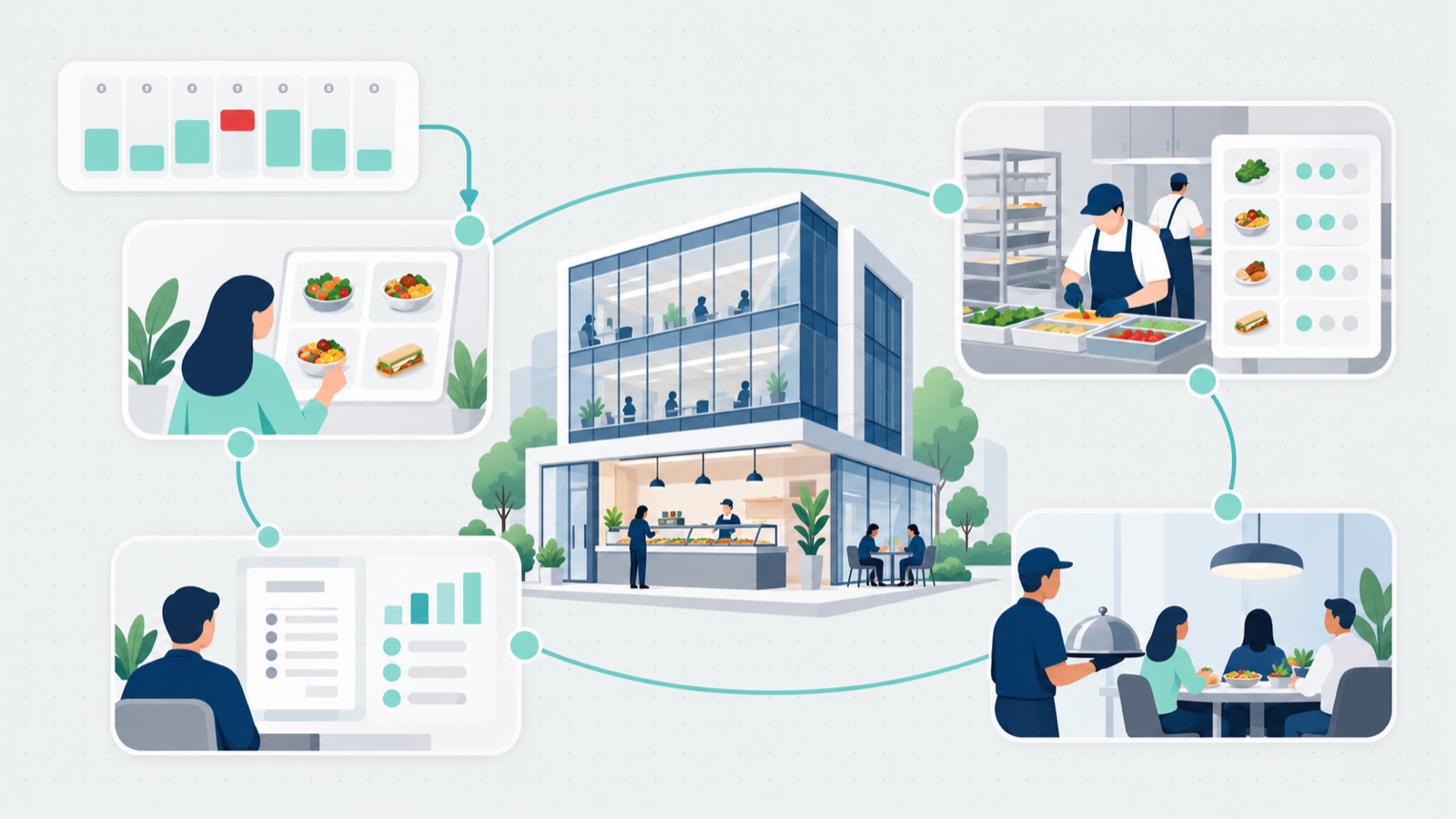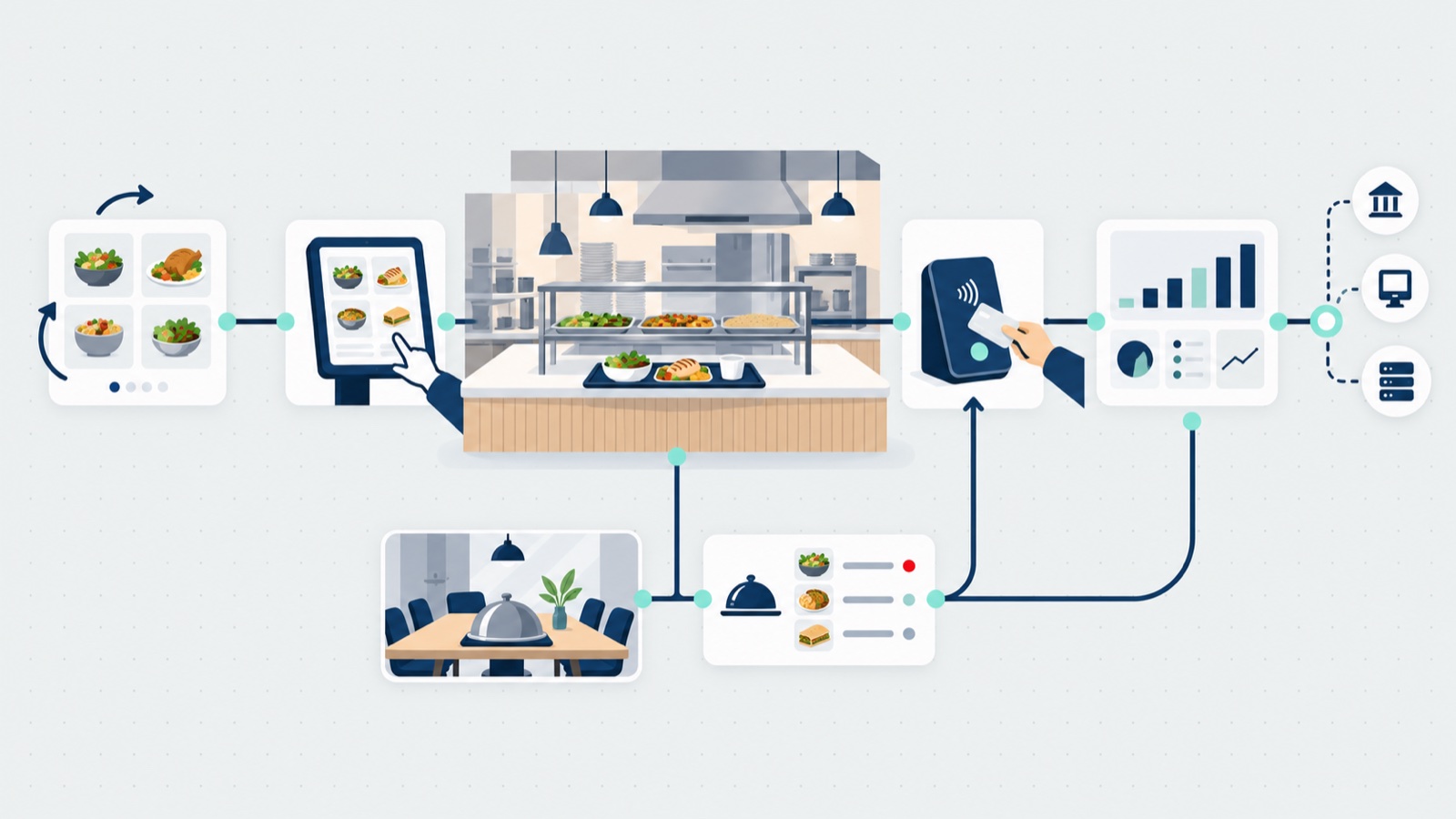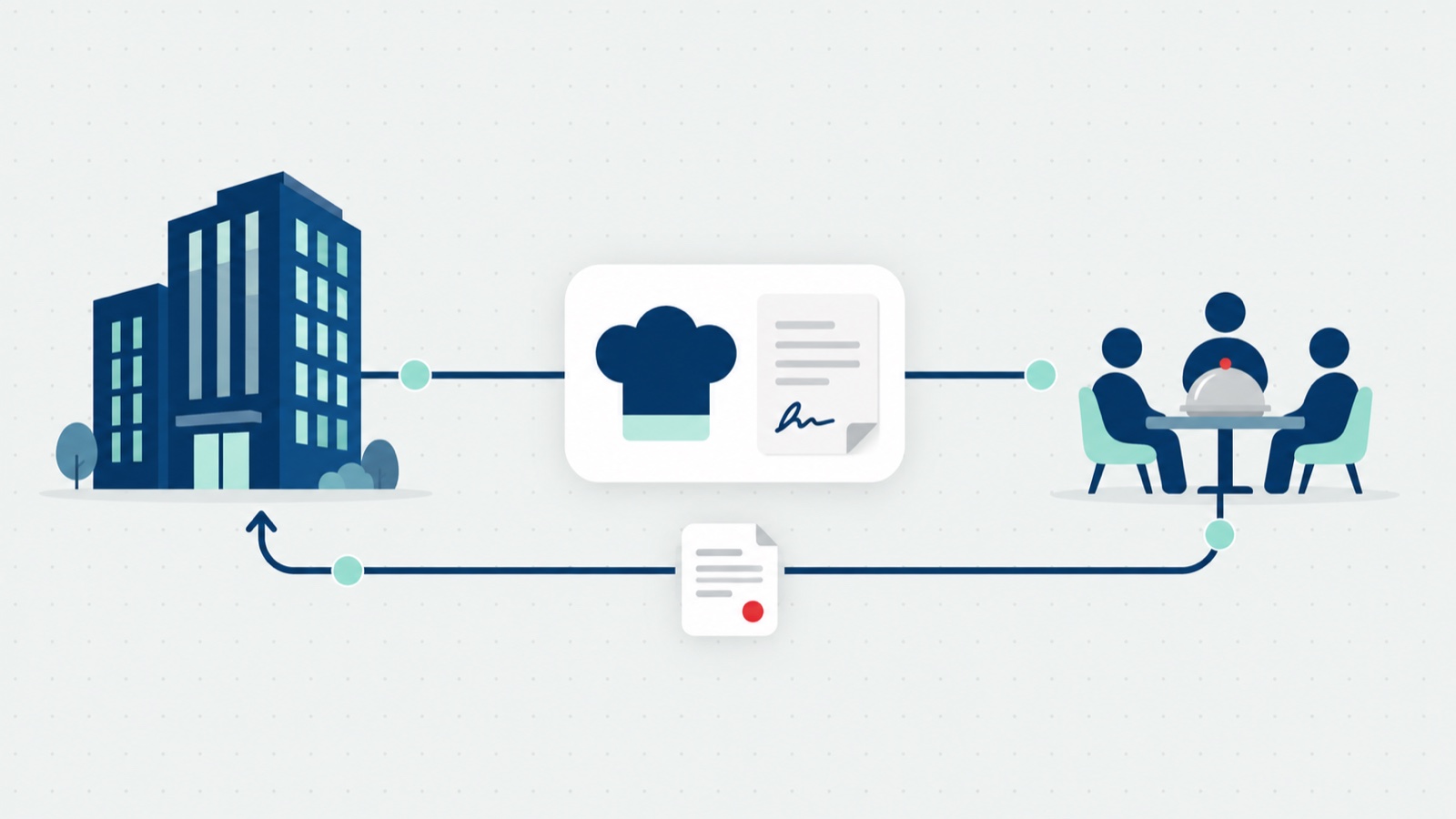

An employee meal program is a perk with a ledger attached. Employees experience it as lunch; the employer experiences it as a budget, a tax question and a retention lever; and the foodservice operator in the middle has to make both experiences work on the same kitchen. This post covers how employers structure meal programs, what the software has to do, the tax basics by country with official links, and what host employers measure, written for the workplace or HR lead on the employer side and the operator who runs the program for them.
TL;DR
- The four structures: free, subsidized, allowance or credit, and pay-your-own, often combined.
- What changed: expectations and costs are up, cafeteria attendance isn’t, per two vendor surveys.
- Memberships: one workplace menu open to the public, with members recognized by email, domain, phone or employee ID and given their own menu and prices.
- Cost centers and no-prices-shown: how orders carry department codes, and how pre-priced contracts order without prices on screen.
- Tax, by country, with official links and no advice, and what employers measure.
The four ways employers structure meal programs
This grouping is App8’s, from the programs we see, not a published standard. A program can combine them, and we found no independent survey that says which is most common.
| Structure | How it works |
|---|---|
| Free | The employer pays the full cost of the meal |
| Subsidized | The employer pays part of the cost, and the employee pays a lower price |
| Allowance or credit | The employer gives each employee a set amount to spend on food |
| Pay-your-own | Employees pay full price; the employer provides the cafeteria or the catering access |
What changed in the last few years
Two surveys sketch the pressure, and both come from vendors, so weigh them as vendors’ surveys. DoorDash’s 2026 Meal Impact Report surveyed 1,019 US office administrators, finance managers, HR and benefits leaders; Facilities Dive reported in August 2026 that 54% say “meal program expectations have risen, along with their cost”. About three-quarters offer reimbursement “regardless of location”, followed by “discounts and memberships at 71% and meal credits or stipends at 67%”, with an average monthly meal budget per eligible employee of “$425, or $21 per day”.
ezCater’s 2026 Workplace Cafeteria Report surveyed roughly 600 facility managers and 1,000 employees. Facilities Dive reported in March 2026 that “55% of managers who oversee cafeterias say attendance at the facilities is down” and “75% of decision makers who oversee cafeterias say the facilities need to evolve or be reimagined”.
Put together: budgets and expectations are rising while the classic cafeteria model is being rethought, which is the context our corporate dining explainer covers in full. The program structures above are how employers are responding, and the software below is how operators keep up.

Memberships: one kitchen, two menus
The piece to understand first is memberships, live in App8’s Rally Eats and Rally Catering. It works in four steps.
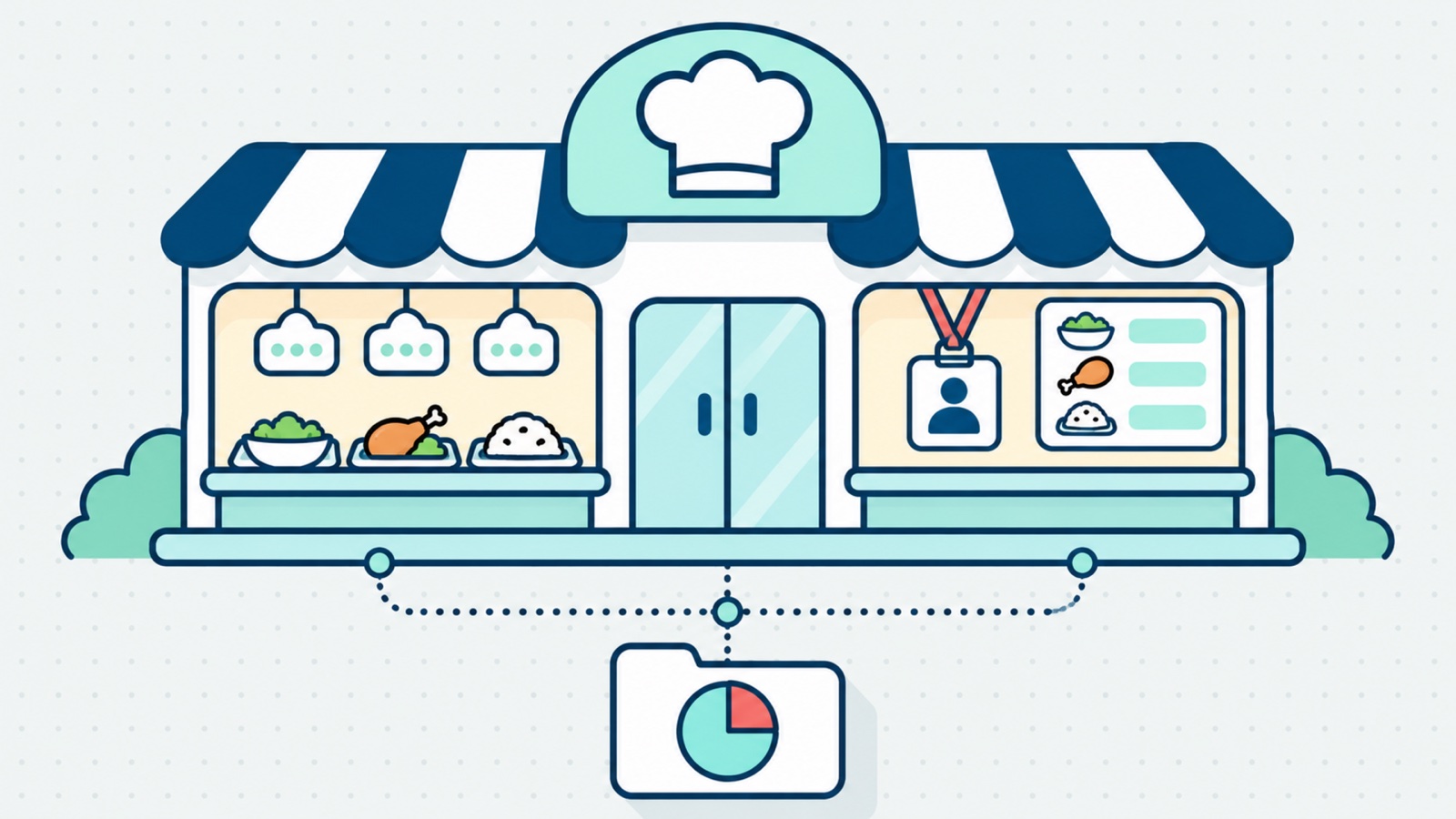
- The operator runs one menu for a workplace, open to anyone who walks in or orders online, at its public prices.
- The operator sets up who counts as a member: by email address, by the client company’s email domain, by phone number, or by a code such as an employee ID.
- A guest who enters a matching email, phone number or code sees the members’ menu instead, with its own prices and even its own items.
- Behind the scenes, every item and option carries its own accounting category and tax setting, which the operator configures, whichever menu the guest ordered from.
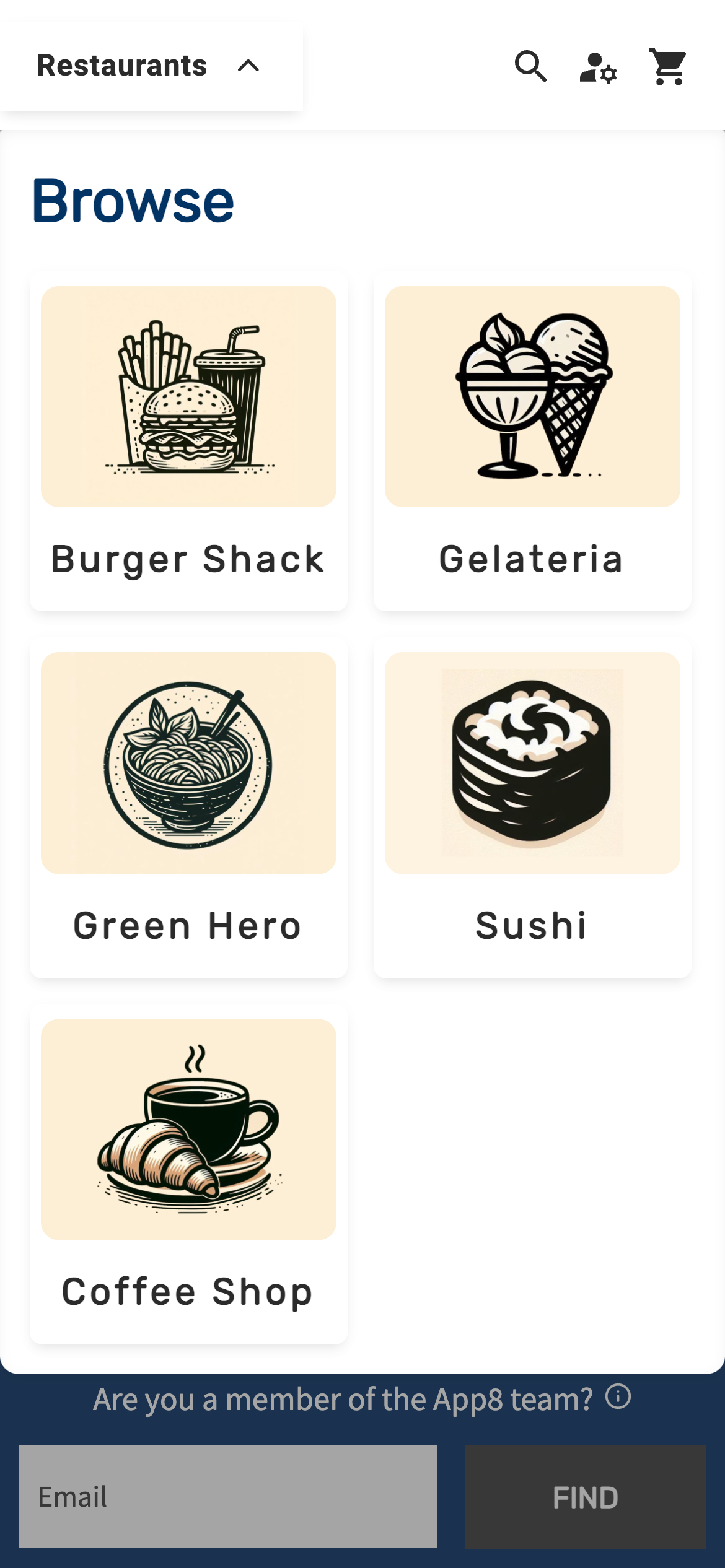
In App8’s view, this is how one kitchen can serve a client’s employee program and the public at the same time. Employees get their program’s prices and menu, and the operator keeps the public sales.
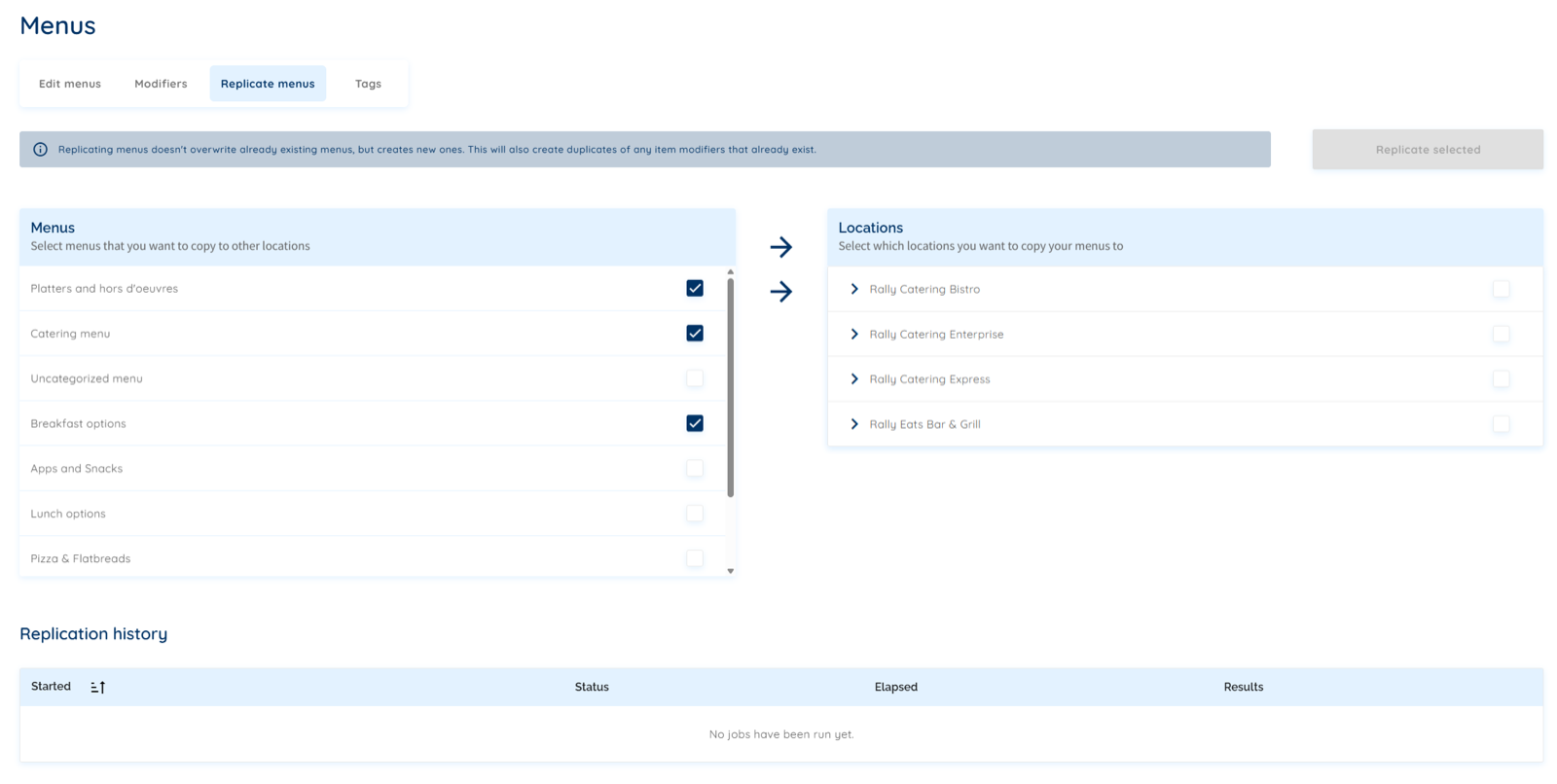
For an operator running many sites, the setup work doesn’t multiply: a menu set up once, pricing, options and accounting categories included, can be copied to other locations.
Cost centers, PO numbers, and ordering with no prices shown
Catering inside a meal program is billed demand, and the billing mechanics are where programs get operationally real. In Rally Catering it runs step by step.
- The employee orders and picks how to pay: a company card, an invoice, or the department’s house account on net terms.
- Where the client bills by cost center or PO number, the code goes on the order. The field can be renamed to the client’s own term, such as an engagement code, and Rally Catering checks the format against a rule the operator sets, so an order with a code that doesn’t match can’t be submitted.
- Invoices billed to a cost center or PO are accounting documents, sent to the operator for accounting. The employee who placed the order doesn’t receive one.
- Once the operator’s accounting connection is set up, payments reconcile into the operator’s accounting system, so each receivable lands on the right category, cost center and PO, the discipline our catering accounting post maps end to end.
Some clients on a pre-priced contract want something simpler still: ordering with no prices shown. Employees and assistants order without seeing prices, the cost is settled between the operator and the client company, and pricing, tax and accounting stay intact in the operator’s reports. In App8’s view, not every ordering product offers this.
Two supporting pieces round it out. Single sign-on with the client company’s own identity provider is set up case by case, so employees can use their work account. And on the employer-subsidy side, members can see their own prices; how the employer’s share of each meal is recorded in the operator’s accounts is agreed with the operator’s finance team in the finance review, because accounting systems treat subsidies differently.
For the cafeteria half of a program, ordering, station throttling and pickup, our cafeteria management software post covers it; one login works across catering and cafeteria.
The tax question, by country
Tax rules shape meal programs, and they differ by country, so here are the official pages. This is orientation, not tax advice; check with a tax adviser.
United States. The IRS says in Publication 15-B that “for amounts incurred or paid after 2025, the employer can no longer deduct expenses associated with providing food” through an on-site eating facility that meets its de minimis or convenience-of-the-employer tests, and there are exceptions. The rule covers food through an on-site eating facility, so it doesn’t mean US employers can no longer deduct meal costs in general.
Canada. The Canada Revenue Agency says subsidized meals “(such as in an employee dining room or cafeteria)” are “not considered a taxable benefit if the employee pays a reasonable charge”, where “A reasonable charge is one that covers the cost of the food, its preparation, and service.” Otherwise “the value of the benefit is the cost of the meals, minus any payment the employee makes.”
United Kingdom. GOV.UK says an employer doesn’t report to HMRC or pay tax and National Insurance if it offers all its employees “free or subsidised meals of a reasonable value at a workplace canteen”, unless they’re offered through salary sacrifice. For other countries, check each country’s official page; we haven’t.
In App8’s view, this is one reason the same client company can run its program differently from one country to the next, and the operator’s software has to work with each site’s way of paying. App8 makes no claim about tax treatment, and neither Rally Catering nor Rally Eats applies any country’s tax rules for you.
What host employers measure
Four measures come up most, and we have no independent benchmark for any of them, so measure against your own baseline rather than a number from a blog.
- Participation. Of the employees on site, how many use the program.
- Cost per employee or per meal. Spend divided by the people who use it, not by headcount.
- Satisfaction. DoorDash’s survey found “44% of companies ranked employee satisfaction as their top program priority, compared with 31% who said cost” (Facilities Dive, August 2026). ezCater’s found “Fewer than half (48%) of employees with an on-site cafeteria rate the food as good or excellent, a 12% drop from last year” (Facilities Dive, March 2026).
- Office attendance. Whether people come in more on days with food.
In App8’s view, the operator needs numbers like these to keep the account. Rally Catering’s reporting covers revenue, volume, customer mix, item performance and program participation, by site, which lets the operator show the host employer how the program is used; it doesn’t report satisfaction, office attendance or cost per employee, so pair it with the employer’s own surveys and badge data.
One honest note to close: we don’t yet have a meal program customer we can name or anonymize, and we won’t borrow our catering or venue results to stand in for one, because they measure different things. What we can show is the machinery above, and the program design questions that decide whether it earns its budget: pick the structure, decide the measures before the vendor, and make sure whatever software you run can tell members from the public without making the kitchen run two systems.
Frequently asked questions
What is an employee meal program?
An employee meal program is how a workplace feeds its people on the employer's terms: free meals, subsidized meals, an allowance or credit, or pay-your-own, and a program can combine them. The host employer sets the structure and budget, and a foodservice operator usually runs the food. That grouping is App8's, not a published standard, and we found no independent survey that says which structure is most common.
How do meal program memberships work in ordering software?
In App8's Rally Eats and Rally Catering, the operator runs one menu for a workplace, open to anyone at public prices, and sets up who counts as a member by email address, company email domain, phone number, or a code such as an employee ID. A guest who enters a matching email, phone number or code sees the members' menu instead, with its own prices and even its own items. Behind the scenes, every item and option carries its own accounting category and tax setting, whichever menu the guest ordered from.
How do employees bill catering to a department?
In Rally Catering the employee orders and picks how to pay: a company card, an invoice, or the department's house account on net terms. Where the client bills by cost center or PO number, the code goes on the order, the field can be renamed to the client's own term, and the format is checked against a rule the operator sets, so an order with a code that doesn't match can't be submitted. Invoices billed to a cost center or PO go to the operator's accounting, not the employee's inbox.
Are employee meals a taxable benefit?
It depends on the country, and the rules changed recently in the US, so link to official sources and ask a tax adviser rather than taking a blog's word. The IRS covers employer-provided meals in Publication 15-B, including a change for amounts incurred or paid after 2025 affecting on-site eating facilities; the CRA says subsidized meals aren't a taxable benefit if the employee pays a reasonable charge covering food, preparation and service; and GOV.UK exempts free or subsidised workplace canteen meals of reasonable value offered to all employees, unless through salary sacrifice. App8 makes no claim about tax treatment.
What should a company measure in its meal program?
Participation (of the employees on site, how many use the program), cost per employee or per meal (spend divided by the people who use it, not by headcount), satisfaction, and office attendance on food days. There's no independent benchmark for any of them, so measure against your own baseline. In DoorDash's 2026 survey, 44% of companies ranked employee satisfaction as their top program priority, compared with 31% who said cost.
Can one kitchen serve an employee program and the public at the same time?
On App8's platform, yes, and in App8's view this is the quiet superpower of memberships: the operator runs a public offering at public prices and a members' offering for the client's employees, with their own menu and prices, filled by the same kitchen. Employees get their program's experience, and the operator keeps the public sales.