
Corporate dining in 2026 is a program being rebuilt around a new rhythm: more people are back in the office, but they come in on the same days, budgets are watched harder than ever, and the catering side has quietly become the part of the program the client company’s leaders actually see. This post is the operating picture: who owns what between the host employer and the operator, what the published surveys say is changing, what gets measured at reviews, and where catering fits. The industry structure behind it, contracts included, is in our contract foodservice explainer, and The Catering Operations Playbook covers the catering operation itself, free, with no sign-up.
TL;DR
- The client company owns the program, and the operator runs it: the split, in one table.
- Catering is the part ordered ahead, billed to departments, and the part leadership sees.
- Hybrid work concentrated demand: attendance is up, cafeterias are still harder to run, and meal budgets average $425 a month per eligible employee.
- Satisfaction is where the review gap shows: 87% of cafeteria managers rate their food good or excellent; 48% of employees agree.
- Great vs bad, from the research and from one published catering result.
- Corporate dining technology, starting with catering stuck on email and PDF.
Corporate dining in 2026, by the numbers:
- $425 a month per eligible employee, the average meal budget, about $21 a day (DoorDash, 2026 Meal Impact Report, a vendor’s survey of 1,019 US office administrators and finance and HR leaders)
- 55% of cafeteria managers say attendance is down, even as almost two thirds of employees with an in-house cafeteria are in the office full time (ezCater, 2026 Workplace Cafeteria Report, a vendor’s survey of about 600 managers and 1,000 employees)
- 87% vs 48%: managers who rate their cafeteria food good or excellent, against employees who agree (ezCater)
- 75% of the managers say corporate dining needs to evolve or be reimagined (ezCater)
- +513% catering orders in twelve months at one corporate cafe that moved ordering online, a single anonymized site, reported by the operator (App8 case study)
Who owns what
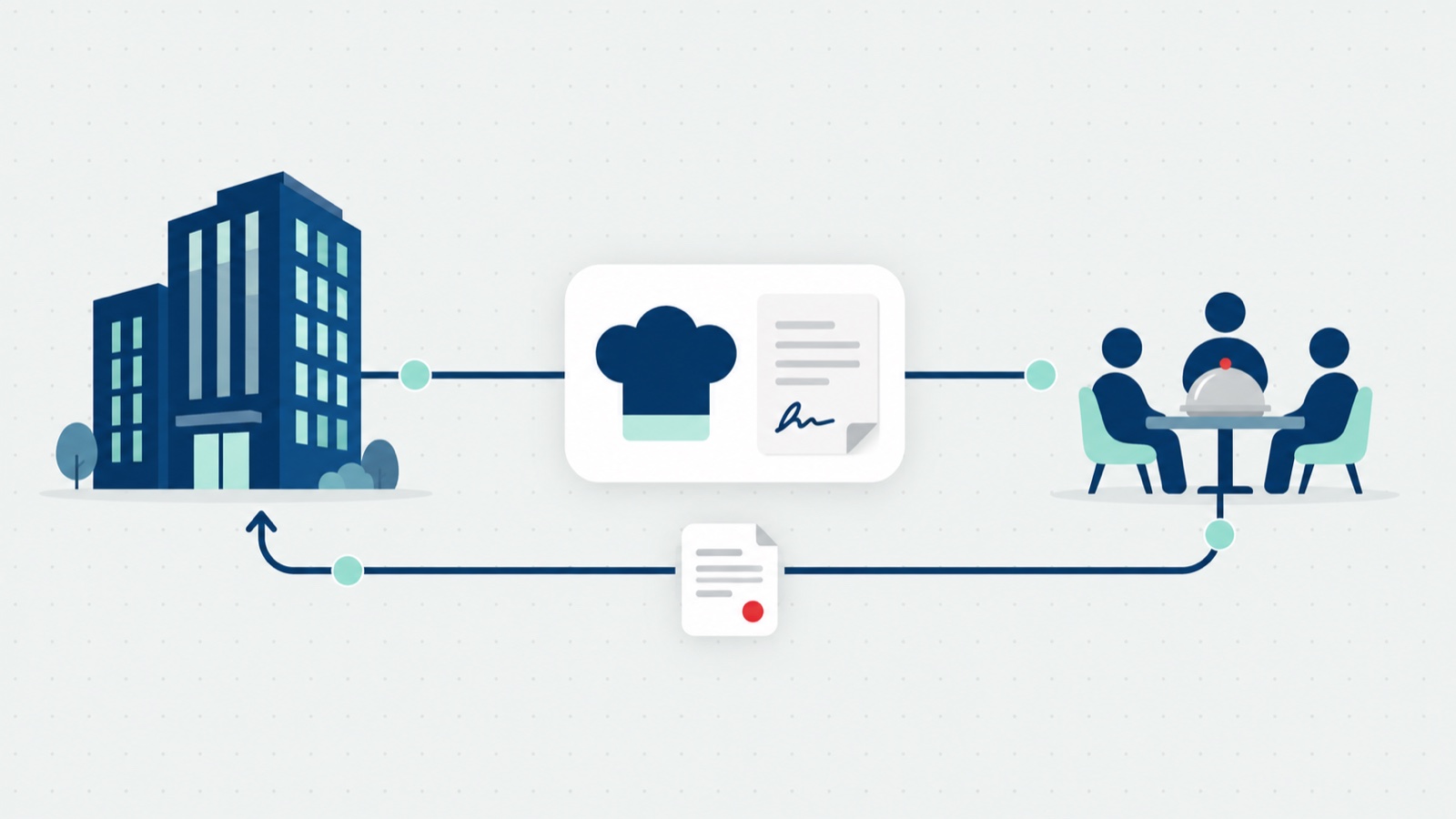
In App8’s view, the clean way to understand a corporate dining program is one sentence: the client company owns the program, and the foodservice operator runs it.
| The client company (host employer) | The foodservice operator | |
|---|---|---|
| Owns | The program’s purpose and budget, the meal subsidy policy, the space and usually the kitchen, and the contract with its service levels | The daily service: menus, staff, purchasing, food safety, the cafe and any grab-and-go, plus catering for meetings and events |
| Reviews | The operator’s reports at business reviews and at contract renewal | Its own results, site by site |
Who pays depends on the contract. On a management fee contract, the client company pays the operating costs plus a fee to the operator, and usually approves new costs. On a profit and loss contract, the operator pays the operating costs and keeps the sales. Our contract foodservice post explains both, in the operators’ own words.
Where catering fits
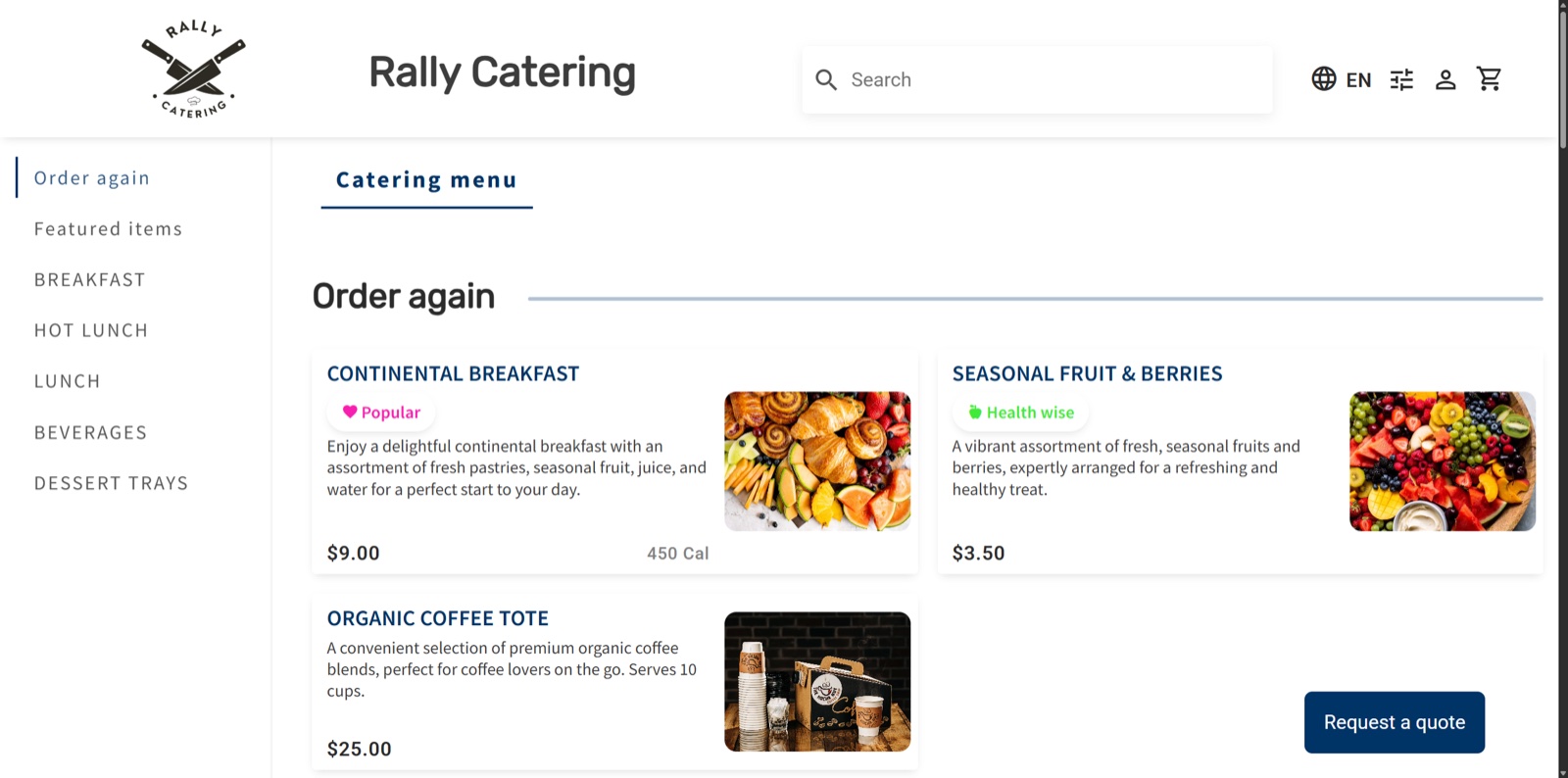
Catering is the part of the program that is ordered ahead. Departments order it for meetings, visitors, and events; each order has a date, a headcount, and a budget, and is billed to the department’s cost center or PO number; and it is the part of dining the client company’s leaders see.
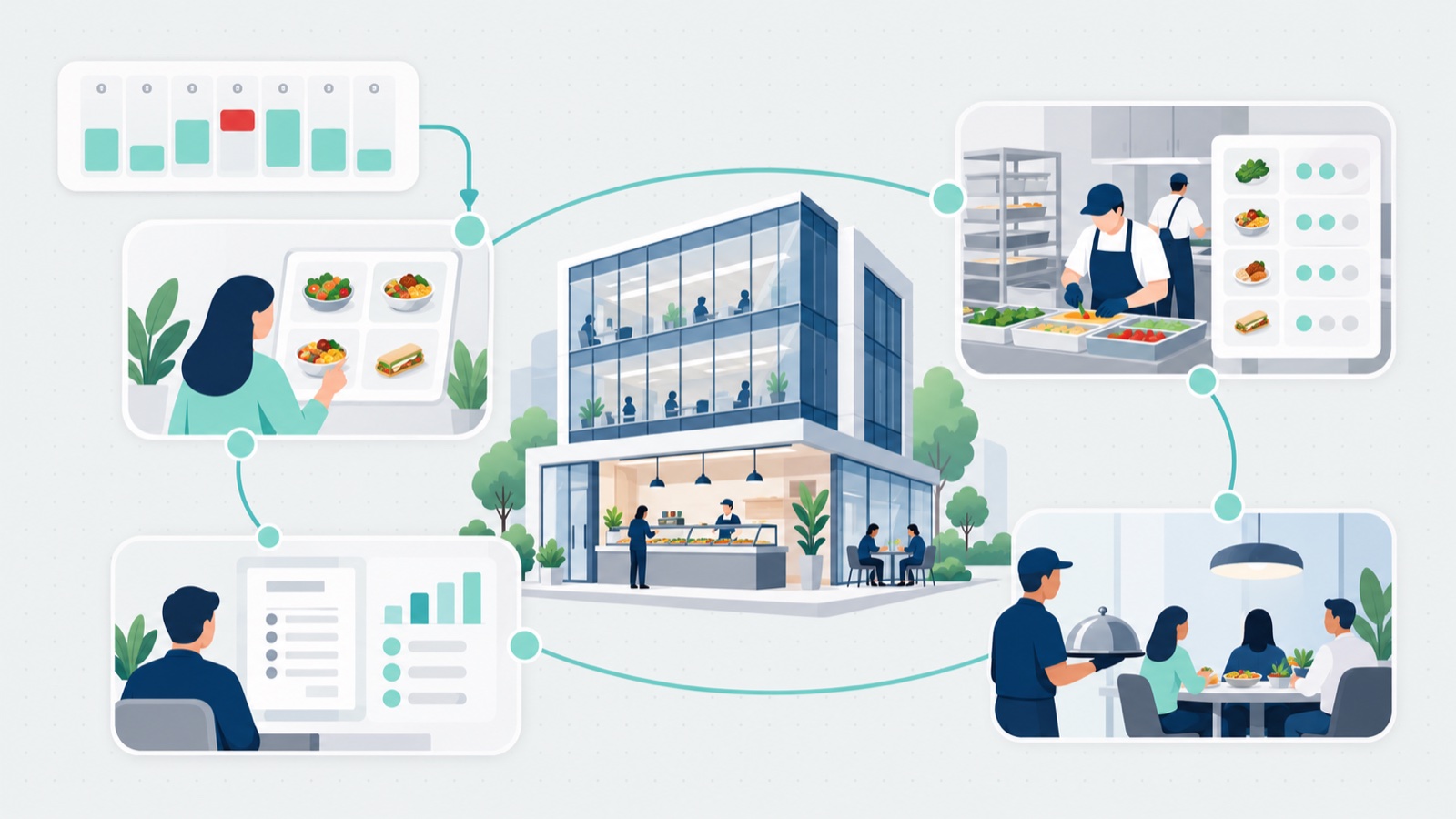
A catering order’s day, in App8’s view: the order comes in, ideally online; the team reviews and accepts it; the kitchen works from a production sheet; the order is delivered to the room; and the invoice goes to the client company, coded to the department. The Catering Operations Playbook breaks this into four parts: how orders come in, how they reach the kitchen, how they get paid, and who sets the ordering rules, and the full platform requirements behind those four jobs are in our catering management system guide.
What changed with hybrid work
More people are in, but the cafeteria is not keeping them. ezCater’s 2026 Workplace Cafeteria Report, a vendor’s survey of about 600 managers who oversee workplace cafeterias and 1,000 employees, found: almost two thirds of employees with an in-house cafeteria are in the office full time, up 15% from last year; 55% of the managers say cafeteria attendance is down; 68% say hybrid schedules make the cafeteria harder to run; just over half have cut operating hours; 75% of the managers say corporate dining needs to evolve or be reimagined, and 36% say companies should plan to close cafeterias in favor of other options.
Budgets are real money, managed deliberately. DoorDash’s 2026 Meal Impact Report, a vendor’s survey of 1,019 US office administrators, finance managers, and HR and benefits leaders, puts the average monthly meal budget at $425 per eligible employee, about $21 a day. 54% say meal program expectations have risen along with their cost; about three quarters reimburse meals wherever the employee works, 71% offer discounts and memberships, and 67% give meal credits or stipends.
And demand concentrates. We found no reliable 2025 or 2026 figure for pre-ordering or for pop-ups, the short-term food stands and rotating restaurant vendors some offices run. App8’s view: catering follows the office days. Meetings and team lunches pile onto the days people are in, so ordering ahead is what lets the kitchen plan for those peaks.
What host employers measure
For the cafe, the sources point to employee satisfaction, revenue, and operating costs, and satisfaction is where the gap shows: in ezCater’s survey, 87% of the cafeteria managers rate their cafeteria food good or excellent, while only 48% of employees agree, which the report calls a 12% drop from last year. In App8’s view, that gap is one reason the client company’s own employee survey carries weight at review time. Some contracts pay on these measures directly: Aramark, one of the largest foodservice operators, says in its annual report that some management fee contracts pay incentive fees measured by factors such as revenue, operating costs, and client satisfaction surveys, quoted in full in our contract foodservice post.
For catering, in App8’s view, the client company wants orders that arrive right and on time, bills with the right code, and spending it can see by department. The specific numbers to bring to a renewal, orders and spend by department, the share of orders from returning buyers, on-time and correct delivery, invoices with the right code the first time, and one improvement made this period, are in our catering sales post, under proving it to the host employer at renewal.
A great employee dining experience, and a bad one
From the published research, a great experience is variety, healthy choices, and value for money, with ordering that takes little effort.
What drives employees away. In ezCater’s survey, the top complaint is not enough variety, followed by too few healthy choices, prices too high, hours too limited, and lines too long. 29% stopped eating at the cafeteria because it got more expensive, and 42% want healthier food, up 15% on last year.
What employees want. Compass Group UK and Ireland’s Eating at Work report, an operator’s research drawing on work with Mintel among 30,000 workers worldwide, gives UK findings: 63% want onsite dining that matches high-street standards, value for money is the number one driver of choice, 52% prefer a human greeting against 10% who prefer digital, with loyalty programs and kiosk ordering seen as adding to the experience, and 38% name cutting food waste as the sustainability action with the most impact. Michelle Sanders, Chief Growth Officer at Compass Group UK and Ireland: “this is no longer just about sustenance - it’s about experience.”
And DoorDash’s report has a line worth keeping, as quoted by Facilities Dive: “the highest-rated meal programs aren’t the ones spending the most. They’re the ones managing the benefit most deliberately: refreshing it more often, extending it to employees wherever they work, and treating it as a business decision rather than a fixed perk.”
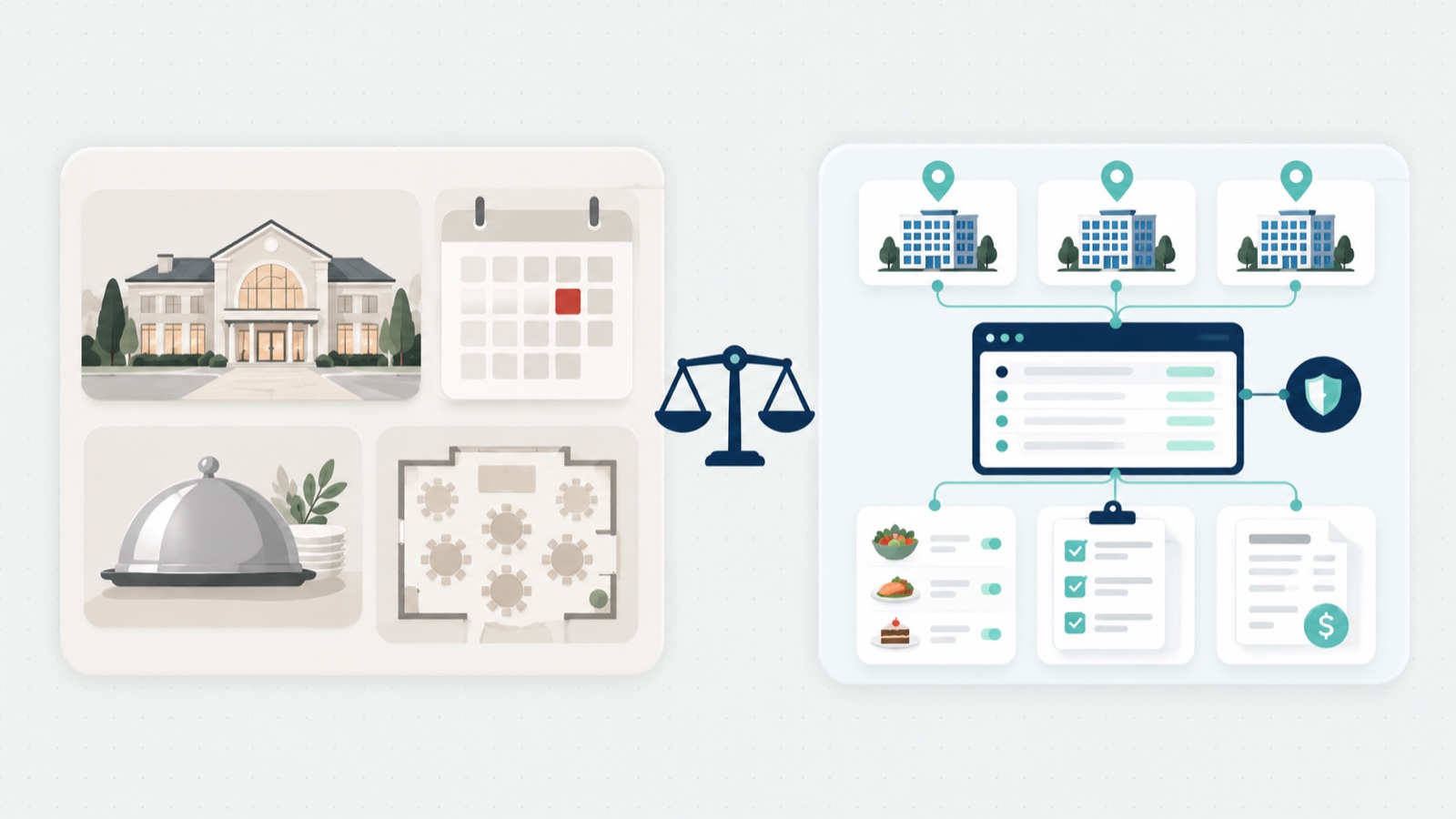
The catering version. In App8’s view: great is an order that arrives right and on time, a next order that is a single click to repeat, and a bill that carries the department’s cost center or PO number. Bad is a PDF menu, a phone call, and card numbers read out loud.
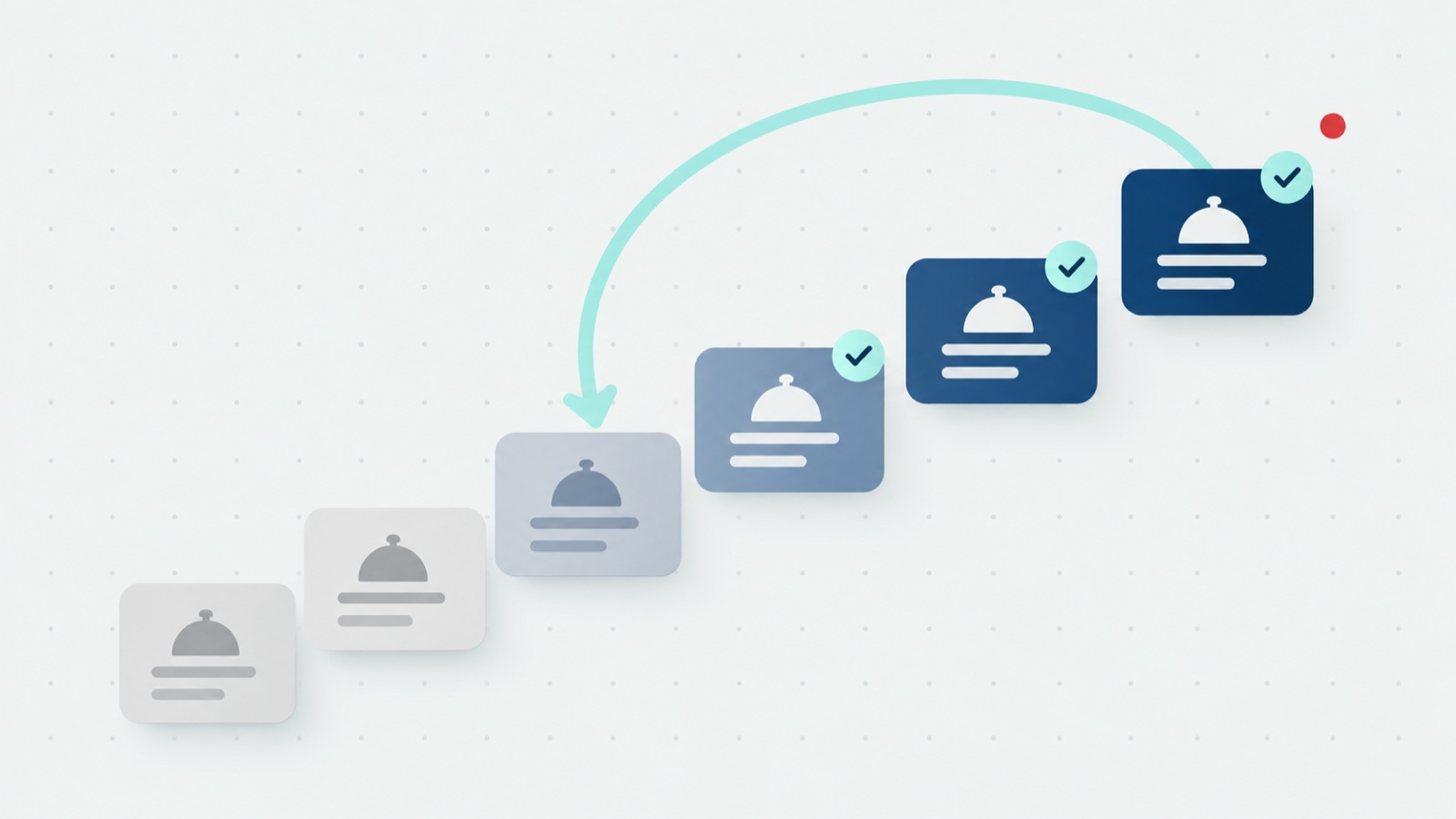
One anonymized example, from our published case study of a downtown corporate cafe that takes catering orders. Before: catering buyers browsed a static one-page PDF menu and called in, and staff took card numbers over the phone and keyed each order by hand. After: buyers order from a branded menu online, the order carries through to the invoice with no re-keying, and the invoice goes out when the operator marks the order complete. The result: catering orders rose 513% and catering revenue, the case study’s dollars processed, rose 526%; 70% of orders were repeat orders, and an estimated 67 hours a year of manual order-taking went away, about five minutes an order across 800 orders a year. In the page’s own words: “Year over year, January 2025 to January 2026. These are business and industry catering results at a single corporate cafe, reported by the operator.” It is one site’s result, not a typical outcome, and the full account is in the enterprise workplace catering case study. The site’s district manager, on the catering buyers: “They don’t phone me, they get their delivery… I click complete, and they get a receipt.”
Corporate dining technology: in use, and still missing
What some programs use now: kiosk ordering and loyalty programs, which employees in the Compass Group UK and Ireland research see as adding to the experience, and meal benefit platforms that set budgets and spending rules by day, time, and location, from DoorDash’s report. In App8’s view, at the sites that adopt it, online ordering takes over the standard catering orders that used to arrive by phone and email.
Still missing, in App8’s view, and this is where most programs have room:
- Catering is often the part still on email, phone, and PDF, even where the cafe has moved on. Our case study site ran it that way before it moved to Rally Catering.
- One view of catering across sites. Often, each site’s orders sit in its own inbox or spreadsheet.
- Billing that carries the client’s cost center or PO number from the order through to the operator’s accounting system, without re-typing.
- Spending the client company can see, broken down by department.
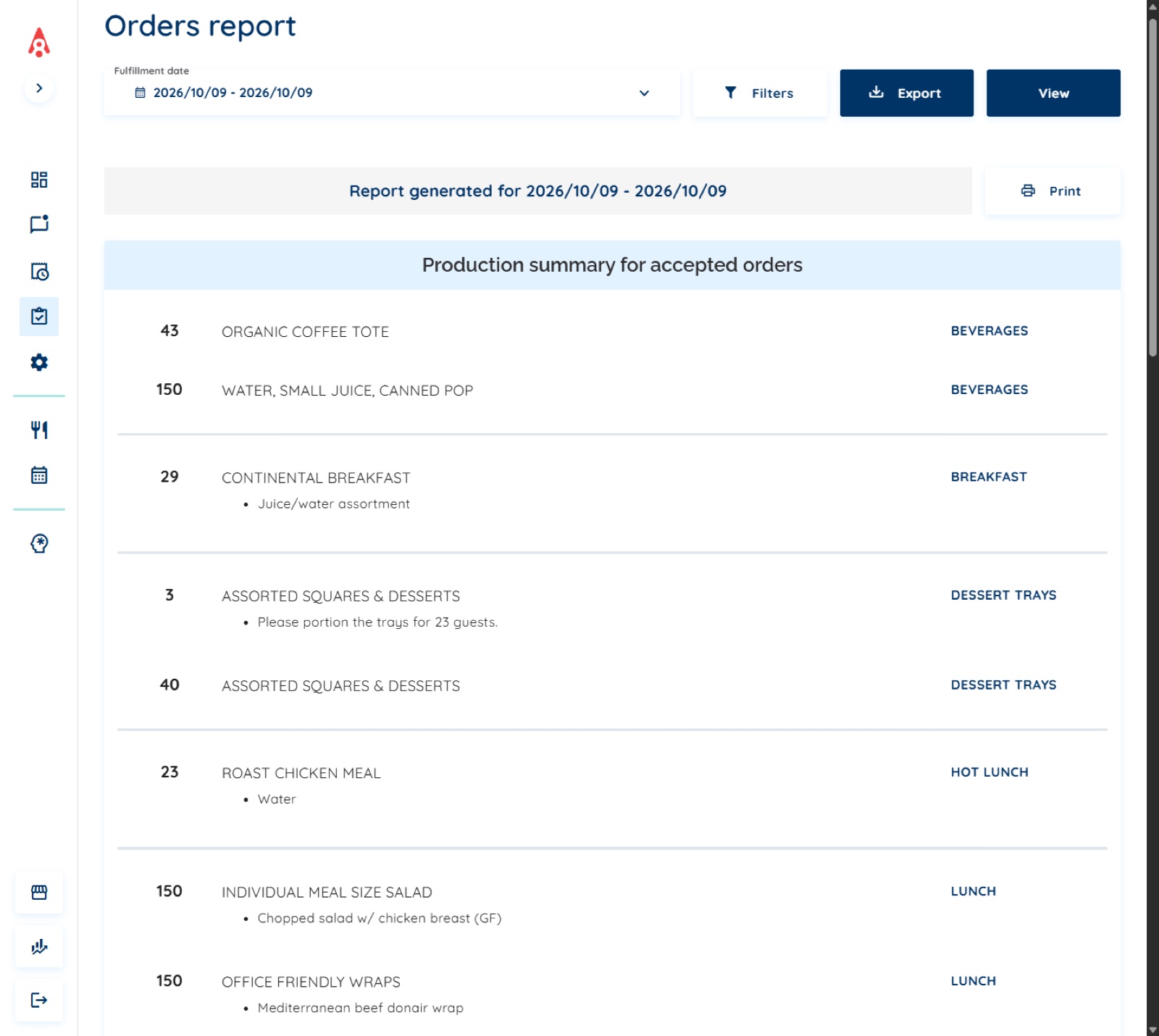
Where App8 fits, plainly: Rally Catering runs the catering side of a corporate dining program, the ordering, corporate catering events, invoicing, and sending what each client owes into the operator’s accounting system. App8 does not run the cafe’s checkout or kiosks. Where it sits among an operator’s systems is mapped in our food service management buyer’s guide.
Where to start
If you run the program, start by scoring the catering side, since it is usually the part furthest behind: the catering scorecard places it on the five-stage maturity model in 90 seconds. The Catering Operations Playbook carries the four jobs in full, free, with no sign-up. And if the catering in your program still runs on a PDF and a phone line, the case study above is what the other side of that looks like.
Frequently asked questions
What is corporate dining?
Corporate dining, also called workplace dining, is the food program a company runs for its people: the cafe or cafeteria, any grab-and-go, and the catering for meetings and events. The client company, the host employer, owns the program's purpose, budget, subsidy policy, and space, and usually hires a foodservice operator to run the daily service: menus, staff, purchasing, food safety, and the catering.
How has hybrid work changed corporate dining?
Attendance is up but concentrated. In ezCater's 2026 Workplace Cafeteria Report, a vendor's survey of about 600 cafeteria managers and 1,000 employees, almost two thirds of employees with an in-house cafeteria are in the office full time, up 15% from last year, yet 55% of managers say cafeteria attendance is down, 68% say hybrid schedules make the cafeteria harder to run, and just over half have cut operating hours. Meetings and team lunches pile onto the days people are in, which is why ordering ahead matters more than it used to.
What is the average corporate meal budget?
DoorDash's 2026 Meal Impact Report, a vendor's survey of 1,019 US office administrators, finance managers, and HR and benefits leaders, puts the average monthly meal budget at $425 per eligible employee, about $21 a day. 54% of respondents say meal program expectations have risen along with their cost, about three quarters reimburse meals wherever the employee works, 71% offer discounts and memberships, and 67% give meal credits or stipends.
What do host employers measure at business reviews and renewals?
For the cafe, the sources point to employee satisfaction, revenue, and operating costs, and satisfaction is where the gap shows: in ezCater's survey, 87% of cafeteria managers rate their food good or excellent while only 48% of employees agree. Some management fee contracts pay the operator incentive fees measured by revenue, operating costs, and client satisfaction surveys. For catering, in App8's view, the client company wants orders that arrive right and on time, bills with the right code, and spending it can see by department.
What separates a great employee dining experience from a bad one?
From the published research: variety, healthy choices, and value for money, with ordering that takes little effort. The top complaints in ezCater's survey are not enough variety, too few healthy choices, prices too high, hours too limited, and lines too long. For the catering side, in App8's view: great is an order that arrives right and on time, a next order that is one click, and a bill that carries the department's cost center or PO number; bad is a PDF menu, a phone call, and card numbers read out loud.