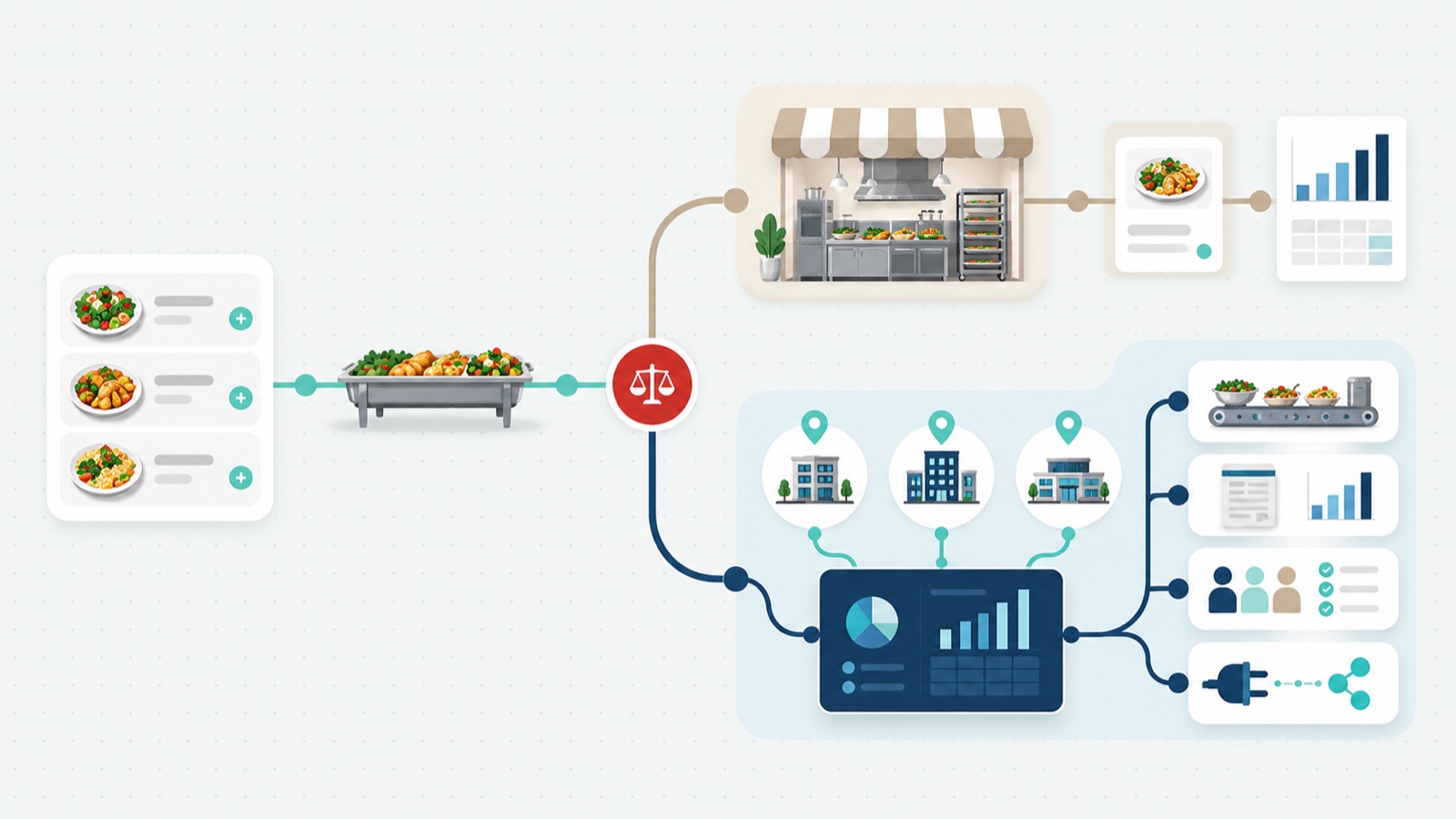

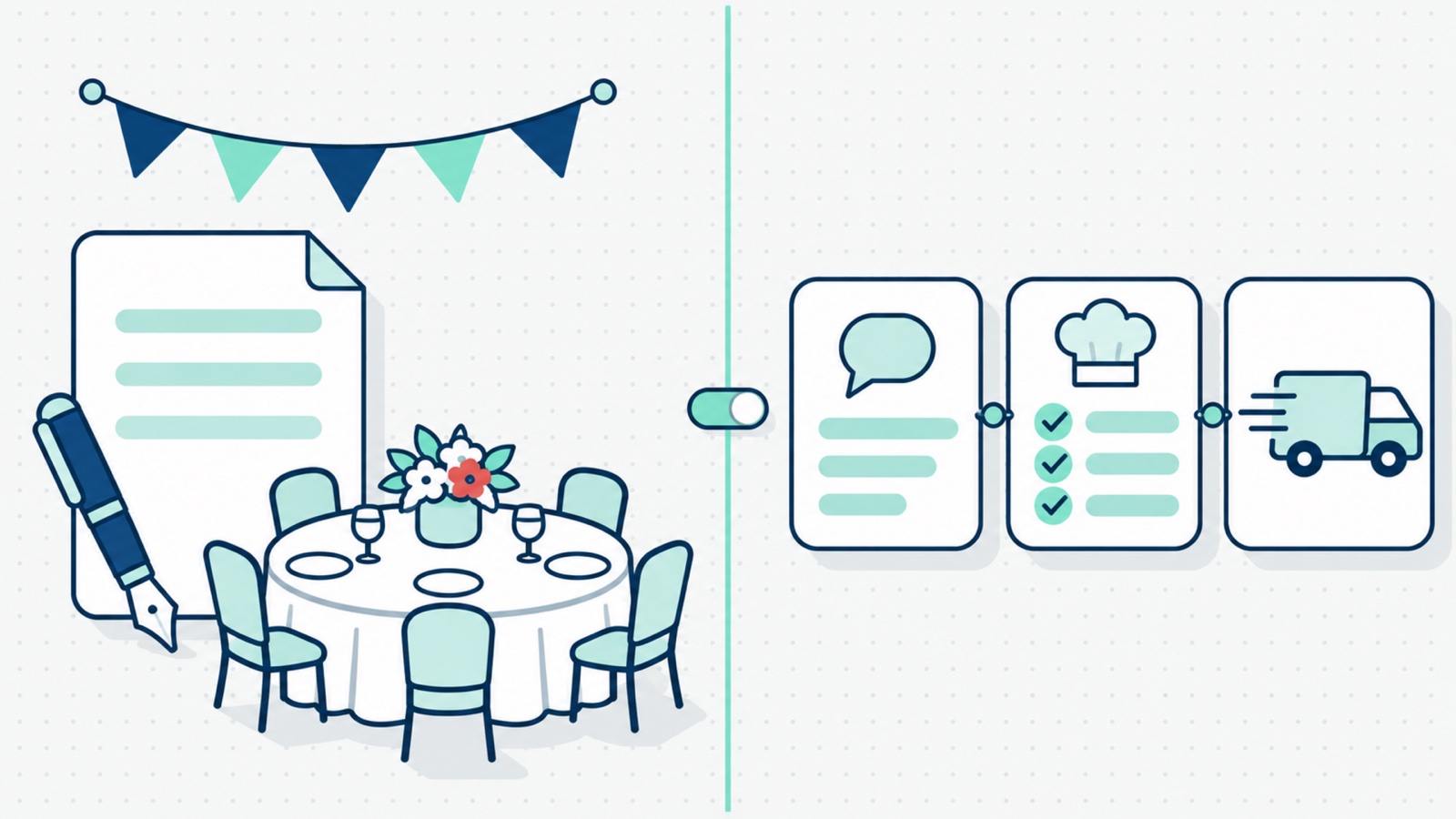
Total Party Planner alternatives get searched by two very different readers, and the honest first move is telling them apart. If your business is weddings, galas and social events, where every booking gets a proposal, a contract and a room layout, Total Party Planner may genuinely suit you, and this guide will say where it shines. If you’re an operator running catering across many sites, much of it for client companies, the calculus is different, and that’s the reader the comparison below is built for.
TL;DR
- Who Total Party Planner is: events-first catering software with a lineage back to 1997, proposals to BEOs to QuickBooks.
- Its pricing, as published: three plans, per-user fees, an ordering add-on, and a fee its page states for clients who don’t adopt TPP Pay.
- Where to look harder for a multi-site program: many sites, client billing, single sign-on, and cost as the program grows.
- How corporate catering events run in Rally Catering, with a plain list of what Rally Catering doesn’t do.
- The 8 best alternatives, each with pros, cons and published pricing, and who should stay.
The short version:
| Best for | Our pick |
|---|---|
| Weddings, galas and social events, proposal to contract to room layout | Total Party Planner, Caterease, Better Cater, CaterZen, or Curate |
| Events at a restaurant, hotel or venue | Tripleseat |
| Catering ordering across many sites, with corporate catering events inside it | CaterTrax, Spoonfed, or App8’s Rally Catering |
What Total Party Planner is, in its own words
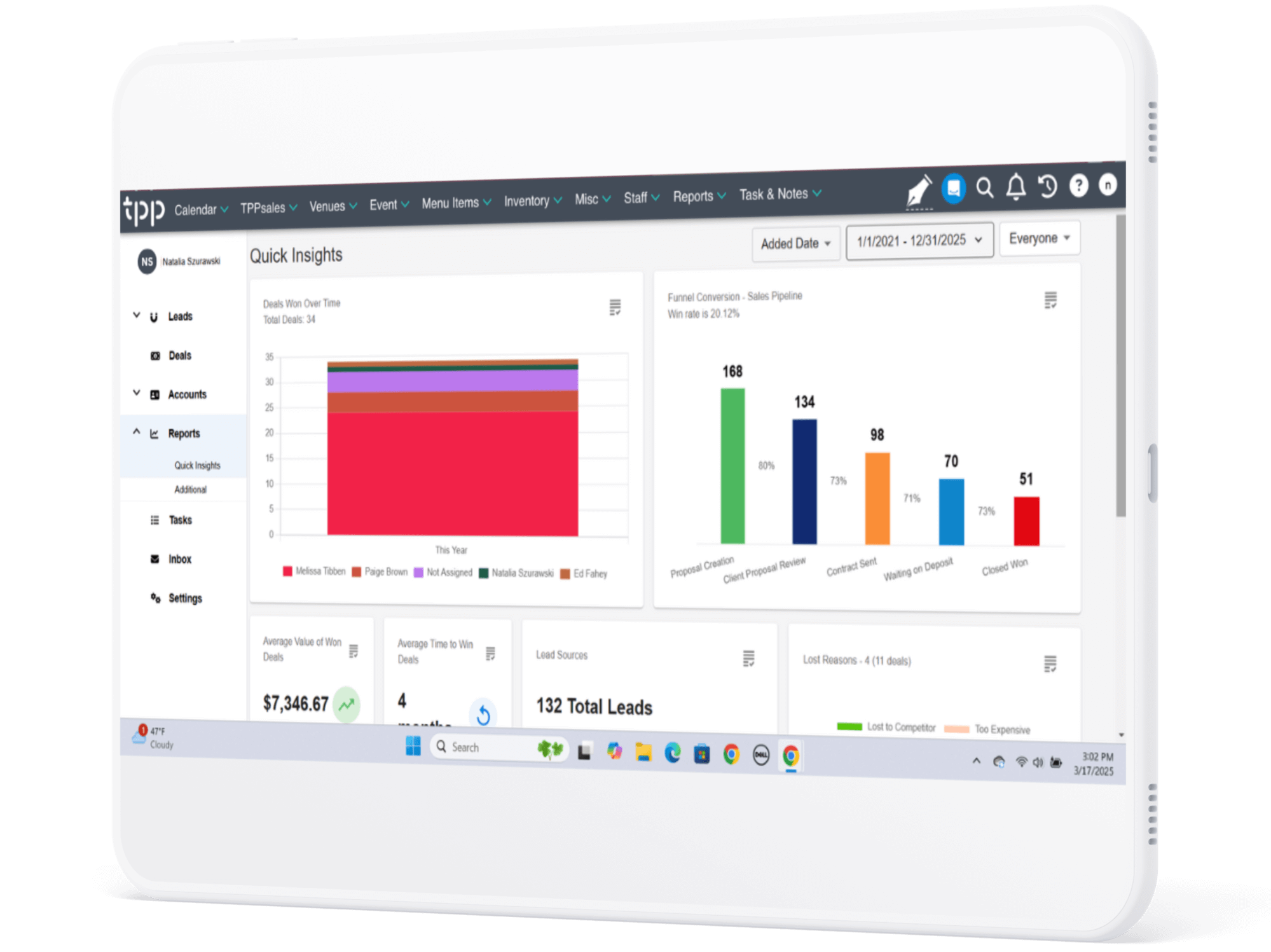
Total Party Planner describes itself as all-in-one catering software built by caterers, and there’s history behind it: founder John Cohen formed Computica, Inc. in 1997, began beta testing what is now Total Party Planner, and sold its first copy in 1998.
Its features page, as of November 2026, lists: “Generate proposals, BEOs, invoices, and express order forms in no time.” “Electronic Signature: for catering proposals and contracts Included!” “Allow deposits, partial payments, and program fees.” “Tailor catering events and organize room layouts with ease.” “Simplify the staff hiring process from start to finish.” “Client portal, chat, and notifications keep everyone connected.” “Compatible with QuickBooks Online and Desktop (USA & Canada).”
Total Party Planner pricing, as its page states it
As of November 2026, its pricing page lists three plans, each with a one-time “$299 Setup Fee”. Prices change, so treat this as a snapshot and check its pricing page.
| Plan | Price | Users included | Online ordering (TPPorder) |
|---|---|---|---|
| Nibble | $119 a month | 1 | +$149 a month |
| Feast | $299 a month | 2 | +$129 a month |
| Delicacy | $429 a month | 3 | +$119 a month |
Each extra user is “$25/month”, and the page adds: “A $200 monthly fee applies to clients who do not adopt TPP Pay.” We haven’t read what TPP Pay covers, so we quote the fee as its page states it and describe nothing else about it. Annual subscriptions get 10% off, and it offers a “30-day money back guarantee”.
Where it breaks for a multi-site corporate program
In App8’s view, Total Party Planner is built for a catering business that sells and runs events: proposals, contracts, deposits, BEOs, staff and room layouts. For a multi-site corporate program, four questions decide the fit, and its pages don’t describe the first three, so ask them in a demo rather than assuming.
- Many sites. Its pages don’t describe managing several locations, each with its own menus and rules, from one head office view.
- Billing client companies. Its pages don’t describe orders carrying a department’s cost center or PO number, the mechanics a B&I program runs on.
- Single sign-on and languages. Its pages don’t describe single sign-on or languages other than English.
- Cost as the program grows. Plans include one to three users, each extra user costs $25 a month, online ordering is an add-on, and a $200 monthly fee applies to clients who don’t adopt TPP Pay, as its page states. In App8’s view, a multi-site program with many staff users should model that before it signs.
How corporate catering events run in Rally Catering
In App8’s view the two products are built for different jobs. Total Party Planner is built to sell and run each event; Rally Catering runs corporate catering events inside the same ordering system the operator uses for everyday catering, across every site, live since September 2026.
From App8’s own product page: “When a client isn’t sure what to order, or plans a board meeting, an offsite, or a reception, they request a quote.” “Once they accept the quote, the order flows automatically to the same production sheets as your everyday orders.” The quote carries “Event timing, headcount, and staffing and equipment charges”, and the client accepts it online or confirms it with a deposit, producing “An automatically generated banquet event order (BEO) with the event timeline, ready to print or export.”
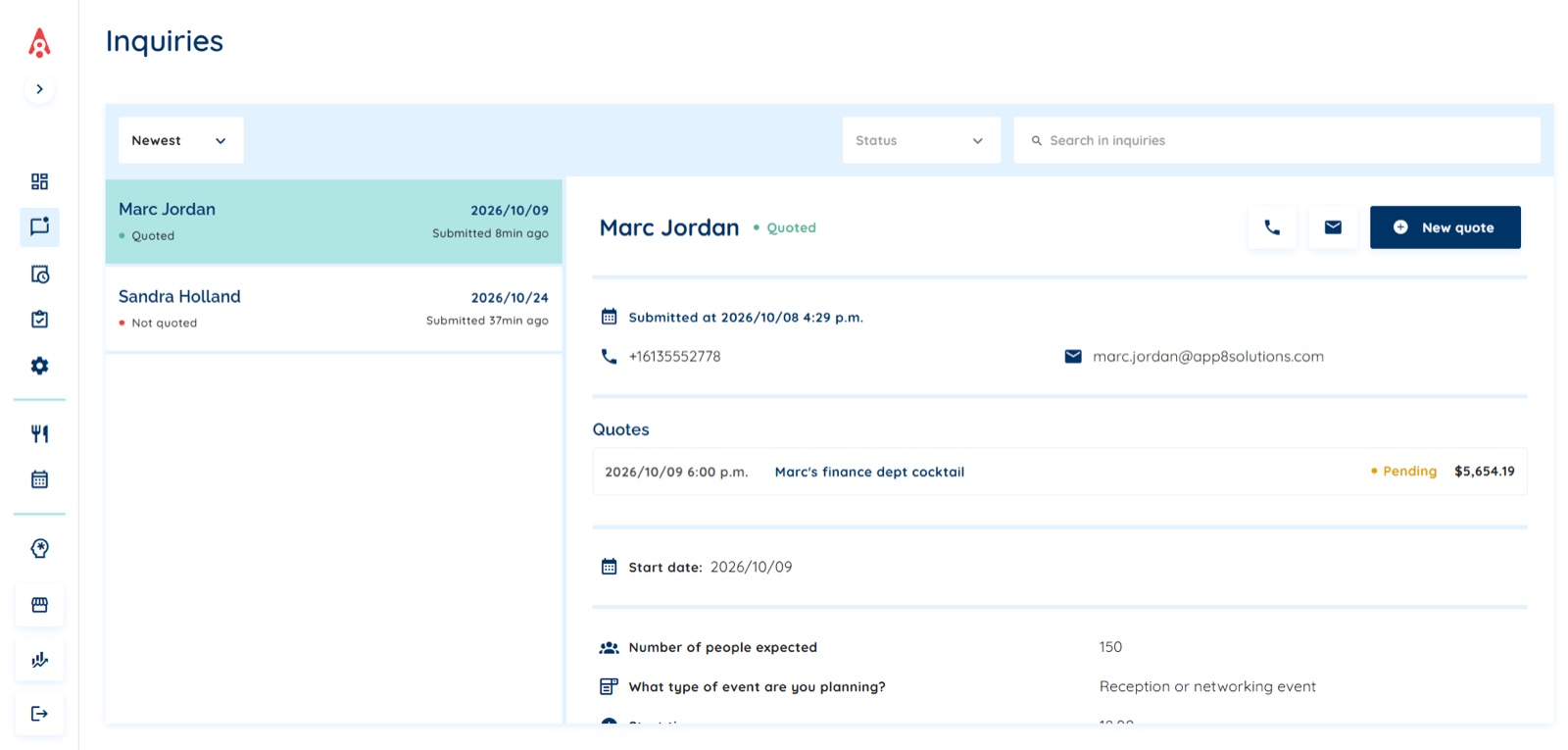
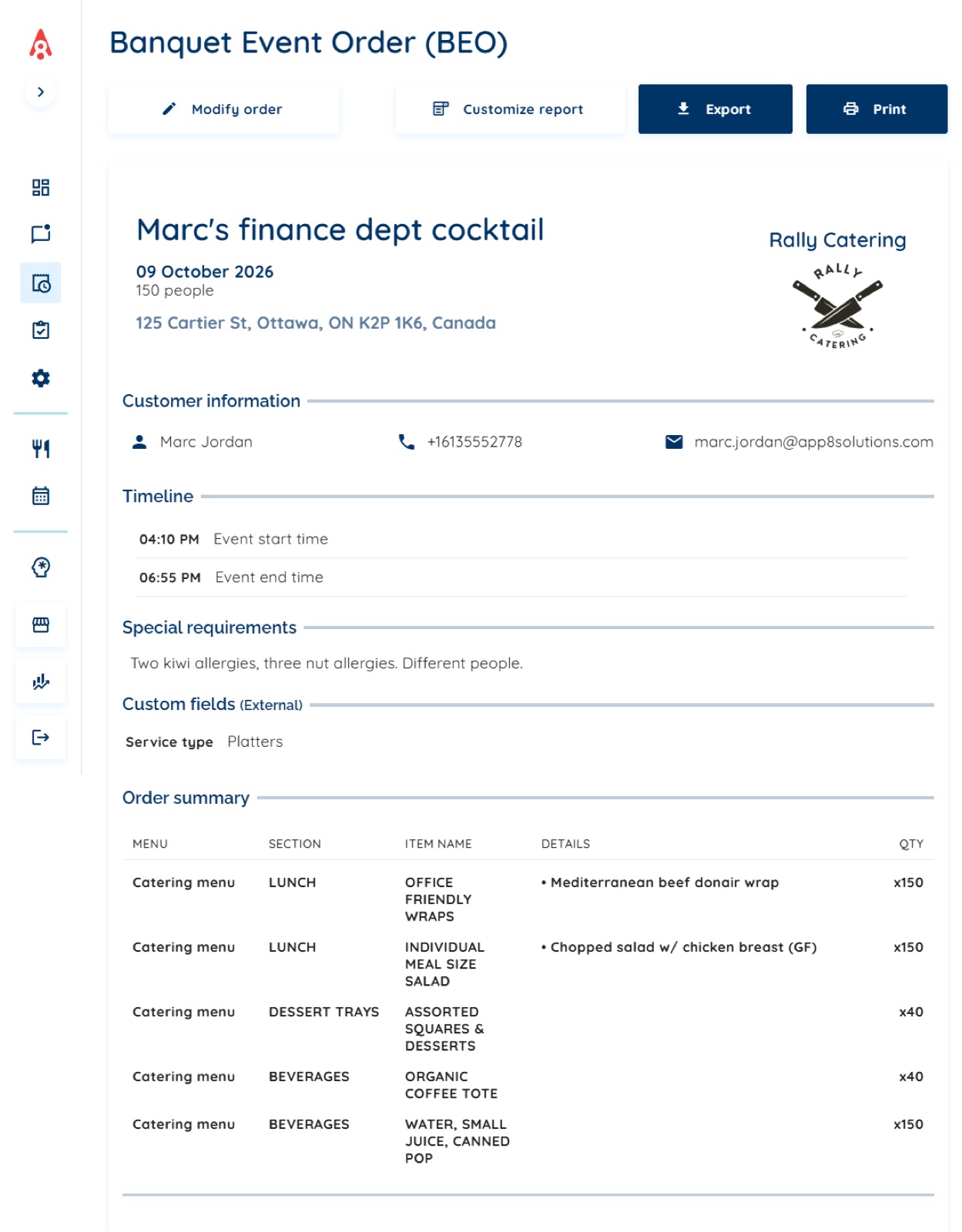
And the plain list of what Rally Catering doesn’t do, because an honest comparison names its own gaps: no floor plans, room layouts or seating charts; no staff scheduling or hiring; no rental or equipment inventory; no contracts or proposals with electronic signature. “Staffing and equipment charges” means priced lines on the quote, not staff or stock management, event orders are built from the operator’s existing menus, and weddings and social events are not Rally Catering’s market.
In App8’s view the fit splits cleanly. Rally Catering suits an operator where most of a client company’s catering is everyday orders employees place themselves, with some events that need a quote and a deposit, both in one system on the same production sheets. Total Party Planner suits a caterer whose business is weddings, galas and social events, where each booking gets a proposal, a contract, staff and a room layout.
The 8 best Total Party Planner alternatives, by use case
The entries are numbered for reading order, not ranked: every tool here has its place, each is described from its own pages as of November 2026, and the right pick depends on whether you sell events or run a multi-site catering program.
1. Rally Catering, best for multi-site programs with events inside them
Rally Catering runs corporate catering events inside the same ordering system the operator uses for everyday catering, as the events walkthrough above shows. If most of a client’s catering is everyday orders with some quoted events on top, this is the shape built for it.
Pros
- Events and everyday orders on the same production sheets, with the BEO generated from the accepted quote
- Client billing with cost centers, POs, invoices on terms and accounting reconciliation
- Many sites run from one head office view, menus copied rather than rebuilt
- English and French, for guests and operators
- Flexible pricing: a subscription scoped to each program, with no fee per user and no commission on orders
Cons
- No floor plans, seating charts, staff scheduling, rentals or e-signature contracts
- Weddings and social events are not its market
Pricing: flexible by design. Where this category prices per seat and per module, Rally Catering is a fixed platform subscription scoped to each program, billed monthly or annually, with no fee per user and no commission on orders, so the number depends on the program rather than the headcount. The place to get yours is a demo.
2. Caterease, best for the same events-first caterer, with published pricing
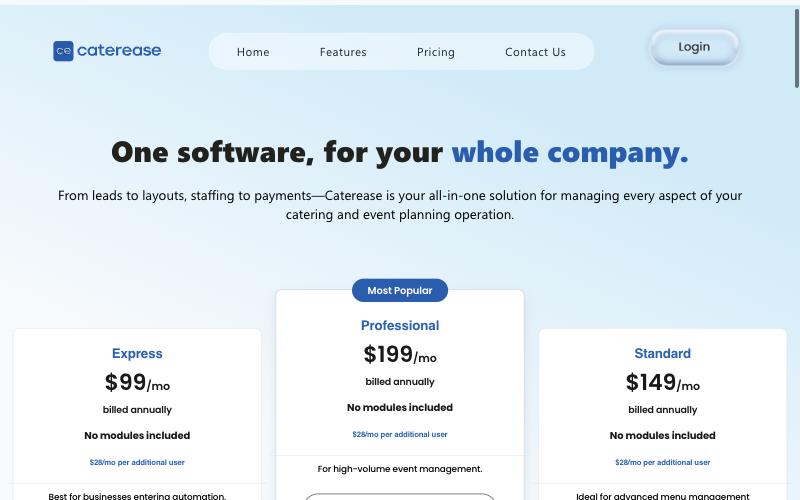
Caterease is catering and event management software covering leads, layouts, staffing and payments, and it publishes its plans. For a caterer comparing it with Total Party Planner, the pricing models line up closely enough to model side by side.
Pros
- Published pricing across three plans, add-on modules priced at $25 a month each
- Event depth from prints and layouts to payments
- Connects to floor plan and seating tools
Cons
- $28 a month per additional user, plus a one-time $200 per-user launch fee
- Its pages don't describe multi-site head office management or client cost-center billing
Pricing: Express $99, Standard $149, Professional $199 a month billed annually, as of November 2026. Our Caterease guide covers it product by product.
3. Better Cater, best for a single-location caterer watching its budget
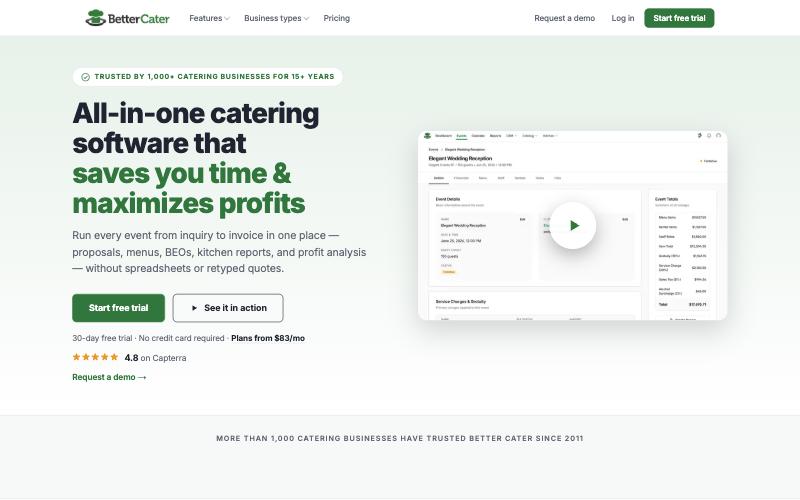
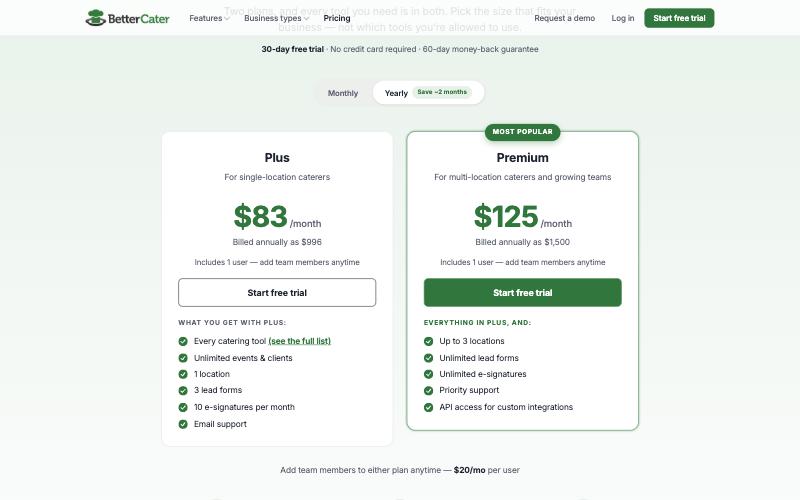
Better Cater describes catering software for proposals, events and BEOs, aimed from single-location caterers up to multi-location teams. Its two plans are published, both including one user with team members added per seat.
Pros
- Published pricing: Plus at $83 and Premium at $125 a month billed annually
- Proposals, BEOs, kitchen reports and profit analysis in one place, per its pages
- 30-day free trial and a 60-day money-back guarantee
Cons
- Premium covers up to 3 locations; a larger program outgrows it
- E-signatures are capped per month on the Plus plan
- Its pages don't describe client-company billing mechanics or single sign-on
Pricing: Plus $83 a month billed annually ($99 monthly), Premium $125 billed annually ($149 monthly), team members $20 to $25 a month per user, as of November 2026.
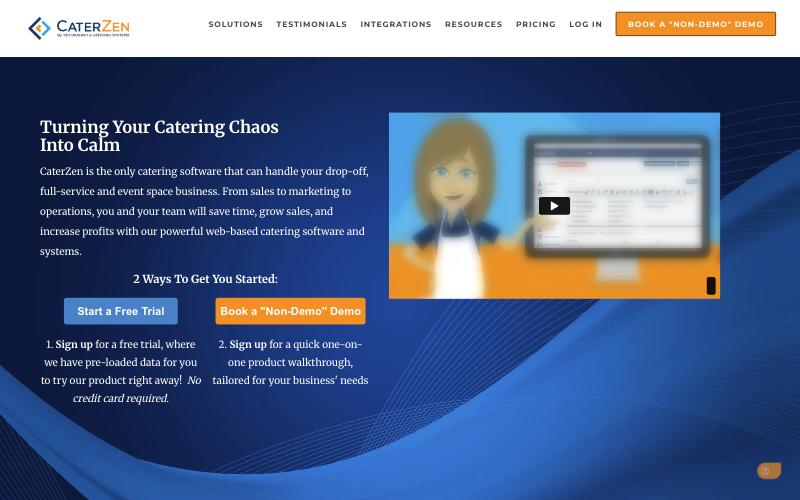
4. CaterZen, best for drop-off and full-service work with marketing built in
CaterZen covers drop-off, full-service and event space businesses, with sales and marketing tools on its upper plans. Its pricing is public, and its own welcome video is the fairest way to see it.
Pros
- Published plans with unlimited users and orders
- Marketing tools for growing repeat catering business
- Free trial with pre-loaded data, per its homepage
Cons
- A $499 one-time start-up investment, more past 5 locations
- Its pages don't describe cost centers, PO billing or single sign-on
Pricing: Pro $179, Pro Plus $199, Marketing Pro Plus $229 a month, Enterprise by quote, as its pricing page states as of November 2026.
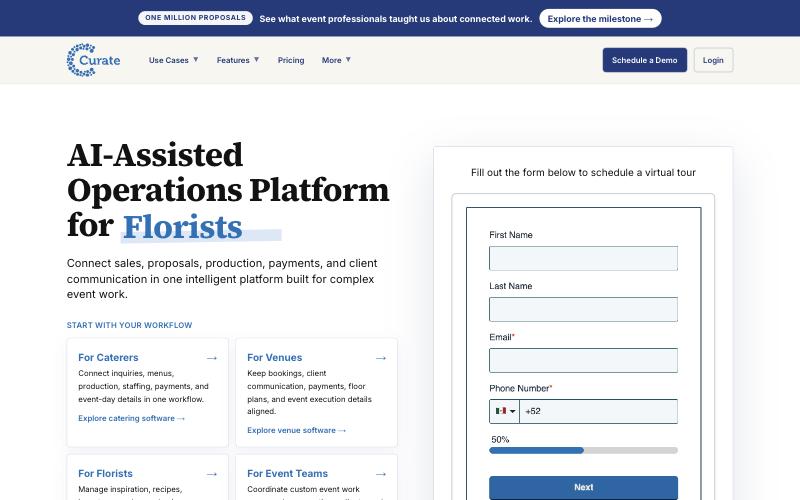
5. Curate, best for AI-assisted proposals across event businesses
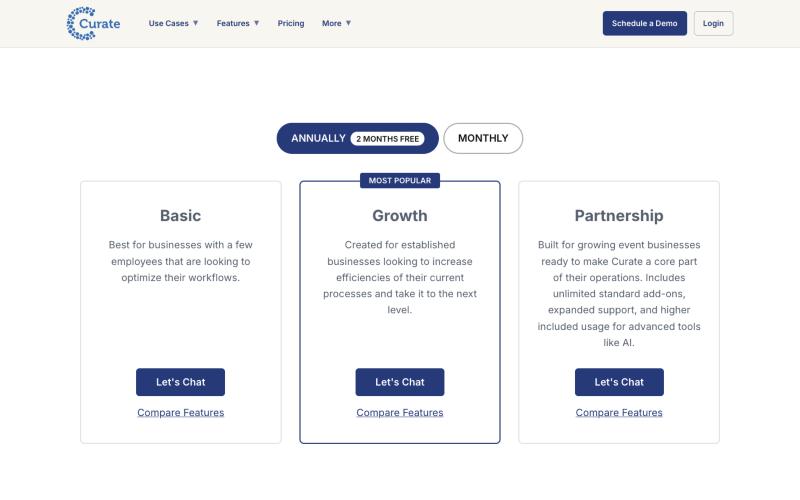
Curate describes an AI-assisted operations platform for event businesses: caterers, venues, florists and event teams, connecting proposals, production, payments and client communication. Its pricing page shows three plans without published figures.
Pros
- Proposals, production, payments and client communication in one platform, per its pages
- Serves caterers, venues and florists, so mixed event businesses fit
- AI-assisted workflow is the product's stated center
Cons
- No published pricing: all three plans are quoted through a conversation
- Its pages don't describe multi-site corporate ordering or client cost-center billing
Pricing: not published as of November 2026; its three plans each end in a conversation.
6. Tripleseat, best for events at restaurants, hotels and venues
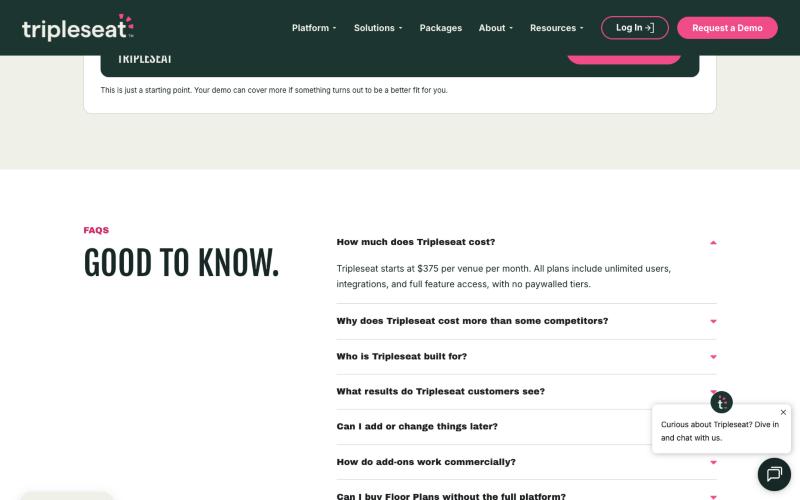
Tripleseat is event management software for restaurants, hotels and venues, from leads to room blocks. Its packages FAQ publishes the starting price plainly.
Pros
- Published starting price with unlimited users and no paywalled tiers
- Venue event sales depth: capture, book, plan and grow, per its platform pages
- Floor plans and self-serve booking as add-ons
Cons
- Venue-centered rather than catering-operations-centered
- Per-venue pricing needs modeling across many sites
Pricing: starts at $375 per venue per month, as its packages page states as of November 2026.
7. CaterTrax, best for contract-foodservice operators
CaterTrax is a catering and hospitality ordering platform built by caterers, sold in Independent and Enterprise tiers, with a large installed base in contract foodservice. Our CaterTrax guide gives it full length.
Pros
- Built for contract-foodservice back offices across many sites
- Its homepage publishes 5,000+ client locations and 5 million+ orders a year
Cons
- Operators report vendor-routed menu changes and per-seat and support costs
- No pricing published on its site
Pricing: not published on its site as of November 2026; Capterra lists US$150 starting, billed per feature.
8. Spoonfed, best for multi-site corporate catering operations
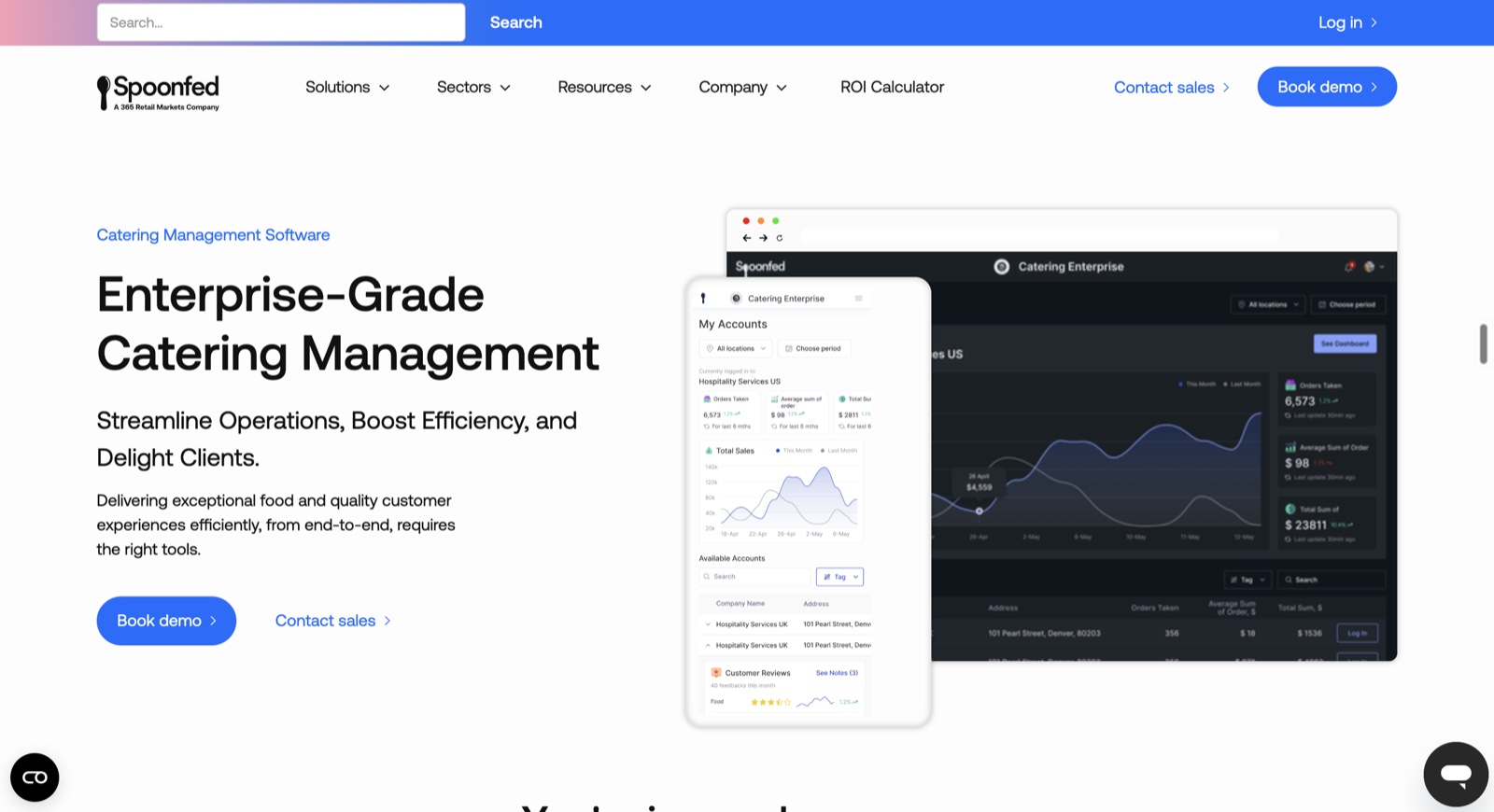
Spoonfed is catering management software for orders across many sites, strongest where group ordering matters, and our Spoonfed guide covers it in depth with its back-office video.
Pros
- Built for catering across many sites, with group ordering a named strength
- Features can be added and removed monthly, per its FAQ
Cons
- Quote-based pricing: a hosting fee with charges by usage and features used, no price list
- Its pages don't describe an events flow from inquiry to BEO
Pricing: quote-based, depending on sites, volume and platform use, as its cost page describes as of October 2026.
The quick comparison
| Product | Built for | Published pricing (as of November 2026) |
|---|---|---|
| Total Party Planner | Events-first caterers, proposal to BEO to QuickBooks | $119 to $429 a month plus add-ons and fees, above |
| Rally Catering | Multi-site programs with events inside them | Flexible: subscription scoped to the program, no per-user fees |
| Caterease | Events-first catering and event management | $99 to $199 a month billed annually, $28 per extra user |
| Better Cater | Single-location caterers up to 3 locations | $83 to $125 a month billed annually |
| CaterZen | Drop-off and full-service catering with marketing | $179 to $229 a month, Enterprise by quote |
| Curate | AI-assisted proposals for event businesses | Not published; three plans by conversation |
| Tripleseat | Events at restaurants, hotels and venues | From $375 per venue per month |
| CaterTrax | Contract-foodservice operators | Not published on its site |
| Spoonfed | Multi-site corporate catering operations | Quote-based, by sites, volume and features |
The hub guide maps the requirements underneath all of them.
Who should stay on Total Party Planner
In App8’s view:
- Caterers whose business is weddings, galas and social events, where each booking gets a proposal, an e-signed contract and a room layout.
- Businesses whose offering centers on the room or venue more than the food. Its pages list venues and banquet facilities among those it serves and say it lets you “organize room layouts”.
- Small teams of one to three users, which fit its plans.
- Caterers who run their books in QuickBooks Online or Desktop, which its page names.
On switching: we haven’t moved an operator off Total Party Planner, so there’s no switching story to tell, and we won’t invent one. One fact helps any switch in this category: Rally Catering imports menus from a structured CSV file, with English and French menus and accounting categories, so a team doesn’t retype its menus. If your catering is corporate and multi-site, start with the four questions above; if it’s weddings and galas, you were probably in the right place before you searched.
Frequently asked questions
What is Total Party Planner?
Total Party Planner describes itself as all-in-one catering software built by caterers. Its founder John Cohen formed Computica, Inc. in 1997 and began beta testing what became Total Party Planner, with its first copy sold in 1998. Its features page lists proposals, BEOs, invoices and express order forms, electronic signature for proposals and contracts, deposits and partial payments, room layouts, staff hiring, a client portal, and compatibility with QuickBooks Online and Desktop in the USA and Canada.
How much does Total Party Planner cost?
As of November 2026, its pricing page lists three plans, each with a one-time $299 setup fee: Nibble at $119 a month with 1 user, Feast at $299 a month with 2 users, and Delicacy at $429 a month with 3 users, with online ordering (TPPorder) as an add-on from $119 to $149 a month by plan. Each extra user is $25 a month, a $200 monthly fee applies to clients who do not adopt TPP Pay as its page states, annual subscriptions get 10% off, and it offers a 30-day money back guarantee. Prices change, so check its pricing page.
Who should stay on Total Party Planner?
In App8's view: caterers whose business is weddings, galas and social events, where each booking gets a proposal, an e-signed contract and a room layout; businesses whose offering centers on the room or venue more than the food, since its pages list venues and banquet facilities among those it serves and say it lets you organize room layouts; small teams of one to three users, which fit its plans; and caterers who run their books in QuickBooks Online or Desktop, which its page names.
What are the best Total Party Planner alternatives?
For the same events-first caterer: Caterease, Better Cater, CaterZen, or Curate. For events at restaurants, hotels and venues: Tripleseat. For catering ordering across many sites, much of it for client companies: CaterTrax, Spoonfed, or App8's Rally Catering, which runs corporate catering events inside the same ordering system as everyday catering. Our Caterease, CaterTrax and Spoonfed guides cover those three in depth.
Does Rally Catering replace an events-first tool like Total Party Planner?
For a multi-site corporate program, it runs the events that program actually has: a client requests a quote, accepts it online or confirms it with a deposit, the order flows to the same production sheets as everyday orders, and a banquet event order generates automatically with the event timeline. It does not do floor plans, room layouts or seating charts, staff scheduling or hiring, rental or equipment inventory, or contracts with electronic signature, so a caterer whose business is weddings and galas is better served by an events-first tool.