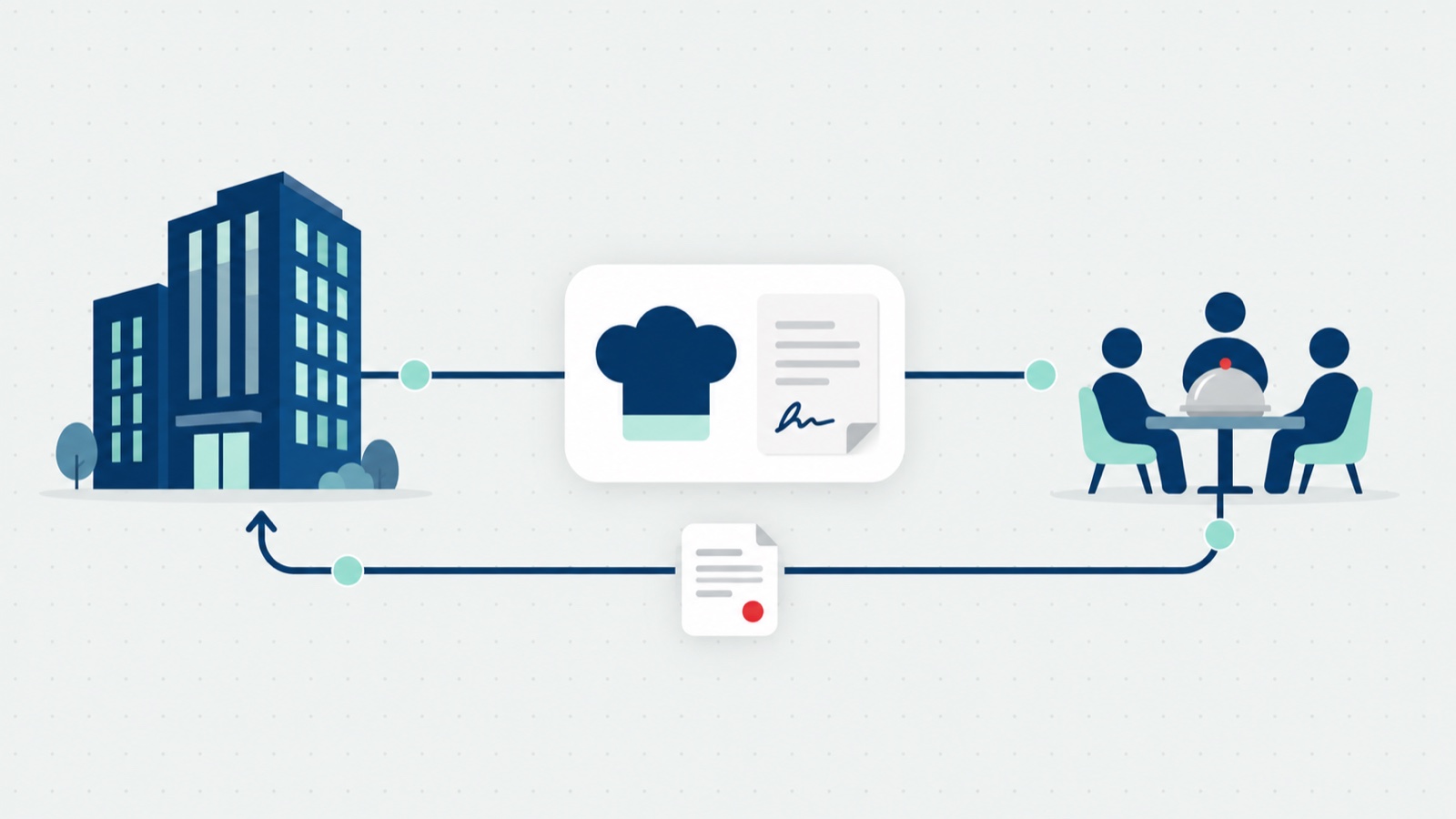

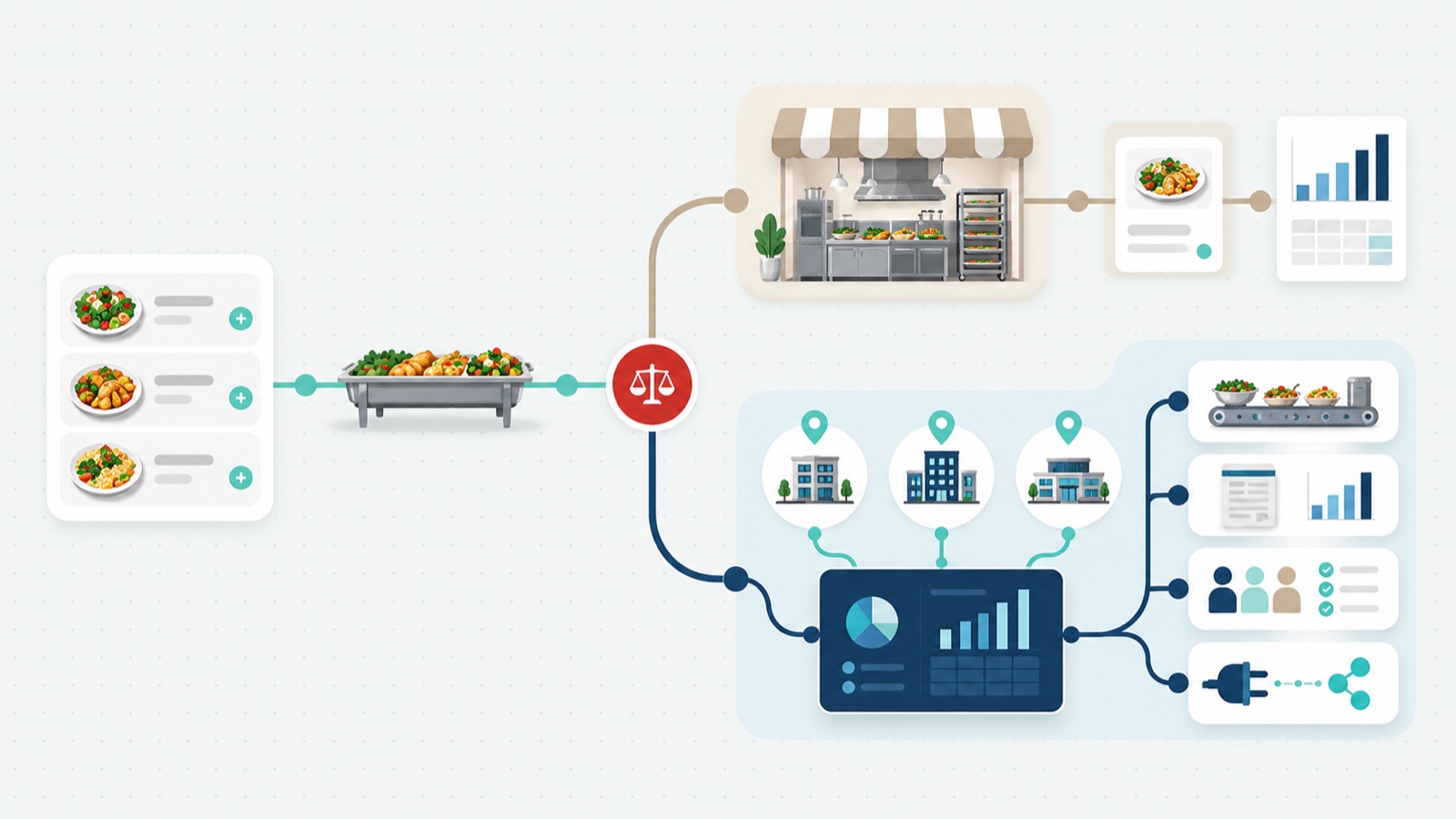
Spoonfed alternatives are a question we hear from a specific buyer: the operator running catering across many sites, mostly business and industry (B&I), who uses Spoonfed today or has it on a shortlist. This guide follows the same rules as our CaterTrax and Caterease guides: what Spoonfed does well stated plainly from its own pages, who should stay on it, the full field of alternatives mapped to the buyer each is built for, and the questions that actually decide an enterprise fit, with App8’s part described as one option rather than a verdict. Every Spoonfed fact here comes from its own pages or its owner’s announcement, all current as of October 2026.
TL;DR
- What Spoonfed is: B2B catering management software, Glasgow-born, owned by 365 Retail Markets since 2021, with ordering, a back office, and an enterprise Console.
- Where it fits well: arena suite catering, month-to-month terms, and many client accounts in one view.
- The three questions that decide a multi-site B&I fit: finance, corporate catering events, and who builds the rest.
- The alternatives by use case: fourteen real options mapped to the buyer each is built for, with Capterra ratings, and the public comparison: integrations, reporting, languages and contract terms, each from published pages.
- What decided real deals, stated as the points that carried them, and who should stay.
The short version, if you only read one table:
| Best for | Our pick |
|---|---|
| Multi-site B&I and workplace catering | App8’s Rally Catering |
| Group ordering at arena suites | Staying on Spoonfed |
| The contract-foodservice operator standard | CaterTrax |
| Weddings and social events | Caterease or Total Party Planner |
| Venue space and event bookings | Tripleseat, Event Temple, or iVvy |
| Drop-off catering at one or a few sites | HoneyCart, Better Cater, or Flex Catering |
| Grocery and perimeter-counter foodservice | FoodStorm |
| Orders brought to you | ezCater, a marketplace rather than software you run |
What Spoonfed is, in its own words
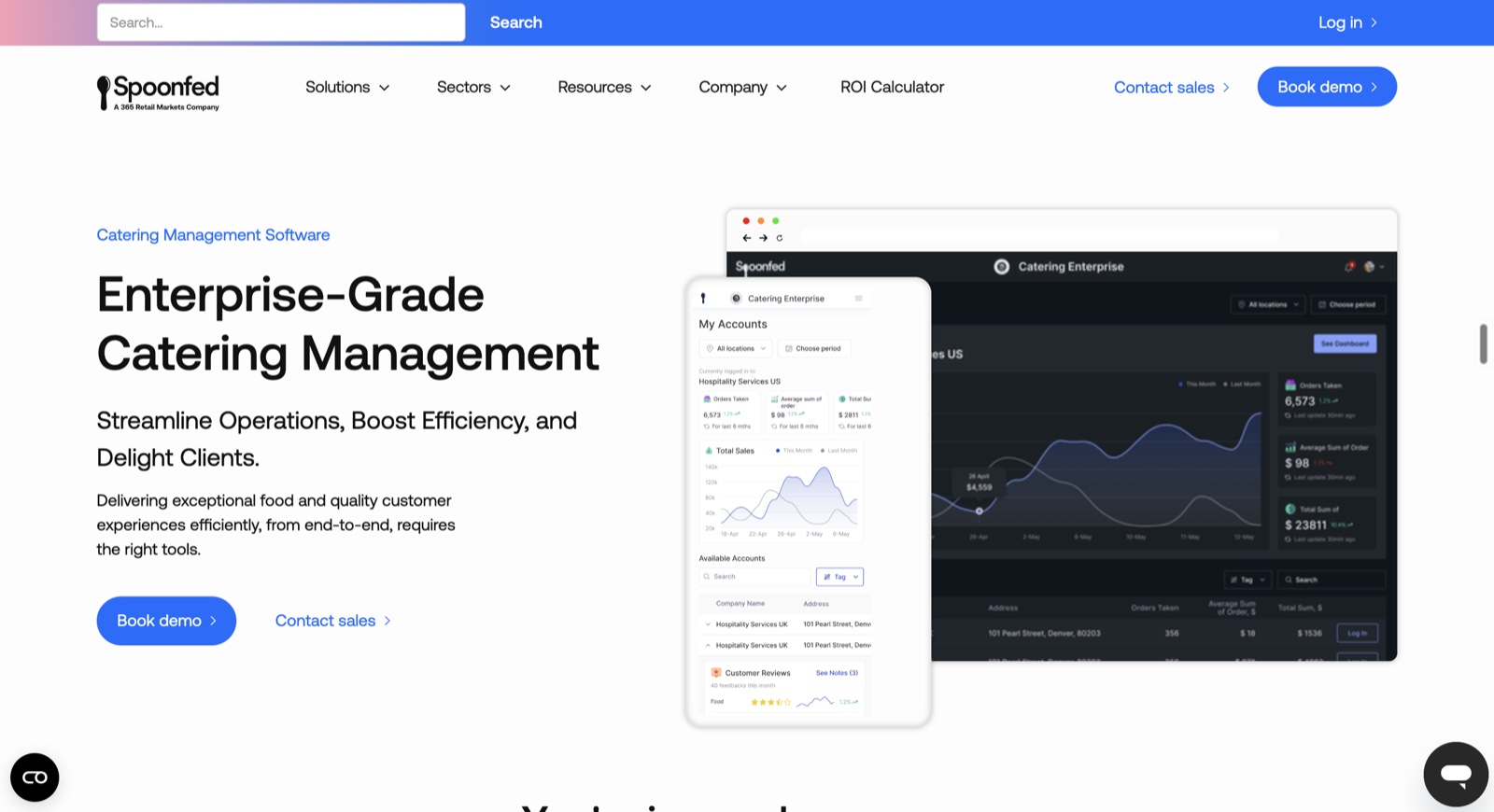
Spoonfed is catering ordering and management software. Its site, getspoonfed.com, calls it “Catering Management Software for B2B” and “Enterprise-Grade Catering Management”.
What its pages list, as of October 2026:
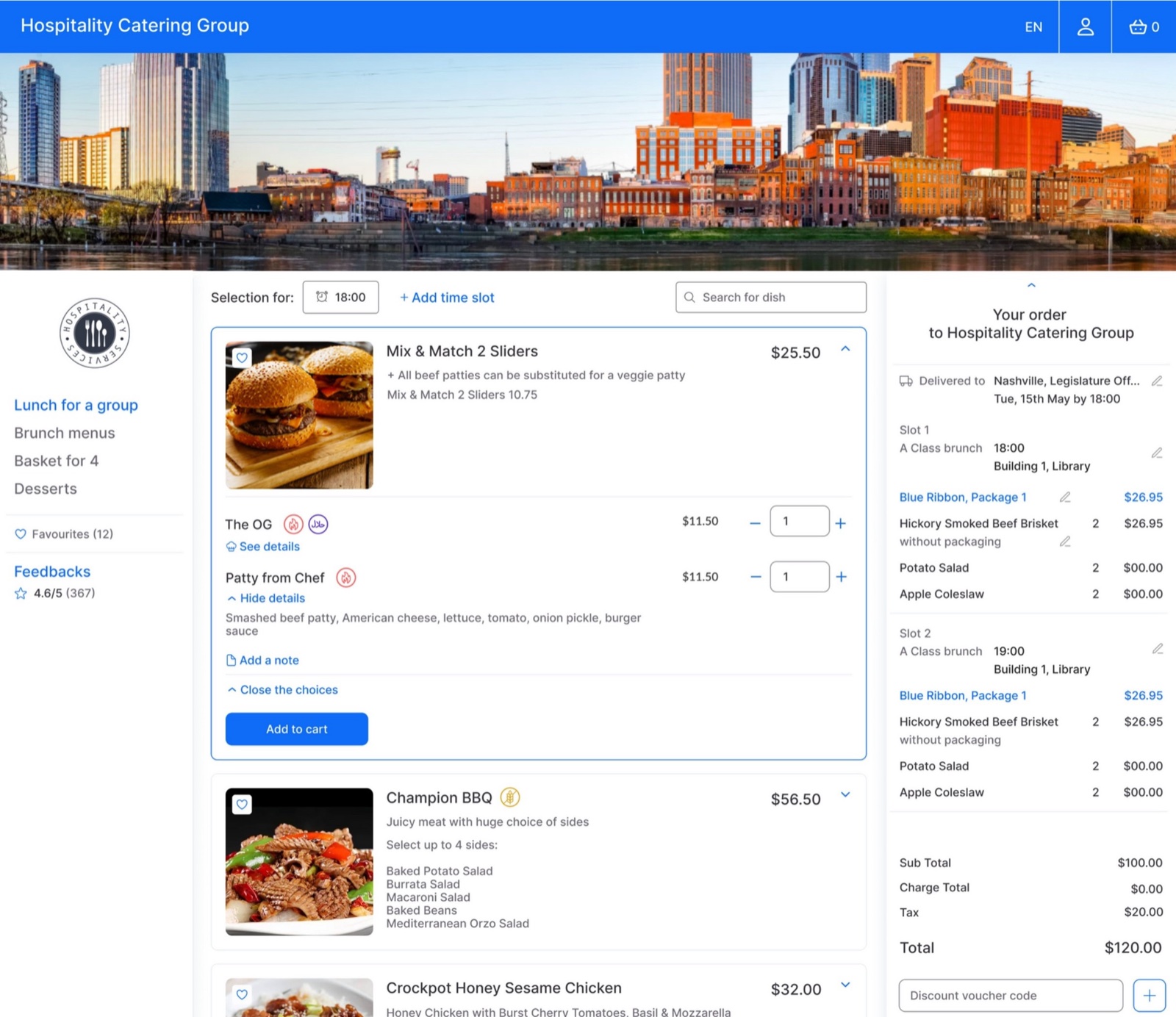
- Branded online ordering, with customers placing, editing and canceling their own orders, and “Single, multi and group” ordering.
- A back office with quotes, allergens, delivery scheduling, a calendar, a CRM and invoicing.
- On its enterprise page: a Console across accounts, single sign-on, user roles and permissions, multiple languages and currencies, and “Punch Out and ERP Integrations”.
- On its partners page: Xero, Oracle Financials and Opayo under accounting; Stripe, FreedomPay and Authorize.net for payments; Kafoodle for recipes; Google Maps, DoorDash and Orkestro for delivery; Access EPoS for point of sale (POS); and Mailchimp.
- In its FAQ: “There are no standard long-term contracts or commitments. Individual features can be added and removed on a monthly basis.” It charges “a hosting fee, and then charges apply to usage and features being used”, larger customers can have tailored terms, and we found no price list on its pages.
That is a real product with a real niche, which is why this guide starts with where it fits rather than where it doesn’t.
Where Spoonfed fits well
- Suite catering at arenas. App8’s view, from deals: Spoonfed has held up well in arena suite catering, and group ordering may be a reason. Its pages list group ordering and stadiums, which fits what we’ve seen.
- Month-to-month terms. Its FAQ says there are no standard long-term commitments. An operator that wants to add and drop features monthly gets exactly that.
- Many accounts in one view. Its Console gives “full view and management capability across accounts”, which suits an operator running many client accounts.
Three questions that decide a multi-site B&I fit
For a multi-site B&I program, we can’t point to a shortfall on Spoonfed’s own pages, so the honest framing is the three questions that decide the fit. Put them to any vendor, Spoonfed and App8 included.
1. How do catering orders reach the operator’s finance system? Spoonfed’s partners page names Xero and Oracle Financials, its FAQ adds CSV and SFTP export, and its enterprise page lists “Punch Out and ERP Integrations”. If the operator’s finance system is something else, such as JD Edwards, ask how the invoices get there and who reconciles them. Reconciliation is where catering programs quietly bleed hours; catering accounting software covers why.
2. How do corporate catering events run? Spoonfed’s pages list quotes in the back office. We didn’t find a flow on its pages that runs from an inquiry to a quote the client approves or secures with a deposit, then to a banquet event order (BEO). That doesn’t mean it doesn’t exist; it means you should ask to see that flow in a demo, end to end, because event-driven demand is one of the clearest growth levers a B&I account has.
3. Who builds the needs the standard product doesn’t cover? App8’s view: enterprise programs often carry needs the standard product doesn’t cover, such as single sign-on, a client’s own invoicing rules or a connection to an inventory system. Ask who builds those and how, because in contract foodservice, the operator’s national standard has to fit every account it wins.
The best Spoonfed alternatives by use case
Type “Spoonfed alternatives” into Capterra and you get fifteen products, with a sponsored placement on top and a couple of staffing tools mixed in that aren’t catering ordering at all. That’s the trouble with feature-similarity lists: they reward products that look alike on paper, which is exactly the comparison that fails enterprise buyers.
So here is the same field sorted the useful way: by the buyer each product is built for, with each vendor described from its own pages or its own Capterra listing, and our related guides linked where we’ve gone deeper.
A star rating alone is the weakest way to compare software, so the table carries three criteria: who each product is built for, what the pricing looks like, and the Capterra score with its review count. Pricing comes from each vendor’s own pricing page where one exists, otherwise from its Capterra listing, and we haven’t forced the prices into one unit, because these products charge on different bases for a reason.
One honest note before the table: read the review counts alongside the ratings. Tripleseat’s 576 reviews and App8’s 10 are different kinds of evidence, and the row we lead with has one of the smallest counts here.
| Product | Built for | Published pricing | Capterra rating (reviews) |
|---|---|---|---|
| App8 (Rally Catering) | Multi-site B&I and workplace catering | Fixed subscription scoped to the program, no fee per user, no commission; no public price list | 4.9 (10) |
| Flex Catering | Drop-off, event and restaurant catering | Capterra lists US$350 a month starting | 4.9 (12) |
| Event Temple | Hotel and venue sales and catering | Capterra lists US$249 a year starting | 4.9 (76) |
| Perfect Venue | Event management for restaurants and venues | Capterra lists US$99 a month starting | 4.8 (82) |
| CaterZen | A single-site caterer growing its book | US$179 to US$229 a month, enterprise by quote | 4.8 (55) |
| HoneyCart | Drop-off catering automation | Capterra lists US$99 a month starting | 4.8 (45) |
| Better Cater | Single-site events, proposals and BEOs | Capterra lists US$83 a month starting | 4.8 (36) |
| Tripleseat | Venue and restaurant event bookings | Not published; its Capterra listing shows none | 4.7 (576) |
| Total Party Planner | Weddings and social events | US$119 to US$429 a month, online ordering module extra | 4.7 (153) |
| CaterTrax | The contract-foodservice operator standard | Not published on its site; Capterra lists US$150 starting, billed per feature | 4.6 (128) |
| iVvy | Venue spaces, bookings and catering | Capterra lists US$250 a month starting | 4.6 (71) |
| Spoonfed | B2B catering; strongest, in our view, at arena suites | A hosting fee plus usage and feature charges; no price list on its pages | 4.5 (30) |
| FoodStorm | Grocery and perimeter-counter foodservice | Not published; contact the vendor | 4.5 (19) |
| Caterease | Weddings and social events | US$99 to US$199 a month billed annually, plus per additional user | 4.4 (111) |
Enterprise multi-site B&I: App8’s Rally Catering
Rally Catering is built for one buyer on this list: the operator running business and industry catering across many sites, where the decision turns on multi-site standardization and on receivables reconciling into the finance system the operator already runs. The three questions earlier in this post are that buyer’s checklist, and the comparison table below is the public evidence on each. The wider requirements picture is in what a catering management system has to do.
For that enterprise buyer, the realistic shortlist is usually Spoonfed, CaterTrax and App8, so here they are on the criteria that decide the deal rather than on a star score. Every cell is from the vendor’s own pages (Spoonfed’s as of this October, CaterTrax’s as of September) or App8’s own positions; where a vendor doesn’t publish detail, the cell says so rather than holding it against them.
| Criterion | Spoonfed | CaterTrax | App8 (Rally Catering) |
|---|---|---|---|
| Who it is sold to | "Catering Management Software for B2B", with an enterprise page and a Console across accounts | Independent tier and Enterprise tier | Enterprise and multi-location foodservice operators only |
| Finance and ERP | Xero and Oracle Financials named; CSV and SFTP export; "Punch Out and ERP Integrations" | Enterprise tier states integration with POS and finance systems | Receivables reconcile into the operator's accounting system; JD Edwards is a named example |
| Corporate catering events | Quotes in the back office; an inquiry-to-deposit-to-BEO flow not found on its pages | Event tracking and multi-calendar views on its pages | The inquiry, a quote the client approves or secures with a deposit, and the BEO, in one system |
| Languages | Multiple languages and currencies | Not stated on its homepage | English and French for guests and operators, written to meet Quebec's requirements under Bill 96 |
| Commercial model | A hosting fee plus usage and feature charges, month to month; no price list found | Not published; Capterra lists US$150 starting, billed per feature | Fixed subscription scoped to the program, no fee per user, no commission on orders |
| Group ordering | "Single, multi and group" ordering | Not a claim we checked on its pages | Not listed on App8's pages |
The operator standard: CaterTrax
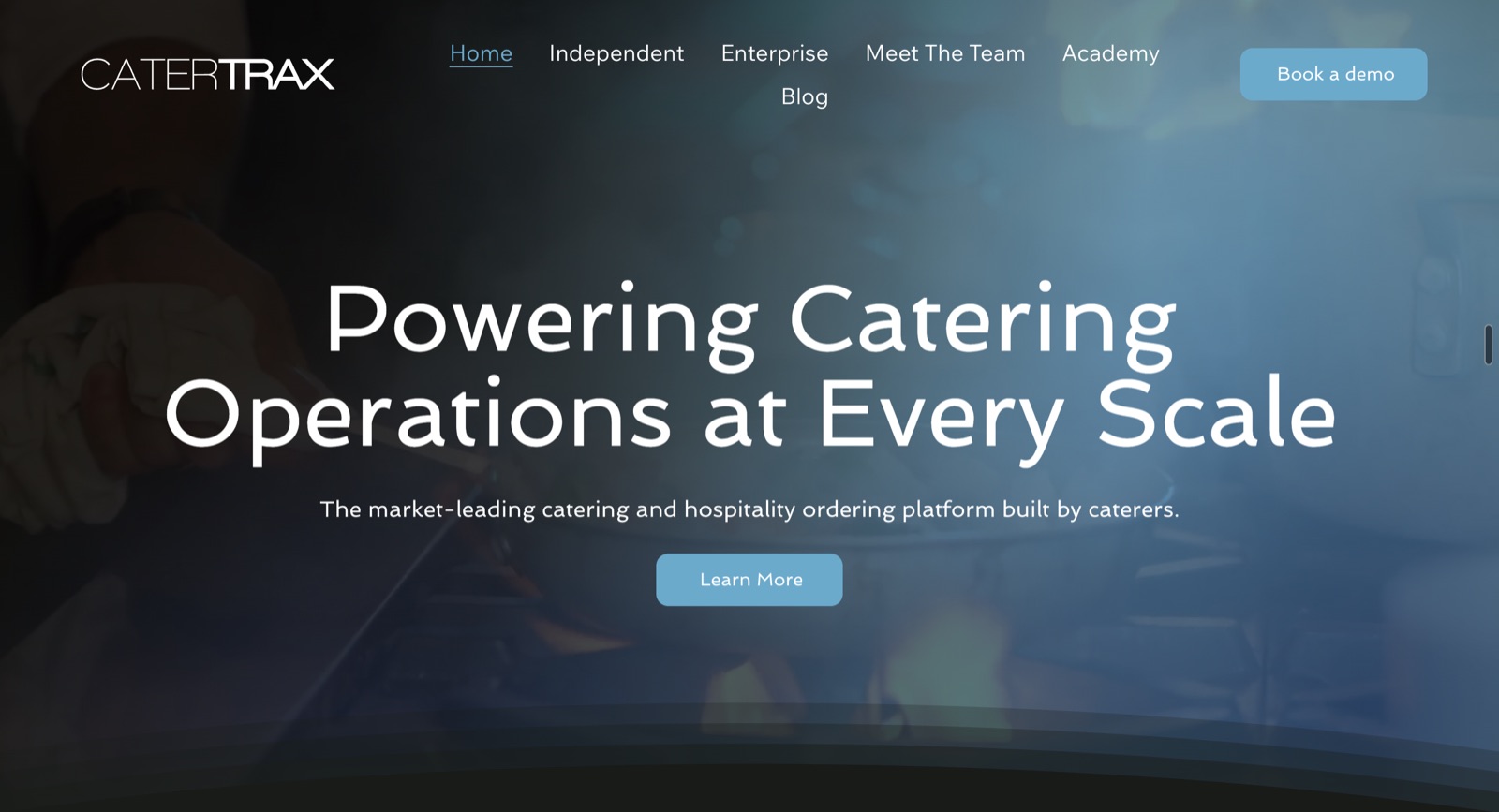
CaterTrax is the incumbent most contract-foodservice operators have met, with an installed base to match its 128 reviews, and an Independent tier for single sites. If your shortlist is CaterTrax-shaped, our CaterTrax alternatives guide gives it its due at full length, including when we’d tell you not to switch.
Events-first: Caterease and Total Party Planner
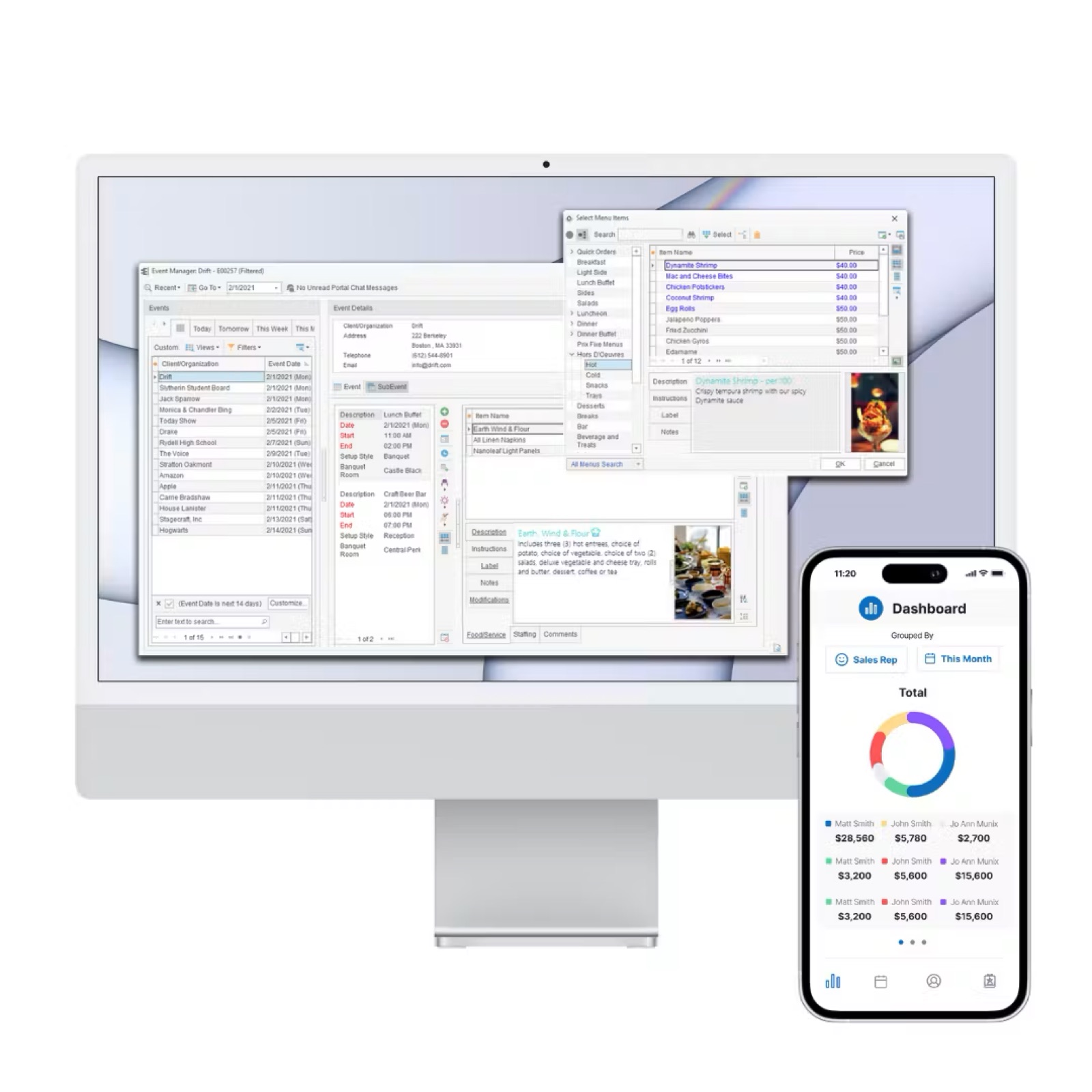
If the business is weddings and social events, where every booking gets a bespoke menu and a tasting, these two are the fit: Caterease calls itself an all-in-one solution for catering and event planning, and Total Party Planner builds around proposals, contracts and deposits. Our Caterease guide has the full comparison, floor plans included.
Venue and event bookings: Tripleseat, Perfect Venue, Event Temple and iVvy
These sit closest to Spoonfed’s arena strength, but they sell a different job: the venue’s sales pipeline and spaces rather than an operator’s catering ordering. In their own Capterra listings: Tripleseat enables clients to book events across “on-premise, full-service, pick-up, and drop-off catering”; Perfect Venue organizes “all event tasks in one place for catering and restaurants”; Event Temple calls itself sales and catering software that connects “with hundreds of web apps”; and iVvy manages “spaces, bookings, and catering in one place” for venues. If what you need is booked events and managed spaces, evaluate here; if what you need is suite hosts ordering against a menu, that’s the group-ordering job where Spoonfed has held up.
Drop-off and single-site: HoneyCart, Flex Catering, Better Cater, CaterZen and FoodStorm
The strongest tier for one kitchen and one book of clients. From their own listings and pages: HoneyCart positions on “Simple features built just for Drop-Off Catering” and names Breads Bakery NYC across five locations as a customer; Flex Catering describes itself as all-in-one software for orders, events, payments, proposals and deliveries, for drop-off, event and restaurant catering; Better Cater covers “events, proposals, invoices, BEOs, production documents, shopping lists, packing lists, and profit analysis”. CaterZen adds a sales-and-marketing CRM around the caterer’s client book, and FoodStorm, now an Instacart company, has leaned toward grocery and perimeter counters. The common ceiling is the one our CaterTrax guide describes: a tool built for one site treats your second site as a copy, and the breaks come at multi-site reporting and clean receivables, which is its own discipline.
Marketplaces: ezCater
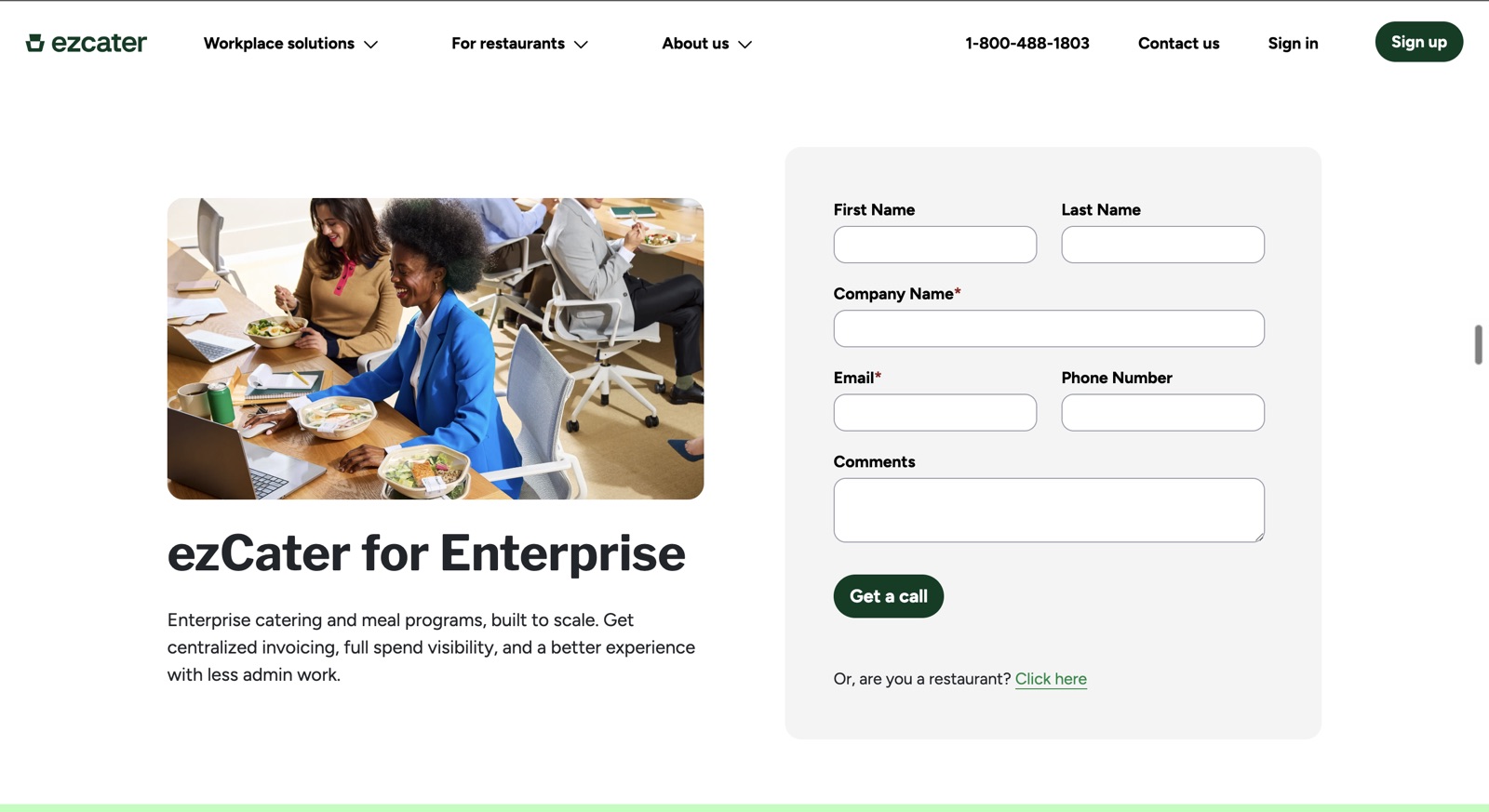
ezCater brings demand with it, which is the point, and takes a different economic shape in return: orders and restaurants arrive from its network, on its economics. If your orders come from your own buildings and your own corporate clients, you are buying software, not a channel.
Spoonfed vs Rally Catering: what we can state publicly
Every Spoonfed cell below is from its own pages or its owner’s announcement, all current as of October 2026. Where a cell says we didn’t find something, that means we didn’t find it on its pages, not that it doesn’t exist.
| Spoonfed | App8 (Rally Catering) | |
|---|---|---|
| Owner | 365 Retail Markets, since 2021 | App8 Inc., Ottawa, Canada |
| Finance and ERP | Xero and Oracle Financials named; CSV and SFTP export; “Punch Out and ERP Integrations” | Orders reconcile into the operator’s accounting system; JD Edwards is a named example. Other ERPs connect through the enablement team, scoped to the program |
| Payments | Stripe, FreedomPay and Authorize.net named | FreedomPay named |
| Reporting | Reporting and exporting across accounts in the Console; data export “in a number of customizable formats” | Reporting on revenue, volume, customer mix, item performance and program participation, printable and exportable |
| Single sign-on and roles | Single sign-on; user roles and permissions | Single sign-on with the client company’s identity provider, set up case by case; roles and permissions across sites |
| Languages | Multiple languages and currencies | English and French, for guests and on the operator’s dashboard, written to meet Quebec’s French-language requirements under Bill 96 |
| Corporate catering events | Quotes in the back office; an inquiry-to-deposit-to-BEO flow not found on its pages | The inquiry, a quote the client approves or secures with a deposit, and the BEO, in the same system as everyday catering orders |
| Group ordering | ”Single, multi and group” ordering | Not listed on App8’s pages |
| Contract and pricing | Features can be added and removed monthly; “a hosting fee, and then charges apply to usage and features being used”; no standard long-term commitment; no price list found on its pages | A fixed platform subscription scoped to each program, billed monthly or annually, with no fee per user and no commission on orders. Operators add and change their own menus at no extra cost. No public price list; we don’t publish contract length |
Note the group ordering row cuts the other way: Spoonfed lists it, Rally Catering’s pages don’t. An honest comparison has rows like that.
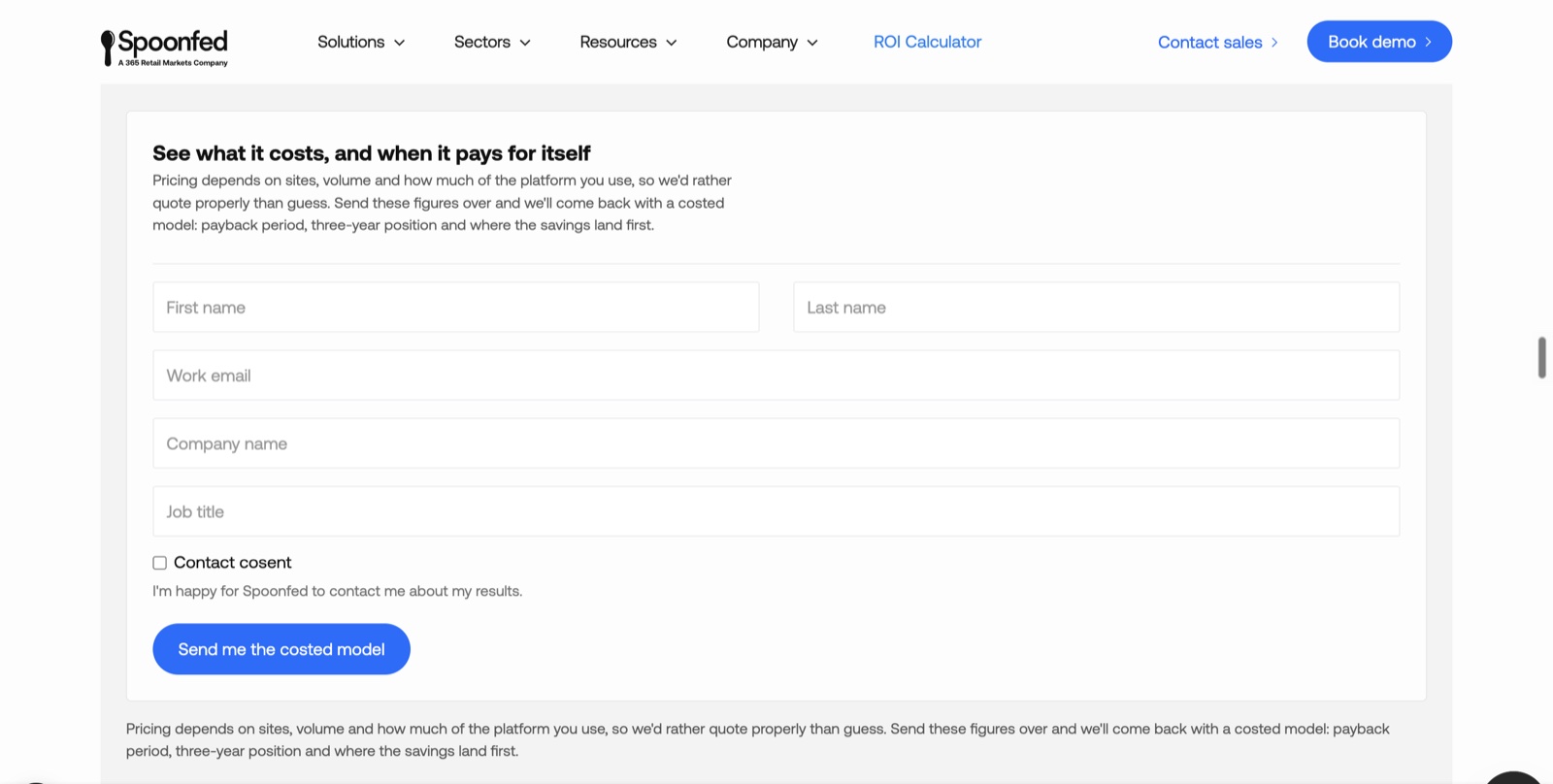
On the pricing row, Spoonfed’s own cost page says it plainly: pricing depends on sites, volume and how much of the platform you use, quoted rather than listed. Neither company publishes a price list, so the comparison is about the shape of the pricing, not the number.
What decided it when we’ve competed
This is App8’s view, from deals, with no customer named. At arenas, Spoonfed typically won on group ordering; some buyers were still looking at other options, but we can’t say whether the gaps they saw were big enough to switch.
In B&I and corporate catering, four things carried it for App8. They are the points that decided those deals, not a claim that either product is better.
The first is enterprise implementation and enablement. App8 staffs it with a team that includes senior developers who know the product, and in our view most of what an enterprise program needs is already in the product, with the team handling the rest of the fit: single sign-on inside the client company’s own identity setup, finance and ERP connections, inventory and recipe systems, and invoicing set up for each site.
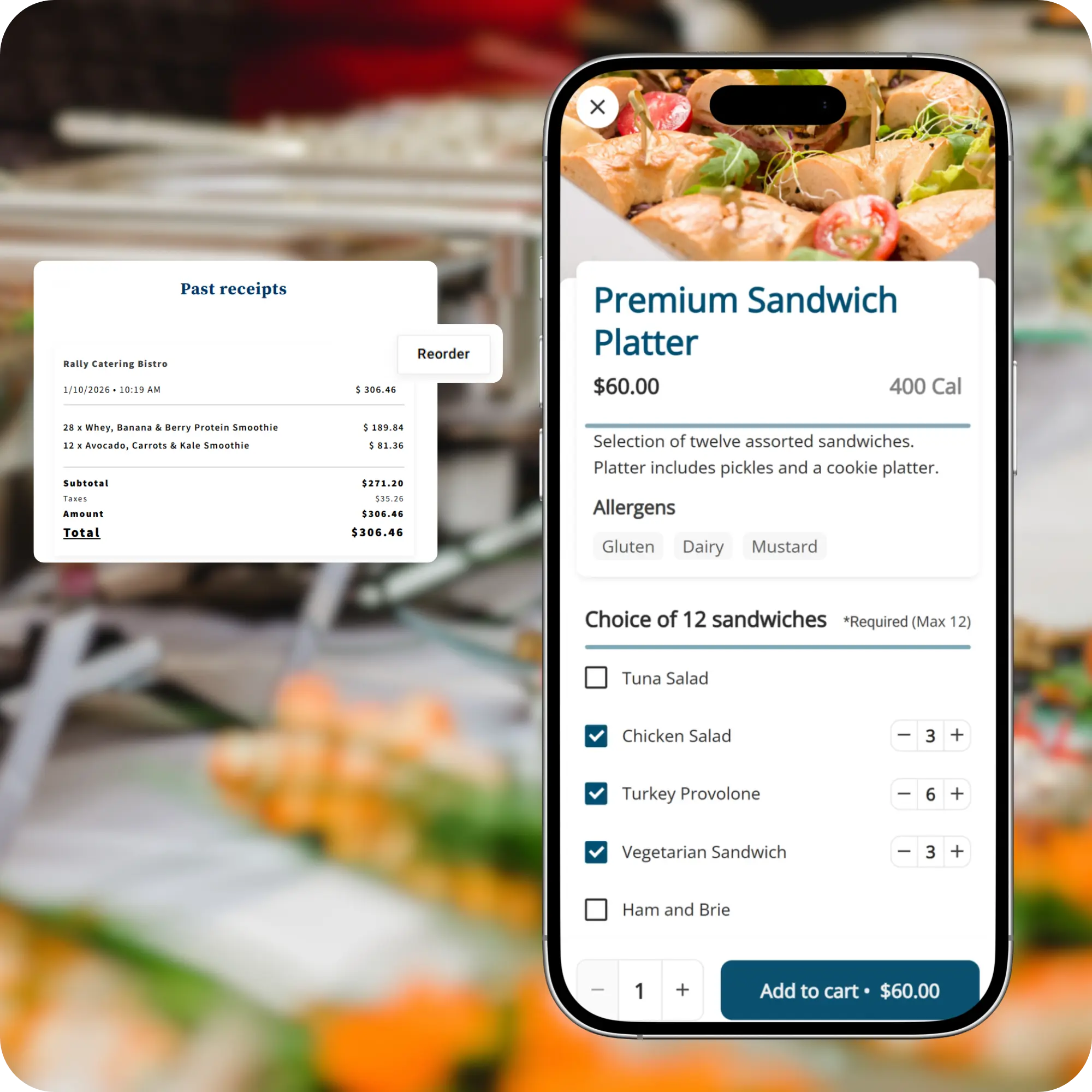
The second is simple ordering for executives. Some B&I clients have a pre-priced contract with the operator, and their executive assistants and team leads want ordering that is quick and clean: no prices shown, fewer options. An operator can set that up for any client in Rally Catering.
The third is French. In French-speaking Canada, Quebec’s language rules weigh heavily, and Rally Catering runs in English and French for guests and on the operator’s dashboard.
The fourth is predictable pricing. Operators want to know what the program will cost before it grows, and a fixed platform subscription scoped to the program, with no fee per user and no commission on orders, is how App8 prices that. The pricing row above has both sides’ published wording.
Who should stay on Spoonfed
App8’s view, in plain terms:
- Arena and venue operators whose main need is group ordering. That’s where we’ve seen Spoonfed do best. Rally Catering’s pages don’t list group ordering, so we won’t claim it.
- Operators who want month-to-month terms and to add or drop features each month, as Spoonfed’s FAQ describes.
- Operators whose finance system is named on Spoonfed’s partners page, such as Xero or Oracle Financials, or who are happy with its CSV or SFTP export.
- Operators already using 365 Retail Markets’ self-checkout and micro markets, which Spoonfed’s site links as its “smart retail partner”.
If you land outside those groups and your program is multi-site B&I, run the three questions above in your next demo, Spoonfed’s and anyone else’s. The wider category, and how an ordering platform sits among the operator’s other systems, is mapped in what a catering management system has to do and the food service management buyer’s guide; if the same client company also hands you the cafeteria, that side of the stack has its own post.
Frequently asked questions
What is Spoonfed catering software?
Spoonfed is catering ordering and management software. Its site calls it Catering Management Software for B2B and Enterprise-Grade Catering Management, and its pages list branded online ordering, customers placing and editing their own orders, single, multi and group ordering, and a back office with quotes, allergens, delivery scheduling, a calendar, a CRM and invoicing. Its enterprise page adds a Console across accounts, single sign-on, user roles, multiple languages and currencies, and punch-out and ERP integrations.
Who owns Spoonfed?
365 Retail Markets, which announced the acquisition in December 2021. The announcement describes Spoonfed as a Glasgow-based company, founded in Scotland and launched in 2013, with software used in the US, the UK and western Europe, and customers that then included global contract caterers, restaurant chains and independent caterers.
What is the best Spoonfed alternative for enterprise catering?
It depends on the buyer. For a multi-site B&I catering program, App8's Rally Catering is built for exactly that, and the three questions that decide it are finance reconciliation, the corporate-events flow from inquiry to banquet event order, and who builds the needs the standard product doesn't cover. For other buyers the pick changes: CaterTrax is the contract-foodservice operator standard, Caterease and Total Party Planner fit weddings and social events, Tripleseat, Event Temple and iVvy fit venue and event bookings, HoneyCart, Better Cater and Flex Catering fit drop-off catering at one or a few sites, FoodStorm fits grocery counters, and ezCater is a marketplace rather than software you run. An arena operator whose main need is group ordering may be best staying on Spoonfed.
Who should stay on Spoonfed?
In App8's view: arena and venue operators whose main need is group ordering, which is where we've seen Spoonfed do best; operators who want month-to-month terms and to add or drop features monthly, as its FAQ describes; operators whose finance system is named on its partners page, such as Xero or Oracle Financials, or who are happy with CSV or SFTP export; and operators already using 365 Retail Markets' self-checkout and micro markets, which Spoonfed's site links as its smart retail partner.
How does Spoonfed's pricing compare with App8's?
From Spoonfed's FAQ: there are no standard long-term contracts or commitments, individual features can be added and removed monthly, and it charges a hosting fee with charges applying to usage and features used; we found no price list on its pages. App8's Rally Catering is a fixed platform subscription scoped to each program, billed monthly or annually, with no fee per user and no commission on orders, and operators add and change their own menus at no extra cost. Neither company publishes a price list.