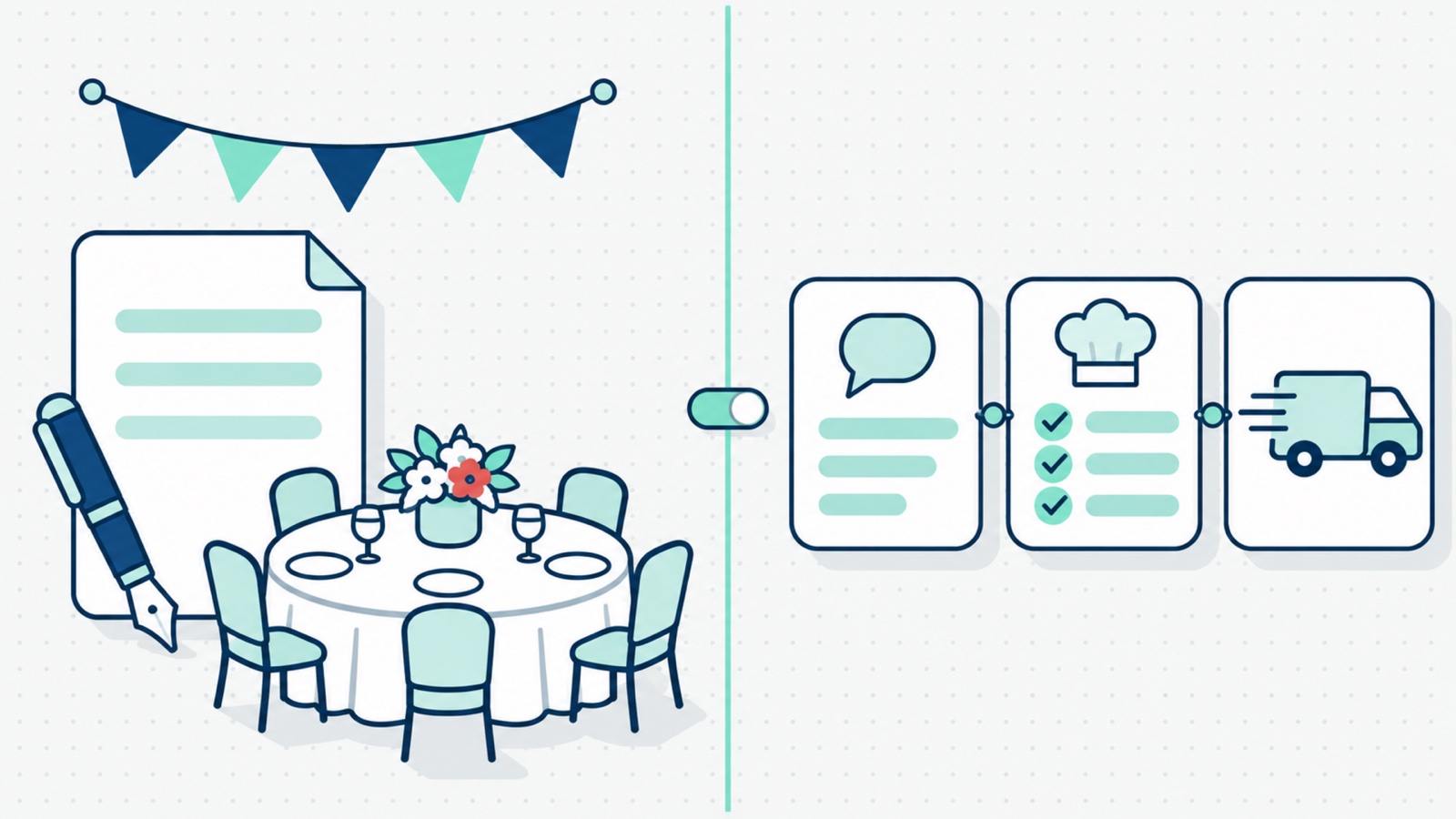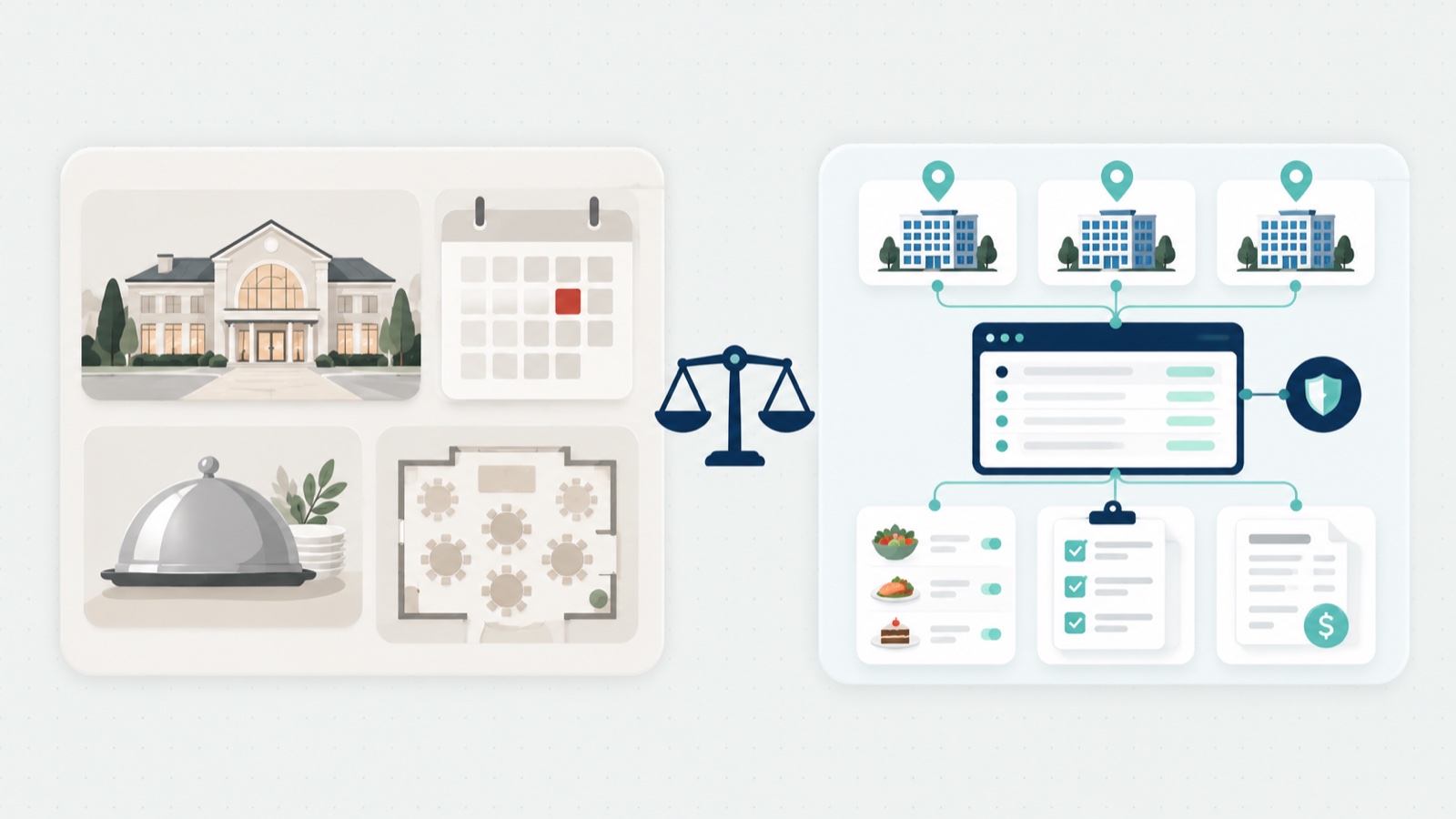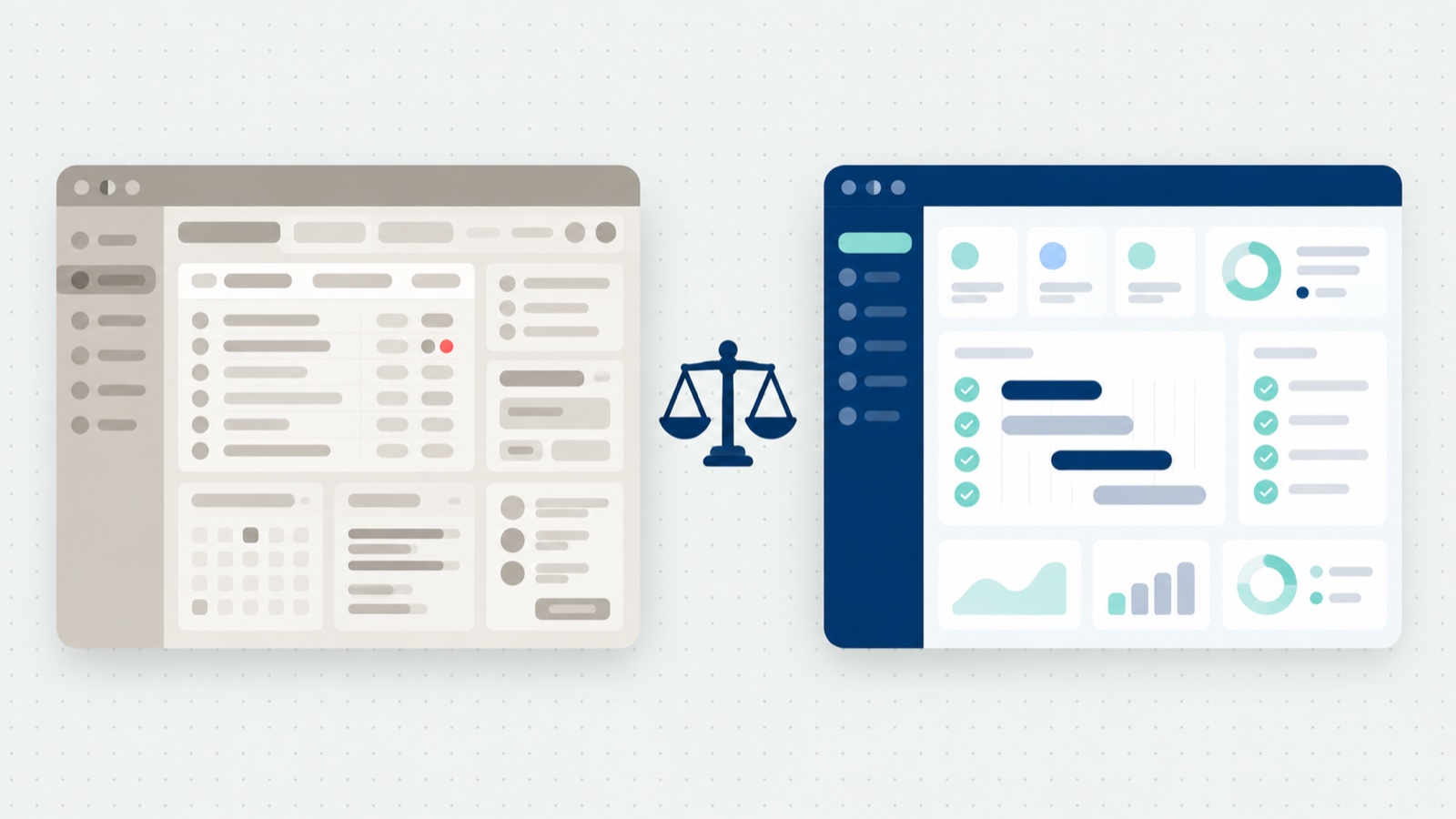

Better Cater alternatives get searched by two kinds of reader, and it’s worth sorting that out up front. If you run weddings, socials and events, where every booking gets a proposal, a signed contract and a BEO, Better Cater may well be the right fit, and this guide will say where it shines. If you run catering across several sites, much of it for client companies, the questions change, and that’s the reader most of this guide is for.
One honest note before we start: we rarely, if ever, meet Better Cater in deals. Everything about it here comes from its own pages, as of November 2026, and every opinion is labeled as App8’s view.
TL;DR
- What Better Cater is: event-led catering software, proposals to BEOs to recipe costing, built since 2011.
- Its pricing: two published plans from $83 a month billed annually, one user included.
- What to ask in a demo if you run catering for client companies across many sites.
- Menu or inquiry form: the choice that quietly shapes how much quote work your team does.
- The 9 best alternatives, each with pros, cons and published pricing, and who should stay.
The short version:
| Best for | Our pick |
|---|---|
| Weddings, socials and events, proposal to e-signed contract to BEO | Better Cater, Caterease, Total Party Planner or CaterZen |
| Drop-off and corporate catering with delivery dispatch | Flex Catering |
| Events at restaurants, hotels and venues | Tripleseat |
| Catering ordering across many sites, much of it for client companies | App8’s Rally Catering, CaterTrax or Spoonfed |
| Grocery catering counters across many stores | FoodStorm |
What Better Cater is, in its own words
Better Cater calls itself “All-in-one catering software that saves you time & maximizes profits”, and its page title reads “Catering Software for Proposals, Events & BEOs”. It says it serves caterers “From a one-person catering shop to a 50-event-a-week kitchen”, and its team page says it “has been building catering software, and nothing else, since 2011.” The company is Better Cater, Inc., based in San Francisco.
Its home page lists proposals, invoices and contracts with e-signatures; menus and packages; a shared events calendar; BEOs, kitchen reports and packing lists; recipe costing and profit analysis; and a CRM with lead forms. On e-signature, its proposals page puts it simply: “Signed online, legally binding, no printer involved.”
Its pages list wedding and event caterers, corporate catering, on-site catering, restaurants and franchises, large-scale food prep, food trucks and festivals, and BBQ and smokehouse caterers among the businesses it serves. One thing worth knowing as of November 2026: online payments are marked “Coming soon” on its pages, so check whether that has changed.
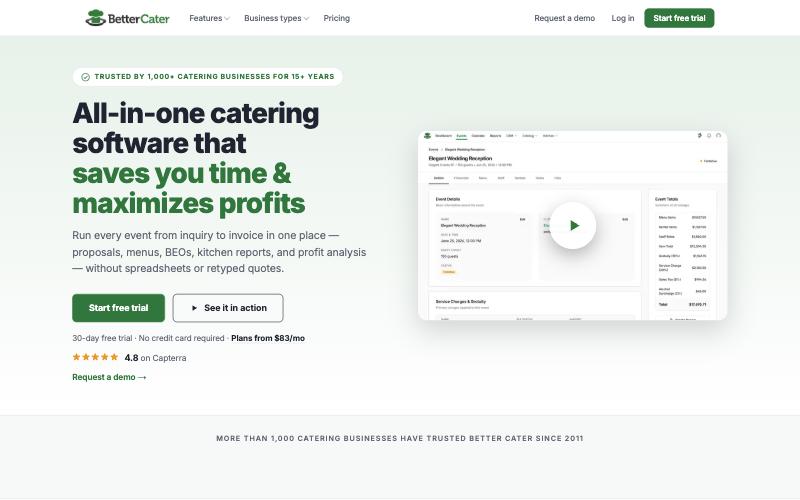
Better Cater pricing, as its page states it
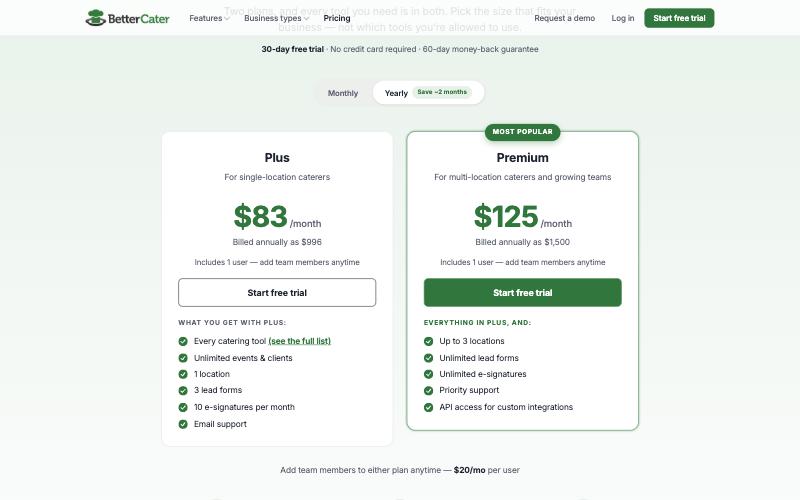
Better Cater publishes its pricing, which is more than most of this category does. Prices change, so treat this as a snapshot as of November 2026 and check its pricing page at bettercater.com/pricing.
| Plan | For, in its words | Billed monthly | Billed annually |
|---|---|---|---|
| Plus | ”For single-location caterers” | $99 a month | $83 a month, billed as $996 |
| Premium | ”For multi-location caterers and growing teams” | $149 a month | $125 a month, billed as $1,500 |
Each plan includes one user. Extra users are $25 a month on monthly billing or $20 a month on annual, and the page lists a “30-day free trial”, “No setup fee, no maintenance fee” and a “60-day money-back guarantee”.
Where Better Cater fits well
In App8’s view, read from its pages, Better Cater is built for a catering business that sells and runs events, from a solo caterer to a busy event kitchen. That focus is a real strength in four situations.
- Event-led caterers. Proposals, e-signed contracts, BEOs, kitchen reports and packing lists sit on one event record.
- Small teams that want a clear price. Its plans are published, with a free trial and no setup fee.
- Caterers who cost their recipes. Recipe costing and profit analysis are on its home page.
- Caterers serving a steady set of offices. Its corporate catering page says it’s “Built for caterers feeding the same offices week after week”, and describes repeating the last order with a new date.
What to ask in a demo for corporate or multi-site catering
App8 sells to foodservice operators running catering across many sites, much of it for client companies, so Better Cater and App8 seldom meet on a shortlist. For a caterer selling events, Better Cater’s pages describe the work. For an operator running a client-company program, its pages don’t describe what that program runs on, so treat these as demo questions rather than conclusions.
- Ordering by the client’s own employees. Its pages describe proposals the caterer sends. We found no ordering site where a client’s employees browse the menu and place their own orders.
- Billing client companies. Its pages don’t describe orders carrying a department’s cost center or PO number, house accounts on net terms, or an ERP connection. Its Premium plan lists “API access for custom integrations”, and online payments were marked “Coming soon” as of November 2026.
- Many sites run as one program. Premium covers “Up to 3 locations” and Plus covers one. Its pages don’t describe how locations are managed together, each with its own menus and rules, from one head office view.
- Single sign-on, roles and languages. Its pages don’t describe single sign-on with a client’s identity provider, access by role, or languages other than English.
- Venues. Its pages don’t describe ordering inside a venue, such as suites or concessions.
Who should stay on Better Cater
In App8’s view, in plain terms:
- Wedding, social and event caterers, where each booking gets a proposal, an e-signed contract and a BEO.
- Small catering teams, from one person up, who want a published price and a free trial.
- Caterers serving a handful of offices on repeat orders, where the caterer enters the order and invoices the client.
Self-serve menu or inquiry form: how catering ordering splits
This part is about catering ordering in general, not about Better Cater. In App8’s view, most catering tools give clients one of two front doors: a self-serve catering menu they order from, or an inquiry form they fill in before waiting for a quote.
Plenty of caterers keep the inquiry form, and the reasons are fair. Some clients don’t seem ready to order online, and a form feels like the simplest thing to offer. But when every standard order becomes a quote, the team spends quote work on orders that never needed it, and in App8’s view, clients who could have ordered drop off while they wait.
A quote earns its effort for a VIP client, an RFP or a large event. For standard orders, a menu with the rules built in lets clients see the items and prices and order themselves, and in App8’s view they’re more likely to order when they can.
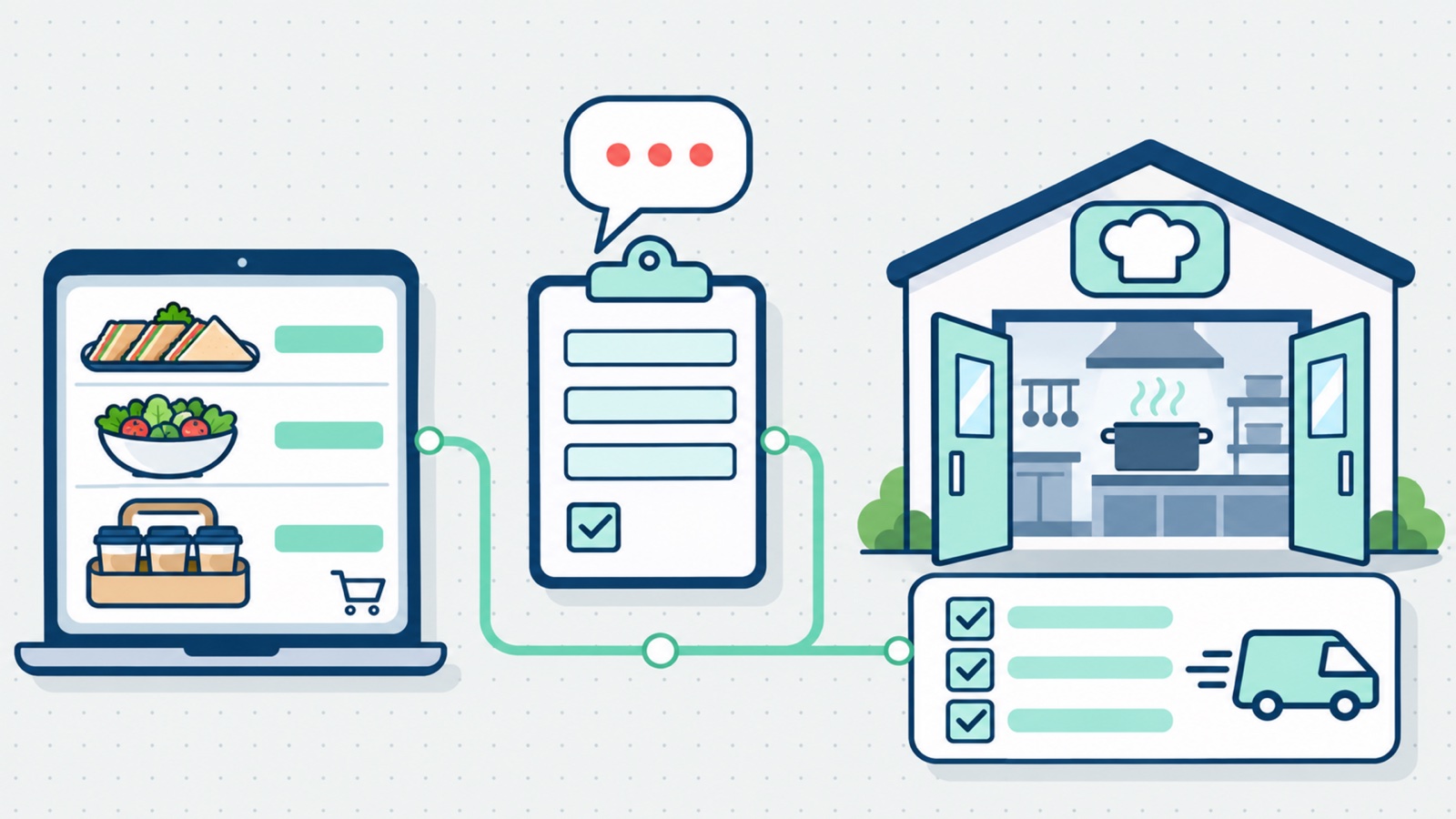
That’s why Rally Catering puts both doors on the same ordering site. Clients who know what they want order from the menu; clients who aren’t sure tap “Request a quote” and describe the event.
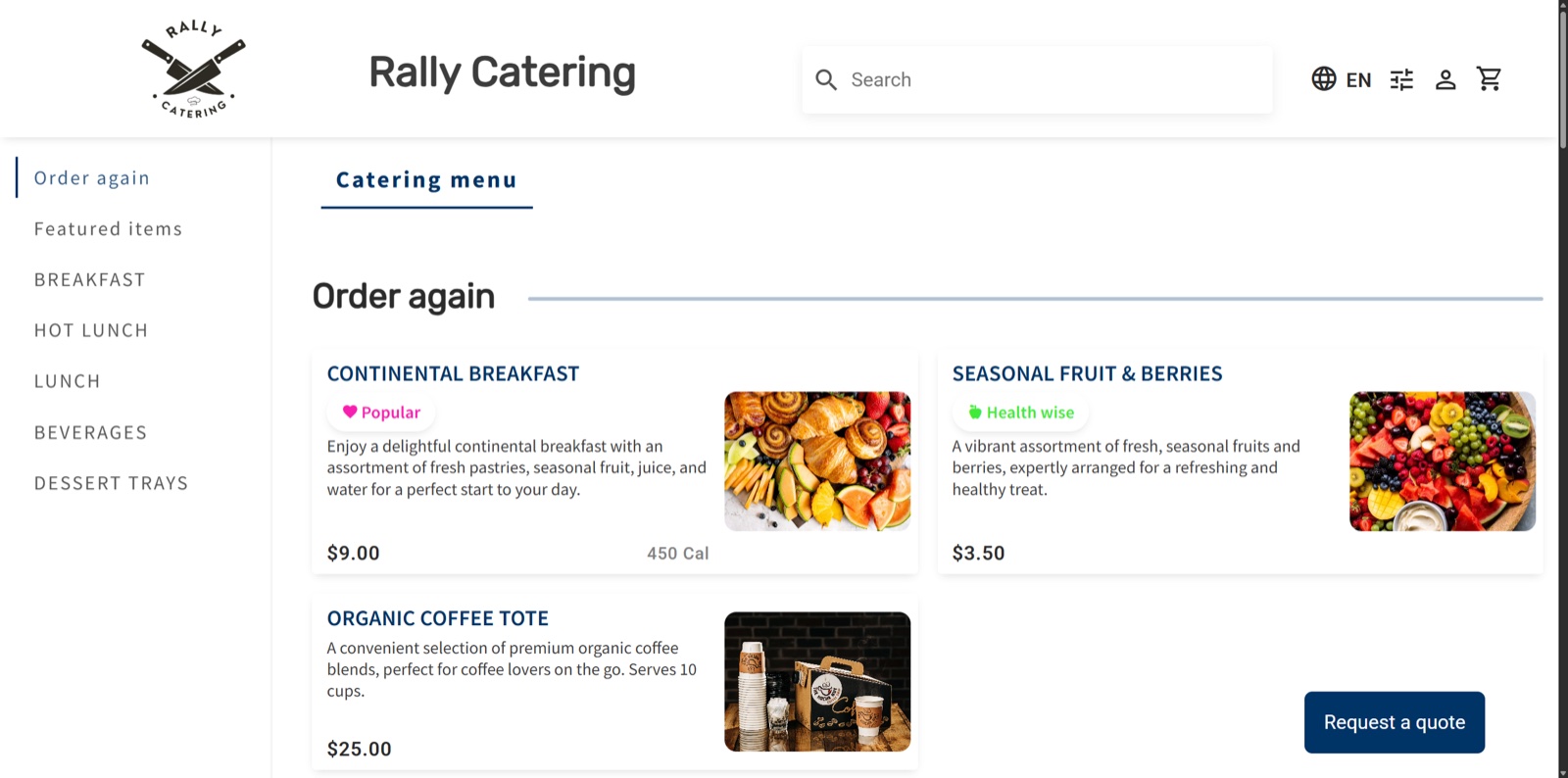
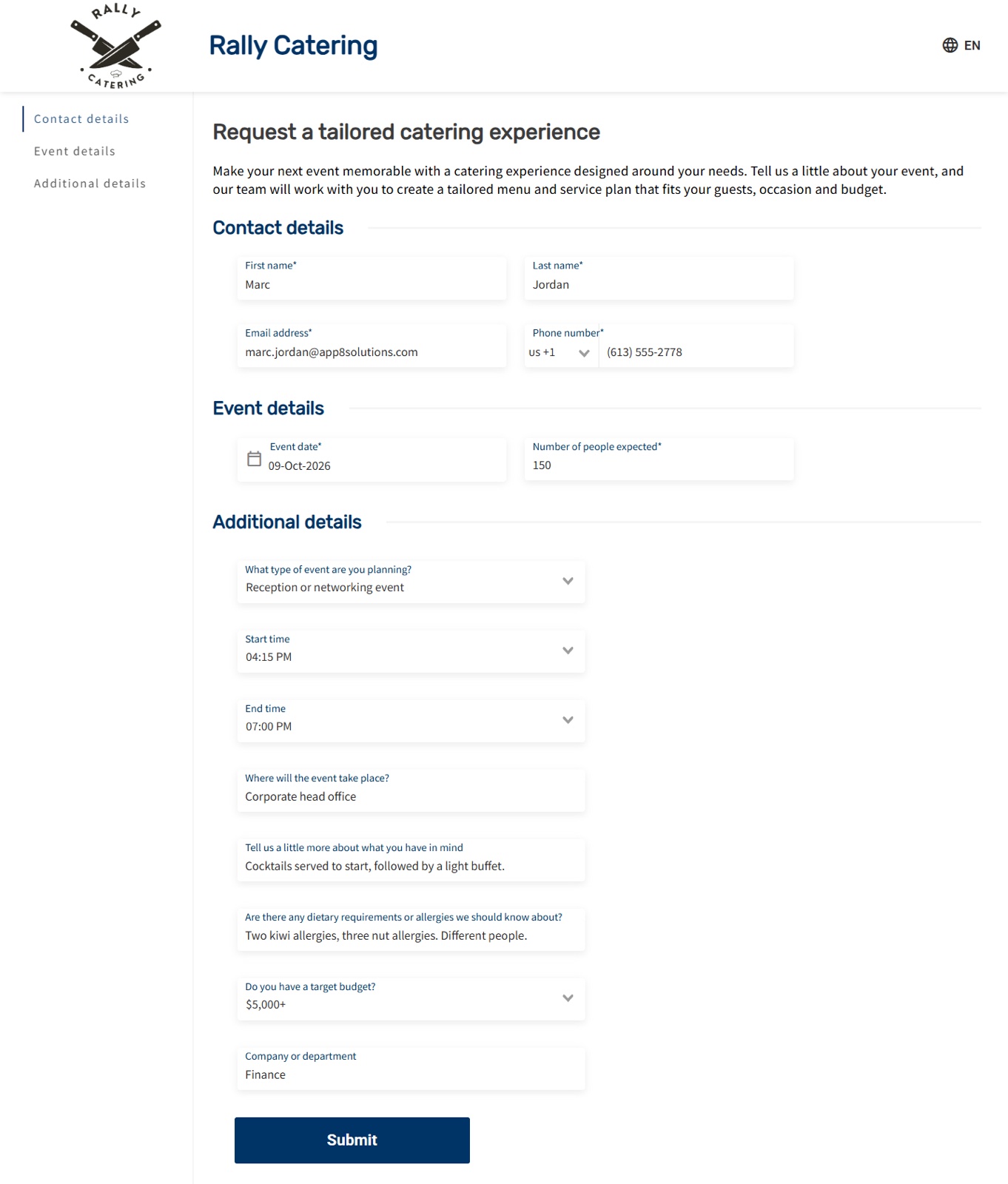
Both land in the same operator dashboard, and both alert the operator. Once an order is accepted, whether the client placed it from the menu or the operator quoted it from an inquiry, it flows to the same production sheets.
Two small details matter more than they look. The operator’s own questions are part of checkout, and guests are asked to sign up only at checkout, so they browse the menu and fill the cart before anything gets in their way.
The 9 best Better Cater alternatives, by use case
The entries are numbered for reading order, not ranked: every tool here has its place, each is described from its own pages as of November 2026, and the right pick depends on whether you sell events, run a venue, or run catering across many sites.
1. Rally Catering, best for multi-site catering for client companies
Rally Catering is App8’s catering platform for foodservice operators: an ordering site for the client’s employees, corporate catering events in the same system, and billing that reconciles into the operator’s accounting. If most of your catering is everyday orders for client companies, with some quoted events on top, this is the shape built for it.
Pros
- A self-serve menu and an inquiry form on one ordering site, landing in one dashboard
- Corporate catering events from quote to BEO, on the same production sheets as everyday orders
- Client billing: card, invoice or house account on net terms, with cost center or PO checked at checkout
- English and French, for guests and on the operator's dashboard
- Flexible pricing: a subscription scoped to each program, with no fee per user and no commission on orders
Cons
- No proposals or contracts with e-signature, and no recipe costing
- No floor plans, seating charts, staff scheduling or rental inventory
- Weddings and social events are not its market
Pricing: flexible by design. A fixed platform subscription scoped to each program, billed monthly or annually, with no fee per user and no commission on orders, so the number depends on the program rather than the headcount. The place to get yours is a demo.
2. Caterease, best for event-led catering with published plans
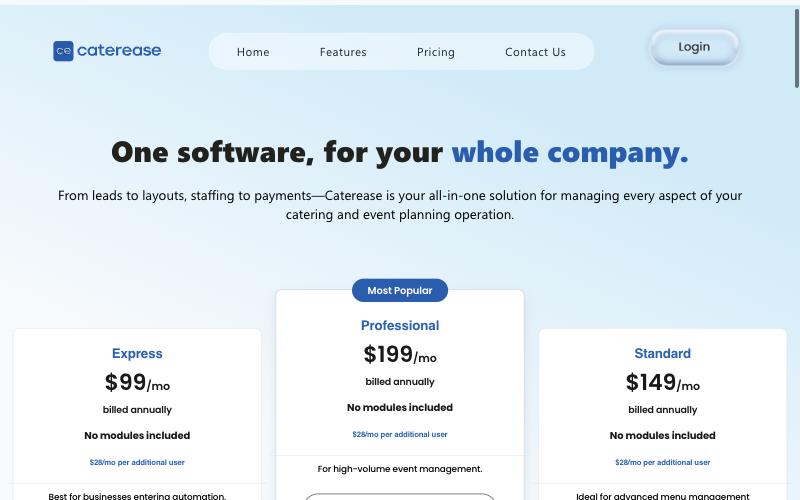
Caterease positions itself as software for catering and event management, from leads and layouts to staffing and payments. Like Better Cater, it publishes its plans, so the two are easy to model side by side.
Pros
- Published pricing across three plans, with add-on modules priced too
- Event depth from prints and layouts to payments
- Connects to floor plan and seating tools
Cons
- $28 a month per additional user, plus a one-time $200 per-user launch fee
- Its pages don't describe client-company billing with cost centers and POs
Pricing: Express $99, Standard $149, Professional $199 a month billed annually, as of November 2026. Our Caterease guide covers it product by product.
3. Total Party Planner, best for events-first caterers on QuickBooks
Total Party Planner describes itself as all-in-one event management and catering software, centered on proposals, contracts, deposits, BEOs, staff and room layouts, with QuickBooks Online and Desktop compatibility. Its own welcome tour is the fairest way to see it.
Pros
- Proposals, e-signed contracts, deposits and BEOs in one place
- Room layouts and staff hiring on its features page
- Compatible with QuickBooks Online and Desktop in the US and Canada
Cons
- Plans include one to three users, with $25 a month per extra user
- Online ordering is a paid add-on, and a $299 one-time setup fee applies
Pricing: three plans from $119 to $429 a month as of November 2026, with the full breakdown in our Total Party Planner guide.
4. CaterZen, best for drop-off and full-service catering with marketing built in
CaterZen covers drop-off, full-service and event space businesses, with sales and marketing tools on its upper plans. It publishes its pricing, with unlimited users and orders on its plans.
Pros
- Published plans with unlimited users and orders
- Marketing tools for growing repeat catering business
- Free trial with pre-loaded data, per its homepage
Cons
- A $499 one-time start-up investment, more past 5 locations
- Its pages don't describe cost centers, PO billing or single sign-on
Pricing: Pro $179, Pro Plus $199, Marketing Pro Plus $229 a month, Enterprise by quote, as its pricing page states as of November 2026.
5. Flex Catering, best for drop-off and corporate catering with delivery built in
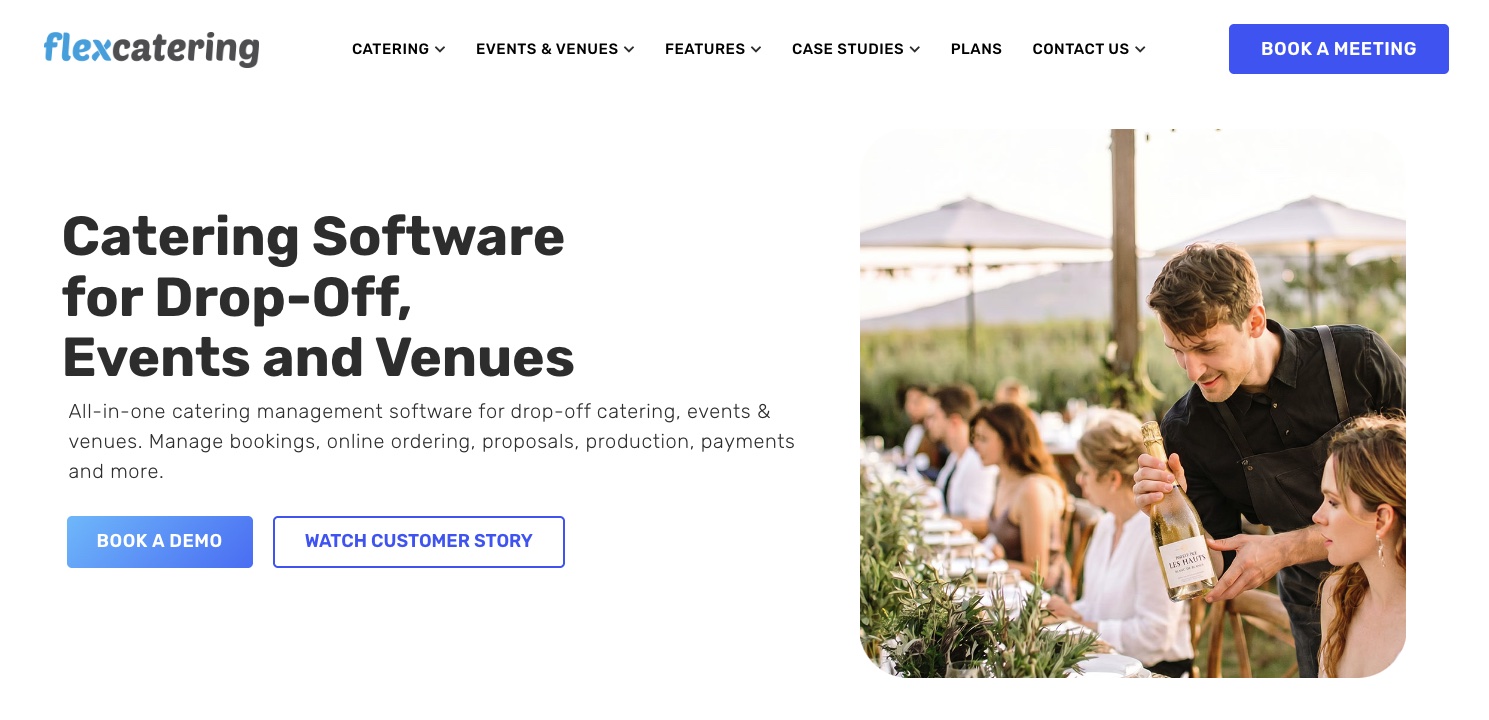
Flex Catering describes “All-in-one catering management software for drop-off catering, events & venues”, to “Manage bookings, online ordering, proposals, production, payments and more.” Its homepage pitches online ordering with B2C and B2B cart and account features for catering companies and multi-location restaurants, plus delivery dispatch, which few tools on this list cover.
Pros
- Online ordering with B2C and B2B cart and account features, per its homepage
- 40+ real-time printable kitchen and production reports, with costing and forecasting
- Delivery dispatch with a run builder, a driver app and Google Maps routing
- Events, venue booking and proposals with e-signature in the same platform
Cons
- No published prices: each of its four plans starts with a demo
- The pages we read don't describe cost center or PO checks at checkout, single sign-on, or French
Its plans are organized by business type rather than size: Ballroom for events and venues, Pantry for online ordering and drop-off, Off Premise for both, and Enterprise for large catering groups and chains.
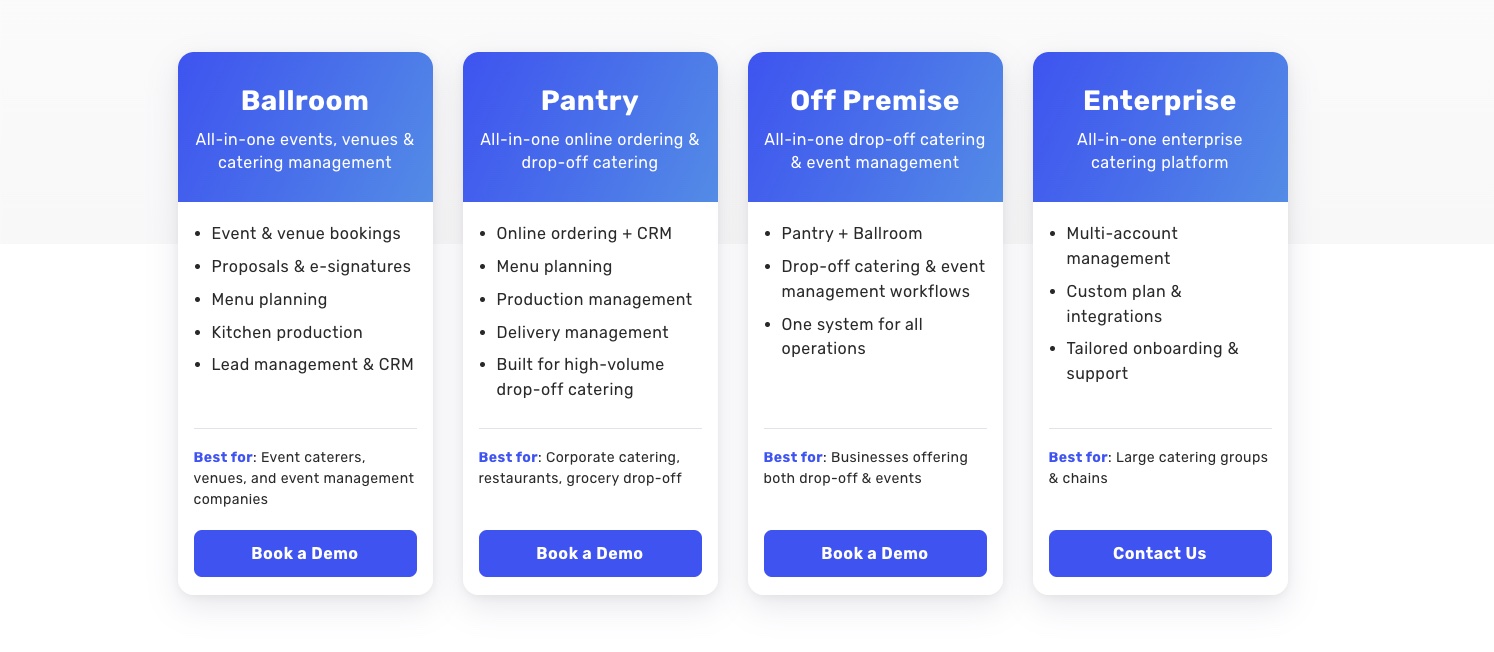
Pricing: not published as of November 2026; all four plans are quoted.
6. Tripleseat, best for events at restaurants, hotels and venues
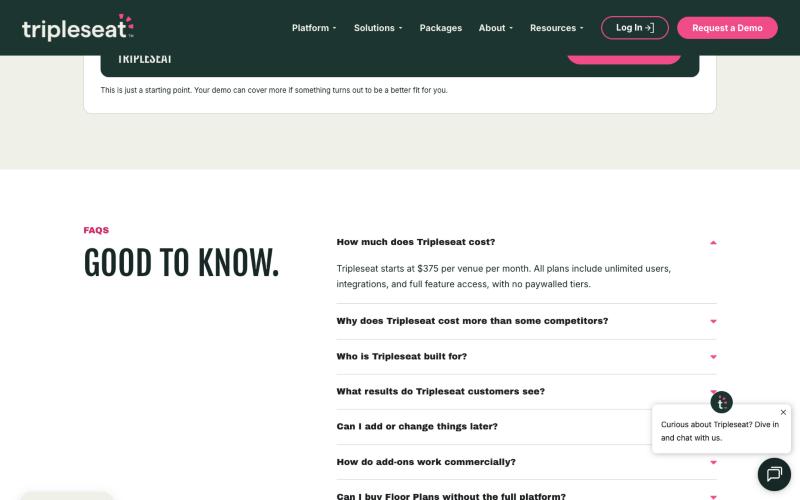
Tripleseat describes “event management software for restaurants, hotels, and venues”, from leads to room blocks. Its packages page answers the cost question directly.
Pros
- Published starting price with unlimited users and no paywalled tiers
- Venue event sales depth, room blocks included
- Floor plans and self-serve booking as add-ons
Cons
- Venue-centered rather than catering-operations-centered
- Per-venue pricing needs modeling across many sites
Pricing: starts at $375 per venue per month, as its packages page states as of November 2026.
7. CaterTrax, best for contract-foodservice back offices
CaterTrax is a catering and hospitality ordering platform built by caterers, sold in Independent and Enterprise tiers, and it’s the product most contract-foodservice operators have already met. Our CaterTrax guide covers it at full length, including when we’d tell you to stay on it.
Pros
- Built for contract-foodservice operations, with a large installed base
- Separate tiers for single sites and multi-location brands
Cons
- Operators report menu changes route through the vendor's team rather than self-serve
- No pricing published on its site
Pricing: not published on its site as of November 2026.
8. FoodStorm, best for grocery chains running catering across many stores
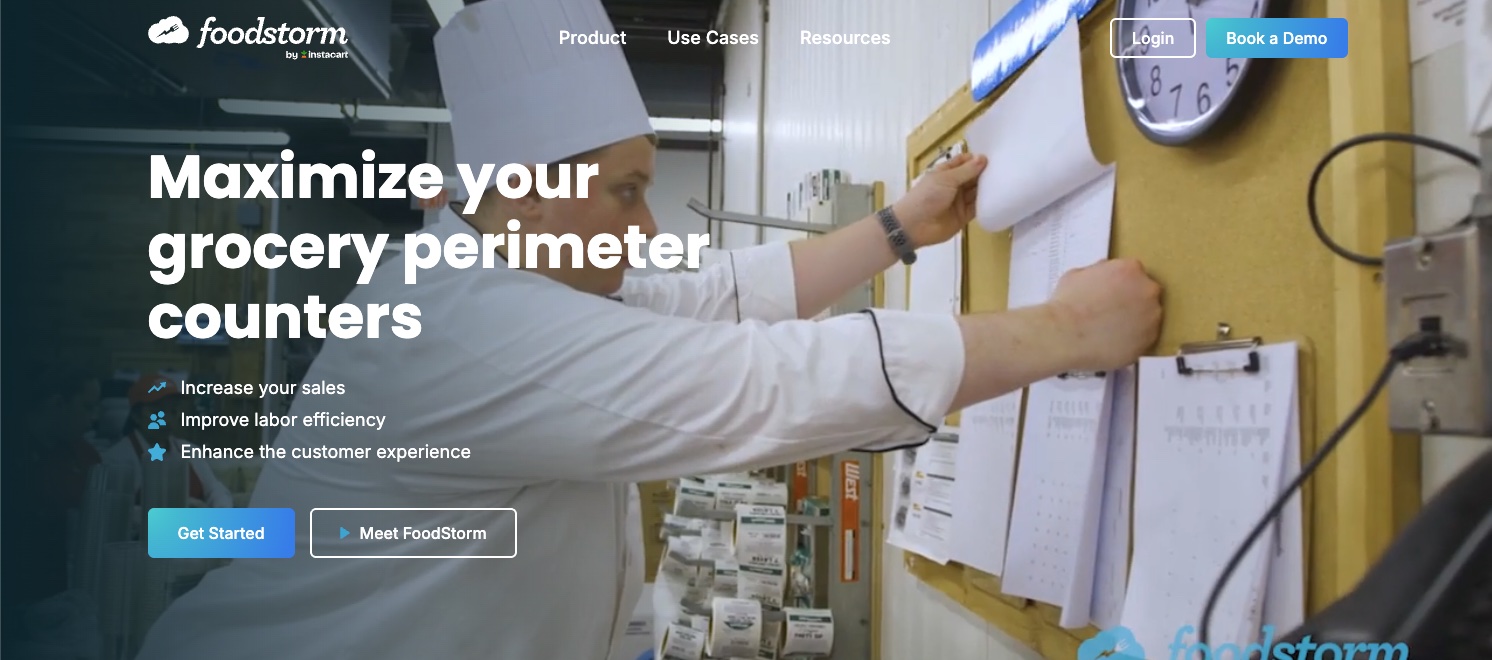
FoodStorm is catering software built for grocery stores: its homepage leads with “Maximize your grocery perimeter counters”, and it lets a retailer “Set up multiple store locations and departments” with multi-location reporting. Instacart announced its acquisition of FoodStorm in October 2021, and our FoodStorm guide covers who it fits and who should look elsewhere.
Pros
- Built for grocery deli, bakery, floral and holiday catering orders
- Multiple store locations and departments, with multi-location reporting
- Setup in as little as 4 to 8 weeks, per its homepage
Cons
- Grocery-built: its pages don't describe corporate catering events, BEOs, or billing client companies by cost center or PO
- No pricing published on its pages
Pricing: not published as of November 2026.
9. Spoonfed, best for multi-site corporate catering with group ordering
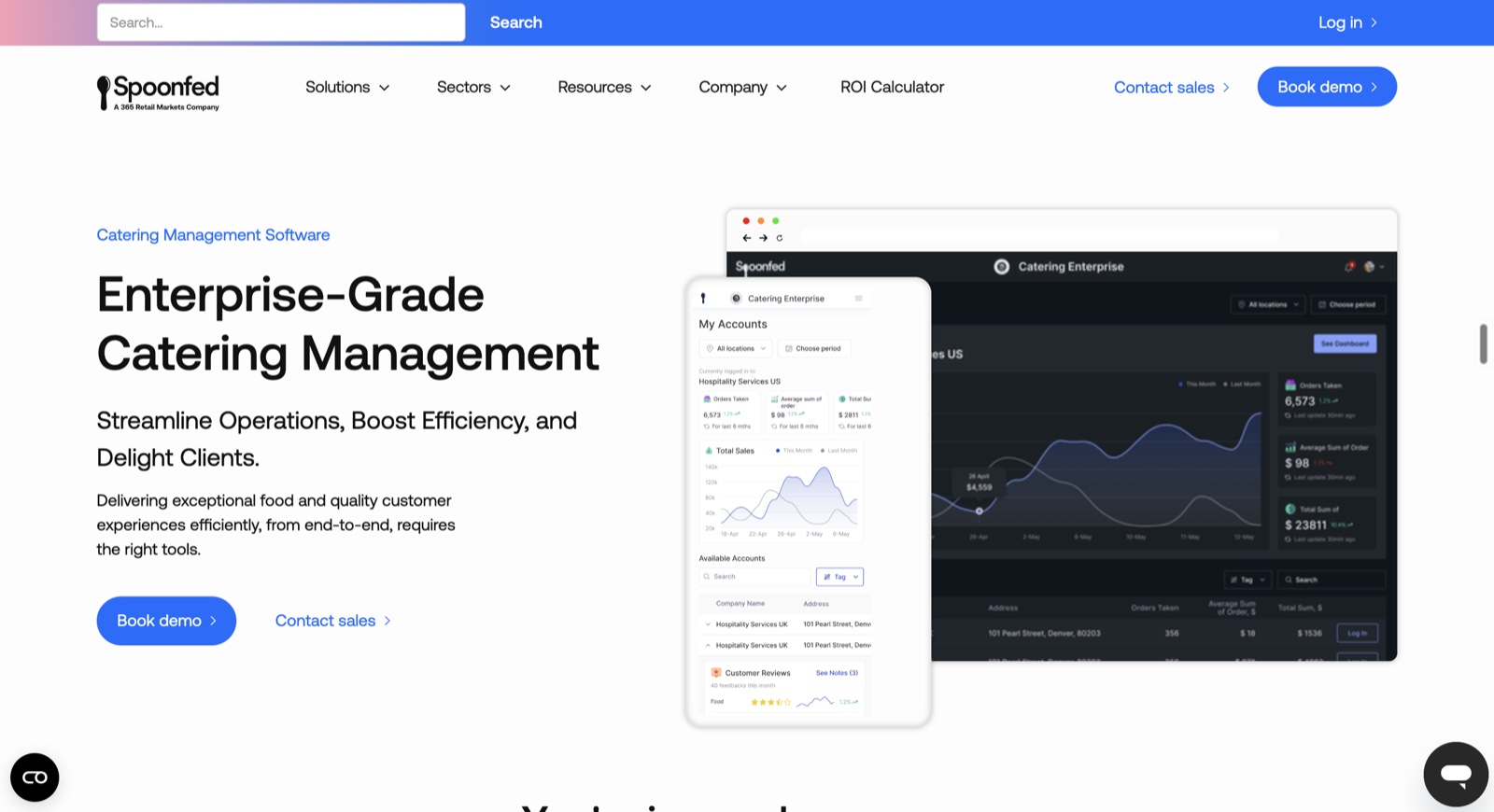
Spoonfed is catering management software for orders across many sites, strongest where group ordering matters, and our Spoonfed guide covers it in depth.
Pros
- Built for catering across many sites, with group ordering a named strength
- Features can be added and removed monthly, per its FAQ
Cons
- Quote-based pricing: a hosting fee with charges by usage and features used
- Its pages don't describe an events flow from inquiry to BEO
Pricing: quote-based, depending on sites, volume and platform use, as its cost page describes as of October 2026.
The quick comparison
| Product | Built for | Published pricing (as of November 2026) |
|---|---|---|
| Better Cater | Event-led caterers, one to 3 locations | $83 to $125 a month billed annually, one user included |
| Rally Catering | Multi-site catering for client companies | Flexible: subscription scoped to the program, no per-user fees |
| Caterease | Event-led catering and event management | $99 to $199 a month billed annually, $28 per extra user |
| Total Party Planner | Events-first caterers on QuickBooks | $119 to $429 a month plus add-ons and fees |
| CaterZen | Drop-off and full-service catering with marketing | $179 to $229 a month, Enterprise by quote |
| Flex Catering | Drop-off, corporate and event catering, with delivery | Not published; four plans by demo |
| Tripleseat | Events at restaurants, hotels and venues | From $375 per venue per month |
| CaterTrax | Contract-foodservice operators | Not published on its site |
| FoodStorm | Grocery catering counters across many stores | Not published |
| Spoonfed | Multi-site corporate catering | Quote-based |
What Rally Catering does that Better Cater’s pages don’t describe
The honest framing is what Rally Catering does that Better Cater’s pages don’t describe, never that Better Cater lacks it. They’re built for different jobs.
| Rally Catering | Better Cater, from its own pages | |
|---|---|---|
| Who orders | The client's employees order on the operator's catering site | The caterer builds proposals and orders; no client ordering site described |
| Menu and inquiry | A self-serve menu and a path to an inquiry form on the same site, both landing in the same operator dashboard | Lead forms feeding its CRM |
| Checkout | The operator's own questions are part of checkout, and guests sign up only at checkout | Not described |
| Corporate catering events | Live since September 2026: the client requests a quote, accepts it online or confirms it with a deposit, and the order flows to the same production sheets, with a BEO generated automatically | Proposals, e-signed contracts and BEOs on one event record |
| Many sites | Menus set up once and copied to other locations in one step | Premium covers up to 3 locations; how locations are managed together not described |
| Billing client companies | Credit card, invoice, or a house account on net terms, with cost center or PO checked at checkout against the operator's rule | Invoices; online payments "Coming soon" as of November 2026; cost centers and POs not described |
| Accounting | Orders reconcile into the operator's accounting system, each receivable to the right category, cost center and PO, with JD Edwards as the named example | Not described |
| Sign-in and languages | Single sign-on with the client's identity provider, set up case by case; English and French for guests and operators | Not described |
The accounting row is its own discipline, covered in our catering accounting guide.
And the plain list of what Rally Catering doesn’t do, because an honest comparison names its own gaps: no proposals or contracts with electronic signature, no recipe costing, no floor plans, room layouts or seating charts, no staff scheduling, and no rental or equipment inventory. “Staffing and equipment charges” on a Rally quote are priced lines, not staff or stock management, and weddings and social events aren’t Rally Catering’s market.
So the fit splits cleanly. If your business is weddings, galas and socials, Better Cater and the event tools above were built for you. If you run catering for client companies across many sites, start with the demo questions above and what a catering management system has to do.
Frequently asked questions
What is Better Cater?
Better Cater describes itself as all-in-one catering software that saves you time and maximizes profits, for proposals, events and BEOs. Its pages list proposals, invoices and contracts with e-signatures, menus and packages, a shared events calendar, BEOs, kitchen reports and packing lists, recipe costing and profit analysis, and a CRM with lead forms. It says it has been building catering software, and nothing else, since 2011, and the company is Better Cater, Inc., San Francisco.
How much does Better Cater cost?
As of November 2026, its pricing page lists two plans. Plus, for single-location caterers, is $99 a month billed monthly or $83 a month billed annually ($996 a year). Premium, for multi-location caterers and growing teams, is $149 a month billed monthly or $125 a month billed annually ($1,500 a year), and covers up to 3 locations. Each plan includes one user, extra users are $25 a month on monthly billing or $20 on annual, and the page lists a 30-day free trial, no setup or maintenance fee, and a 60-day money-back guarantee. Prices change, so check its pricing page.
Who should stay on Better Cater?
In App8's view: wedding, social and event caterers, where each booking gets a proposal, an e-signed contract and a BEO; small catering teams, from one person up, who want a published price and a free trial; and caterers serving a handful of offices on repeat orders, where the caterer enters the order and invoices the client.
What are the best Better Cater alternatives?
It depends on the business. For the same event-led caterer: Caterease, Total Party Planner or CaterZen. For drop-off and corporate catering with delivery built in: Flex Catering. For events at restaurants, hotels and venues: Tripleseat. For catering ordering across many sites, much of it for client companies: App8's Rally Catering, CaterTrax or Spoonfed, and for grocery chains, FoodStorm. Each is described from its own pages in this guide, with pros, cons and published pricing.
Should catering clients order from a menu or an inquiry form?
In App8's view, both have their place. A quote earns its effort for a VIP client, an RFP or a large event. For standard orders, a self-serve menu with the rules built in lets clients see the items and prices and order themselves, and when every standard order becomes a quote, the team spends quote work on orders that don't need it. Rally Catering puts a self-serve menu and a path to an inquiry form on the same ordering site, and both land in the same operator dashboard.
Does Rally Catering replace Better Cater?
For a different buyer. Rally Catering runs a multi-site catering program: an ordering site for the client's employees, corporate catering events in the same system, billing to client companies with cost centers and PO numbers, and accounting that reconciles. It doesn't do proposals or contracts with e-signature, recipe costing, floor plans, staff scheduling or rental inventory, and weddings and social events aren't its market, so an event-led caterer is often well served staying on Better Cater.